Solar panel types

Solar panel types, compared

Monocrystalline, polycrystalline and thin-film panels differ in price, efficiency and lifespan. Here is how they compare, and which homes each one suits.

Free, no-obligation quotes
One vetted installer per upgrade
MCS-certified installers
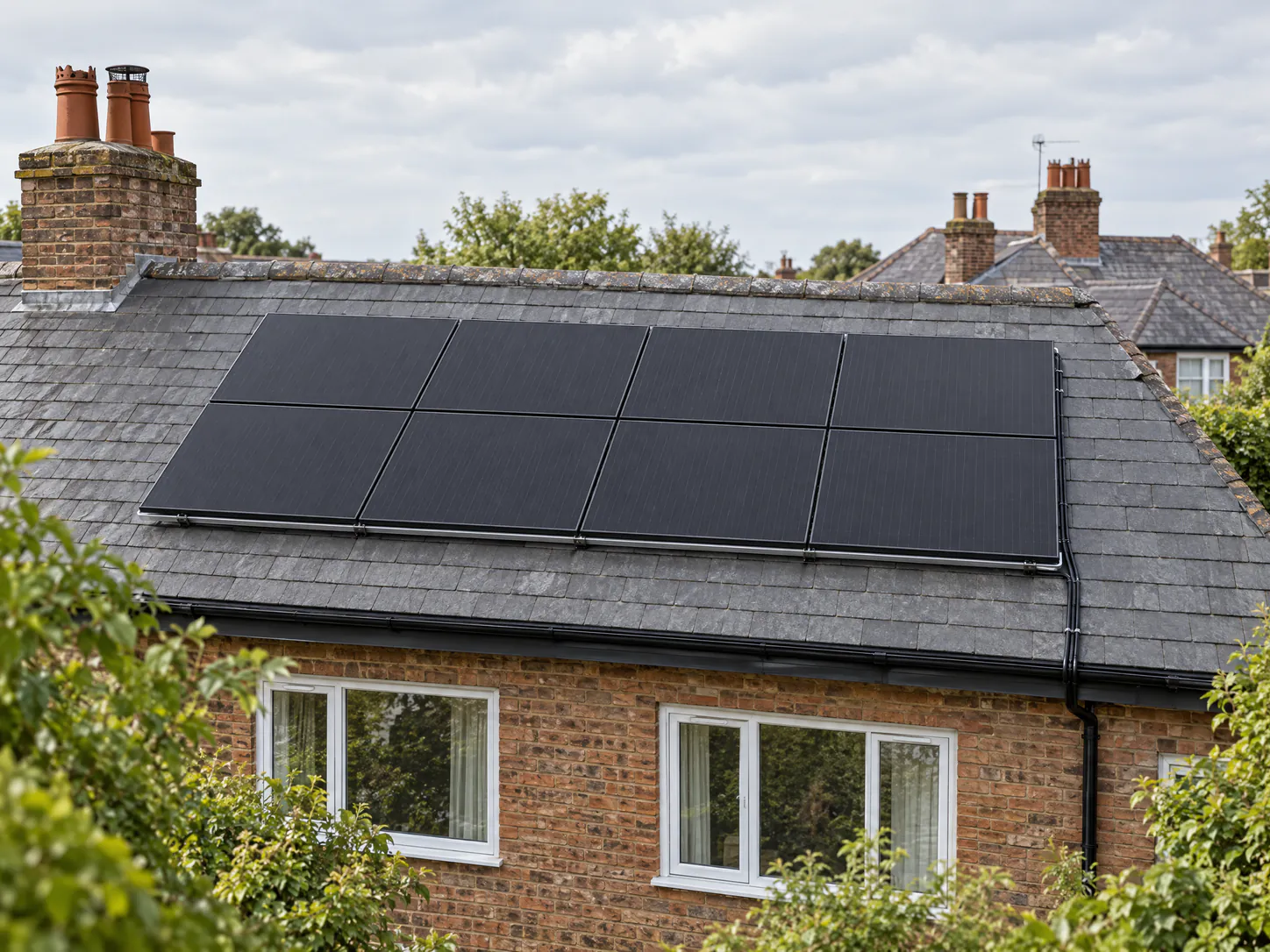
Black solar panels across the slate roof of a brick house, with the mounting rail and cable run visible
The options

Choose the panelthat suits your roof and budget

Most UK homes choose between three types of roof-mounted panel. Plug-in solar is a smaller, newer option for renters and homes without a suitable roof.
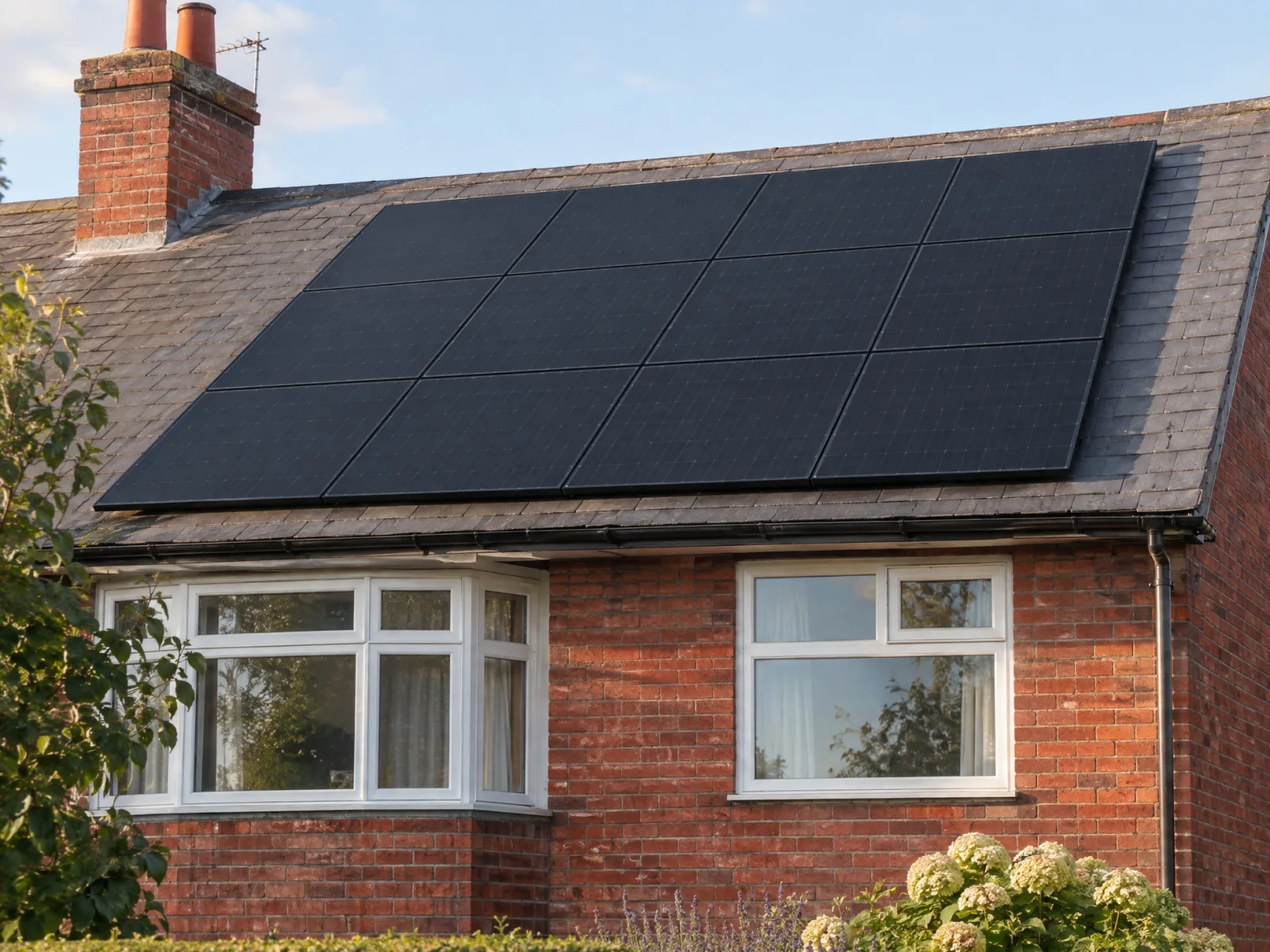
Rows of all black monocrystalline solar panels cover the slate roof of a red brick semi, above white windows, a hedge and hydrangeas, under a clear late afternoon sky.

Best for maximising energy savings and efficiency

Monocrystalline solar panels

With efficiency ratings of 18 to 24%, monocrystalline solar panels have the highest energy efficiency and the longest lifespan. Reduce reliance on the grid and achieve maximum long-term savings.

Β£400 to Β£500
18 to 24%
30 to 40 years
The official figures

Ideal for
  • Maximising lifetime savings
  • Families with high energy usage
  • Small and limited roof spaces
What you get
  • High energy efficiency
  • Long lifespan
  • Suitable for most roof types
What to weigh up
  • Higher initial costs
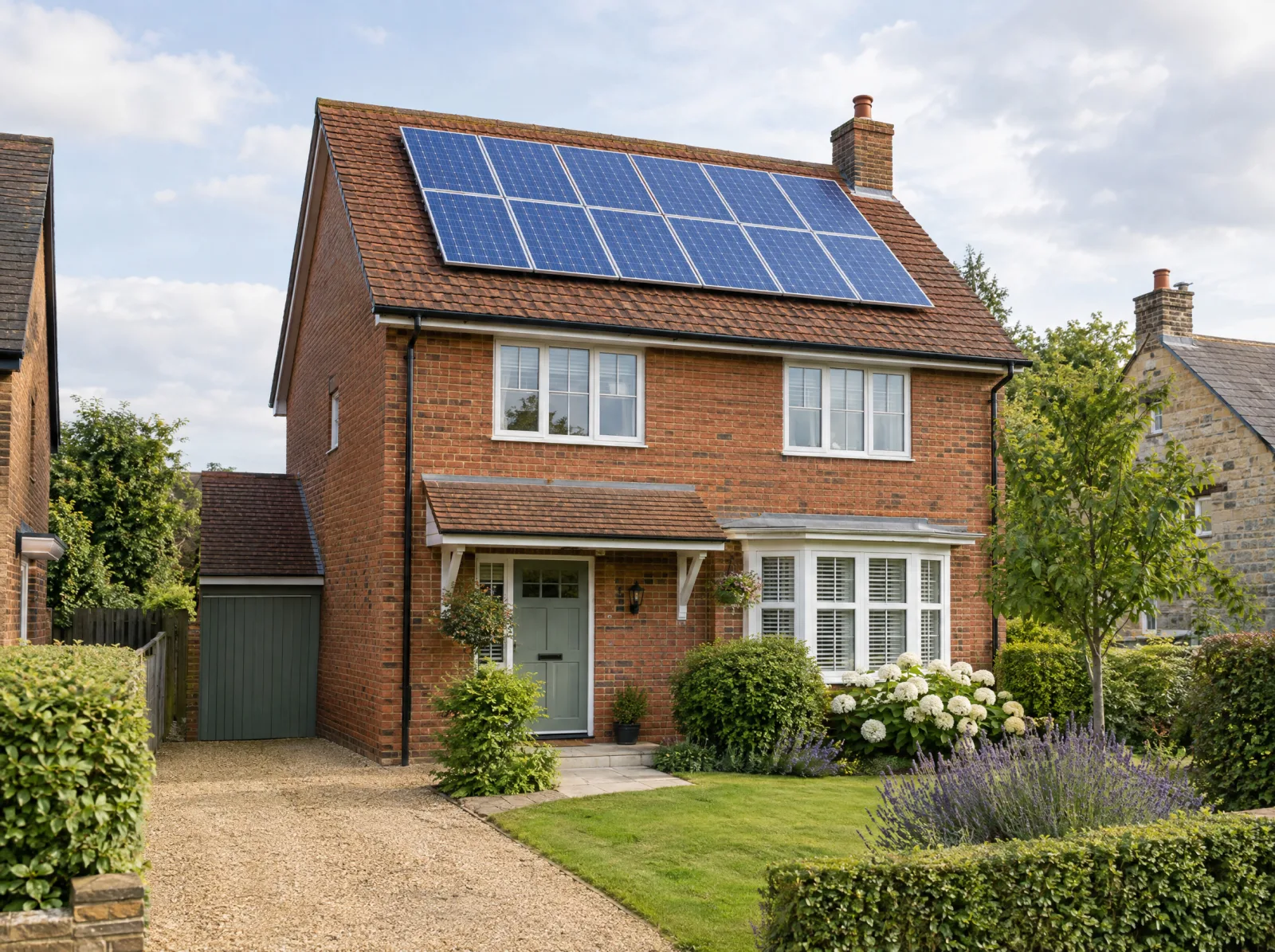
Blue polycrystalline solar panels with silver frames on the clay tiled roof of a red brick detached house, with a lawn, lavender, white hydrangeas and a gravel drive in front.

Best for smaller budgets and eco-friendliness

Polycrystalline solar panels

Looking for an affordable solar panel with the lowest environmental impact? Polycrystalline panels have lower installation prices and CO2 emissions than monocrystalline panels. Generate renewable energy at a lower upfront cost.

Β£350 to Β£450
13 to 16%
25 to 30 years
The official figures

Ideal for
  • Budget-conscious homeowners
  • Large roof spaces
  • Reducing your carbon footprint
What you get
  • Most eco-friendly
  • Lower costs
  • Long lifespan
What to weigh up
  • Lower energy efficiency
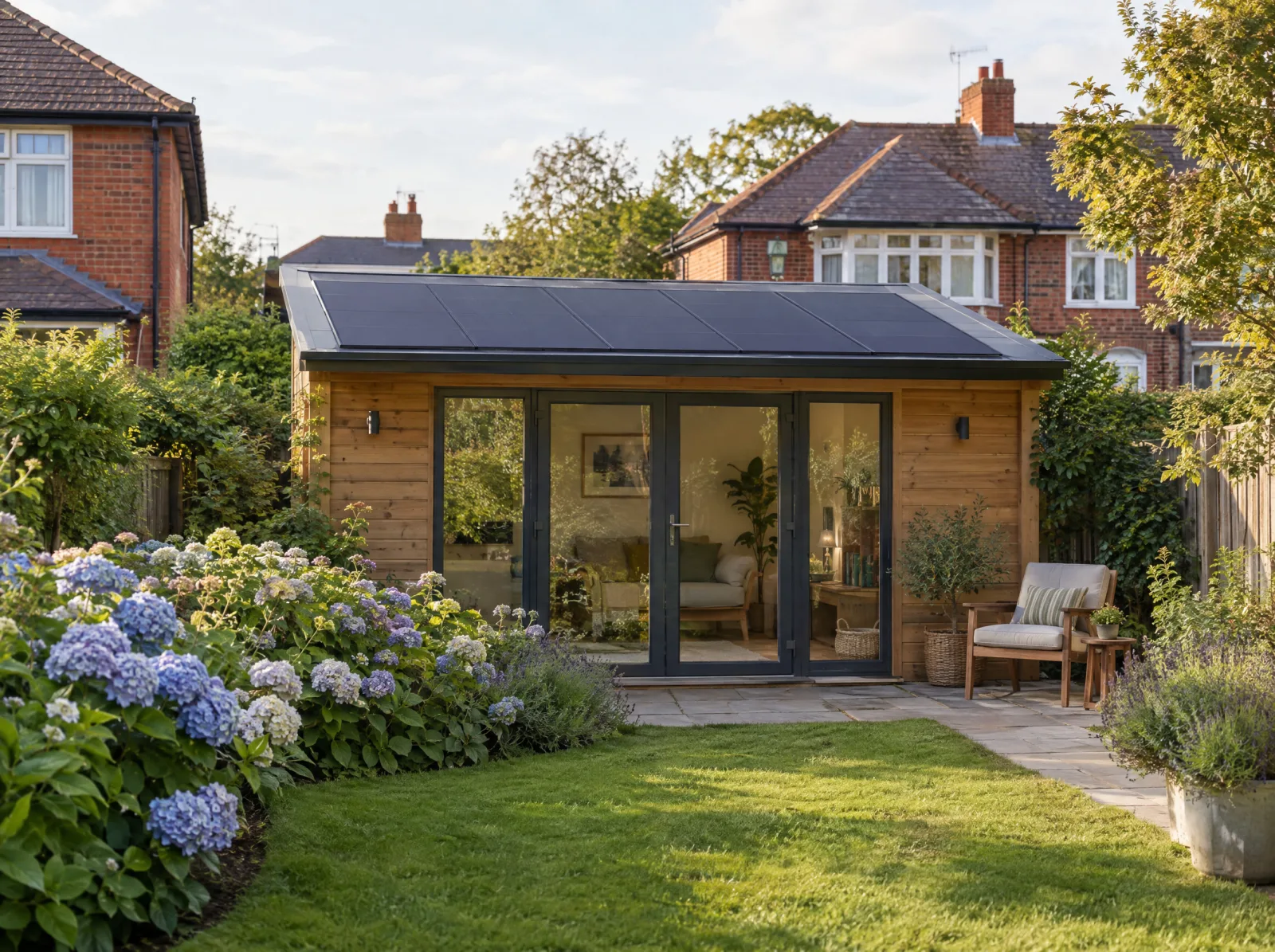
Dark thin film solar panels laid flat across the gently sloping roof of a timber garden room at the end of a lawn, with blue hydrangeas in the foreground and brick houses behind.

Best for flexibility

Thin-film solar panels

Thin-film panels are flexible solutions that suit tiny homes, sheds, and mobile homes. Get a solar panel that’s adaptable to your unique roof type.

Β£250 to Β£350
7 to 13%
10 to 20 years
The official figures

Ideal for
  • Mobile homes and tiny homes
  • Flexible mounting requirements
  • Unique roof shapes
What you get
  • Cheapest option
  • High flexibility
What to weigh up
  • Shorter lifespan
  • Unsuitable for most roof types
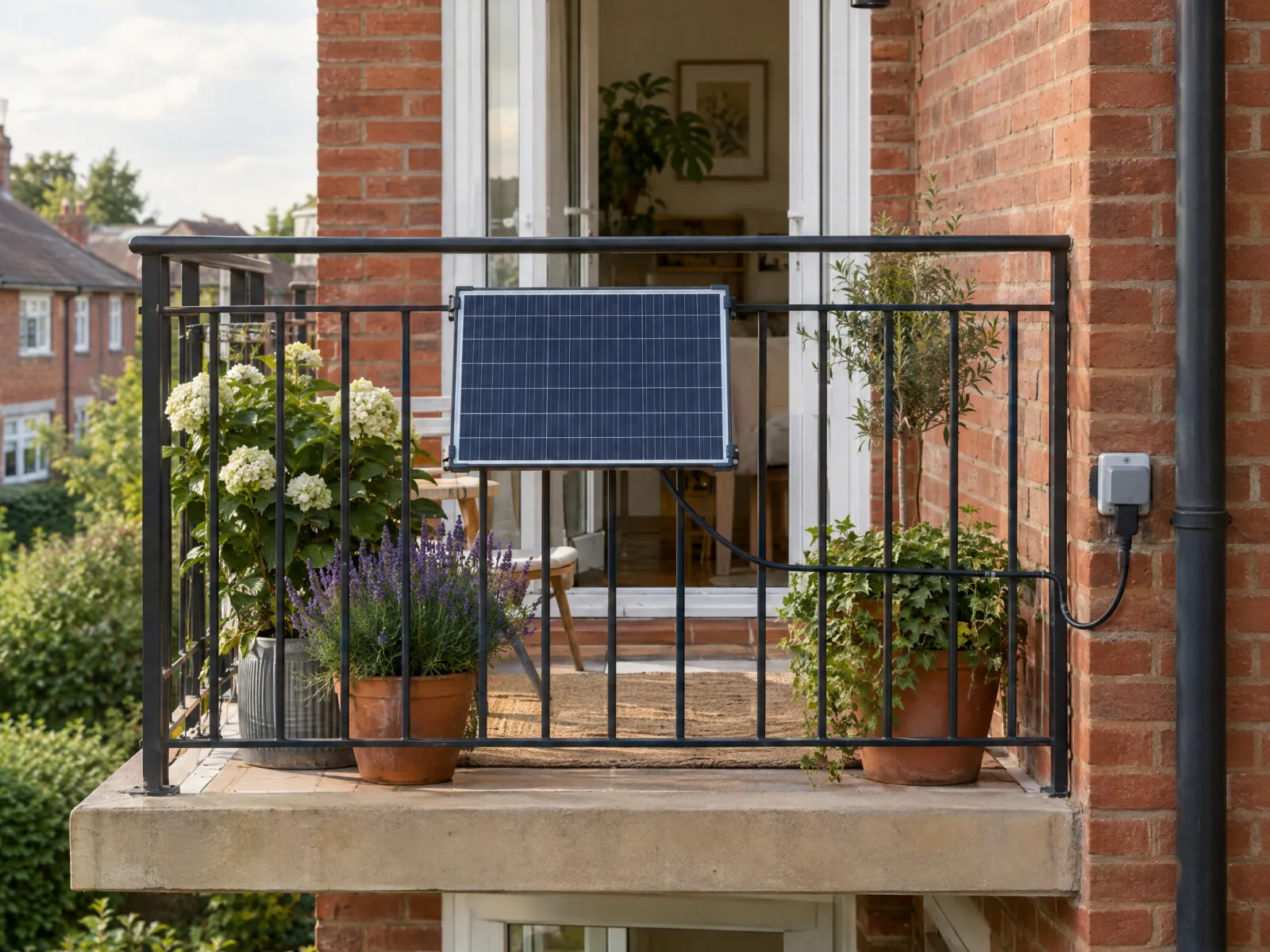
A small solar panel fixed to the railing of a balcony on a red brick block of flats, its cable plugged into a weatherproof outdoor socket, with potted hydrangeas, lavender and ivy.

Best for renters and small outdoor spaces

Plug-in solar

A small panel that plugs into an ordinary socket rather than being wired in through the roof. It needs no roof work and comes with you if you move, which suits renters, flats and anyone testing the idea first.

The official figures

Each kit is capped at 800W. The government puts the saving at up to Β£110 a year, against up to Β£480 a year for rooftop solar. Source: GOV.UK, checked 24 September 2026.

Ideal for
  • Renters and leaseholders
  • Flats and homes without a suitable roof
  • Balconies, patios and garden walls
  • Trying solar without a permanent installation
What you get
  • No roof work, scaffolding or structural survey
  • Portable, so it moves with you
  • The lowest-commitment way to generate some of your own electricity
What to weigh up
  • Generates a small fraction of what a roof-mounted system produces
  • Needs a sunny outdoor spot and a nearby outdoor socket
  • Grants, export payments and installer certification do not automatically apply, so check what you are entitled to before buying
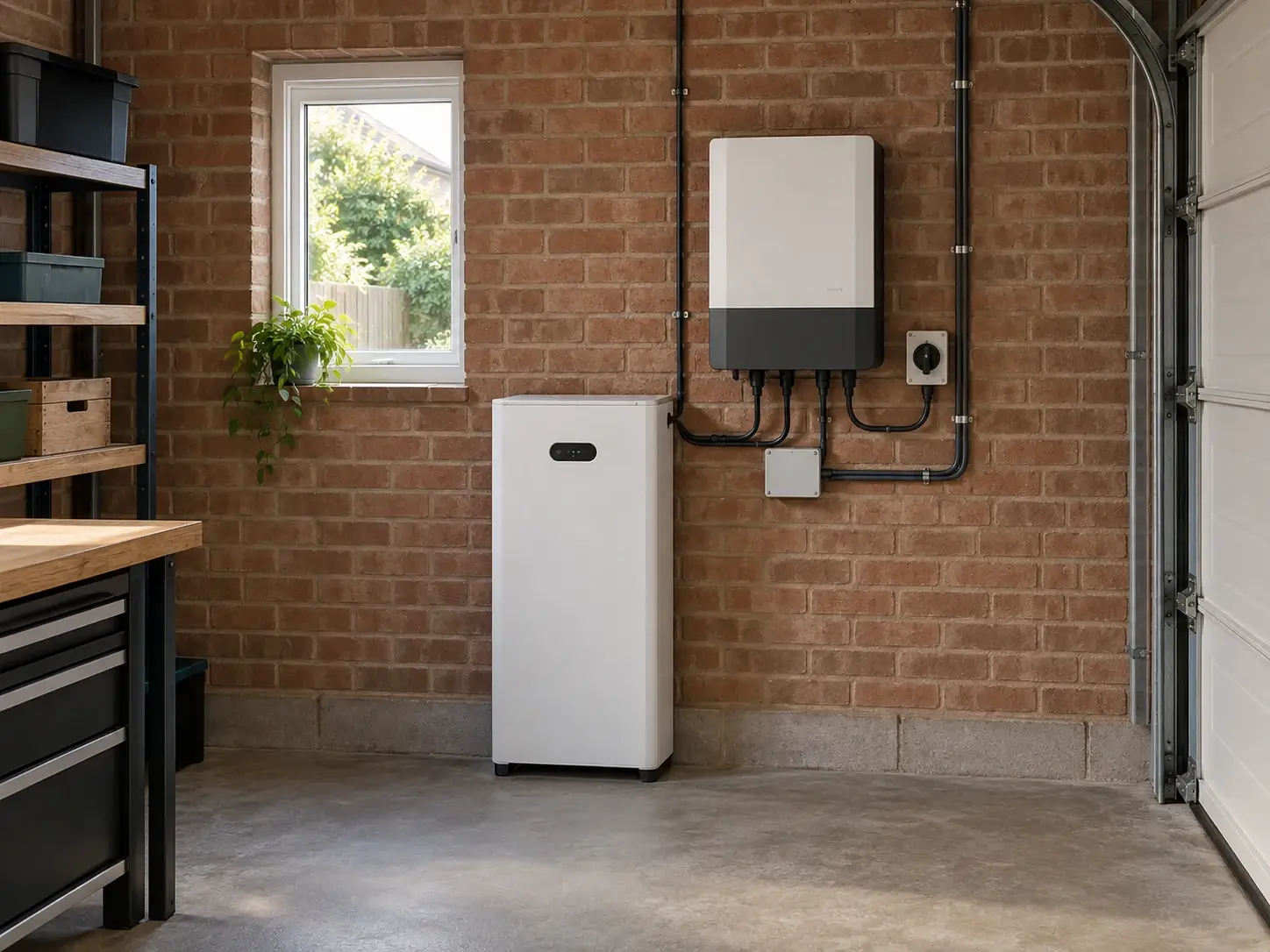
Side by side

How the panels compareat a glance

Typical installed price per panel, efficiency and lifespan for the three roof-mounted types.

Type
Cost per panel
Efficiency
Lifespan
Monocrystalline solar panels
Β£400 to Β£500
18 to 24%
30 to 40 years
Polycrystalline solar panels
Β£350 to Β£450
13 to 16%
25 to 30 years
Thin-film solar panels
Β£250 to Β£350
7 to 13%
10 to 20 years

What solar panels cost

around Β£7,600

The Energy Saving Trust puts a typical 4.5kWp home system at around Β£7,600. Smaller systems start at about Β£5,000, and larger ones can cost Β£13,000 or more.

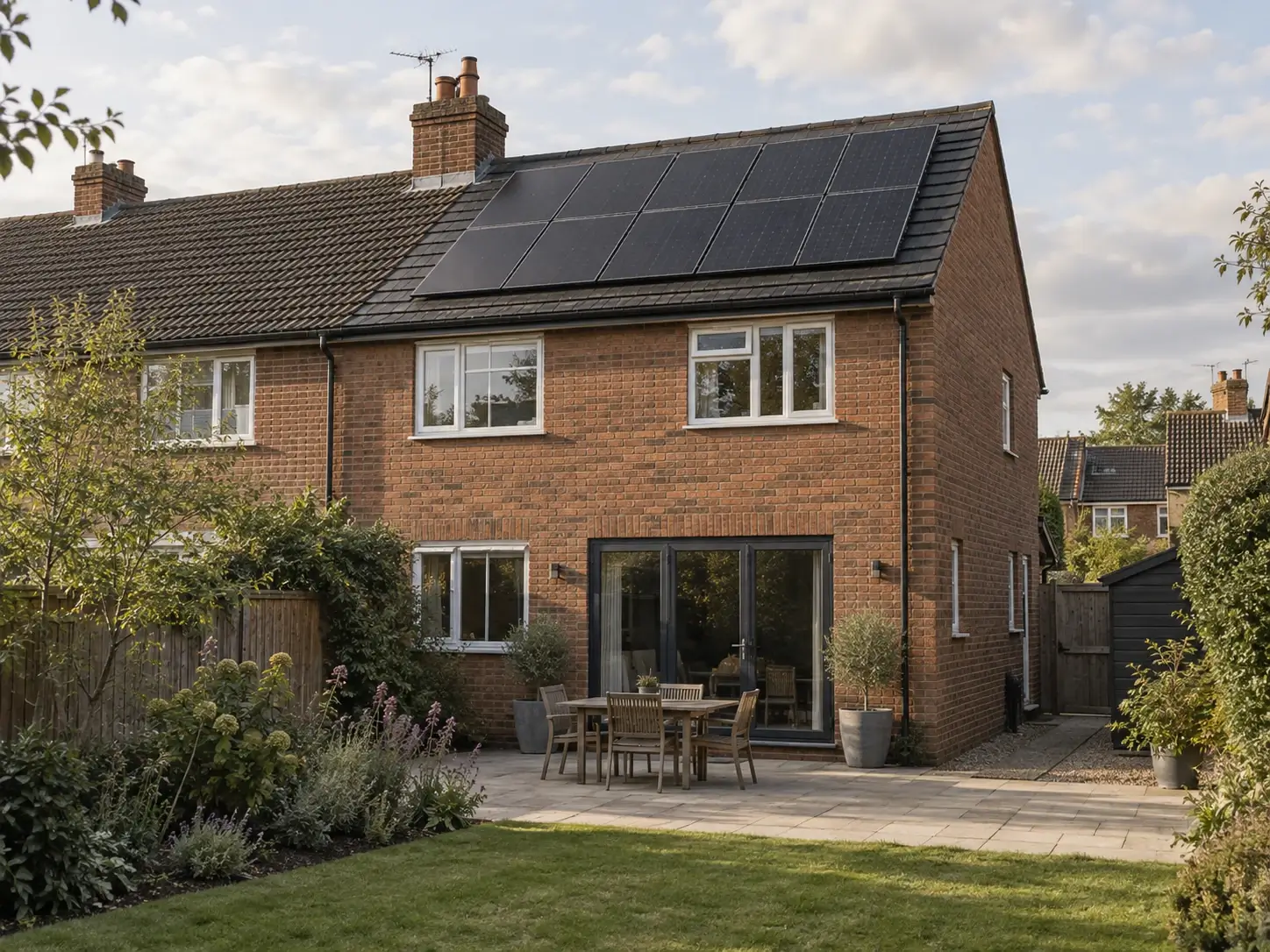
Brick semi-detached house with black solar panels on the rear roof
What you get

What solar panels can dofor your home

Long-term savings

55 to 75%

Cut energy bills by 55 to 75% per year.

Increased property value

16%

Uplift the value of your home by 16% and make it more attractive to buyers.

Reduced carbon footprint

0.7 tonnes

Cut CO2 emissions by approximately 0.7 tonnes per year with clean, renewable energy.

Energy independence

Future-proof

Reduce reliance on the grid and protect yourself from future energy price increases.

Improved EPC rating

5 to 15 points

Boost your EPC score by 5 to 15 points to achieve optimal ratings of A, B, or C.

Earn money from excess

SEG

Under the Smart Export Guarantee (SEG), you can earn money for every unit of unused energy that you feed back into the grid.

Installer checks

Who fits your panelsand what we check

Before we work with an installer, we check they hold the certifications solar work needs.

What it checks

MCS certified

The Microgeneration Certification Scheme (MCS) sets quality assurance benchmarks for solar PV installers in the UK. Our installers use MCS-approved solar systems and follow strict standards for technical, design, performance, and health and safety.

Visit the scheme's website
What it checks

NAPIT membership

A National Association of Professional Inspectors and Testers (NAPIT) membership indicates that renewable energy installers follow strict high standards of electrical safety and compliance.

Visit the scheme's website
What it checks

TrustMark accredited

TrustMark-accredited installers have been verified for compliance and trading standards ensuring the utmost financial protection for buyers. Be sure that the installers you talk to follow ethical, compliant business practices.

Visit the scheme's website
What it checks

HIES membership

Home Insulation & Energy Systems Quality Assured Contractors Scheme (HIES) provides customer protection for homeowners seeking home energy or renewable energy installations. It ensures that installers offer insurance-backed guarantees, deposit protection, and dispute resolution.

Visit the scheme's website
What it checks

EPVS checked

The Energy Performance Validation Scheme validates that any estimates or figures given by solar installers are correct, so you’ll never be over-promised and under-delivered.

Visit the scheme's website
When you are ready

Get a free quote from one vetted solar installer

No never-ending phone calls.
No pushy sales people.
No pressure to decide right now.
Your details go to one installer, not a list.
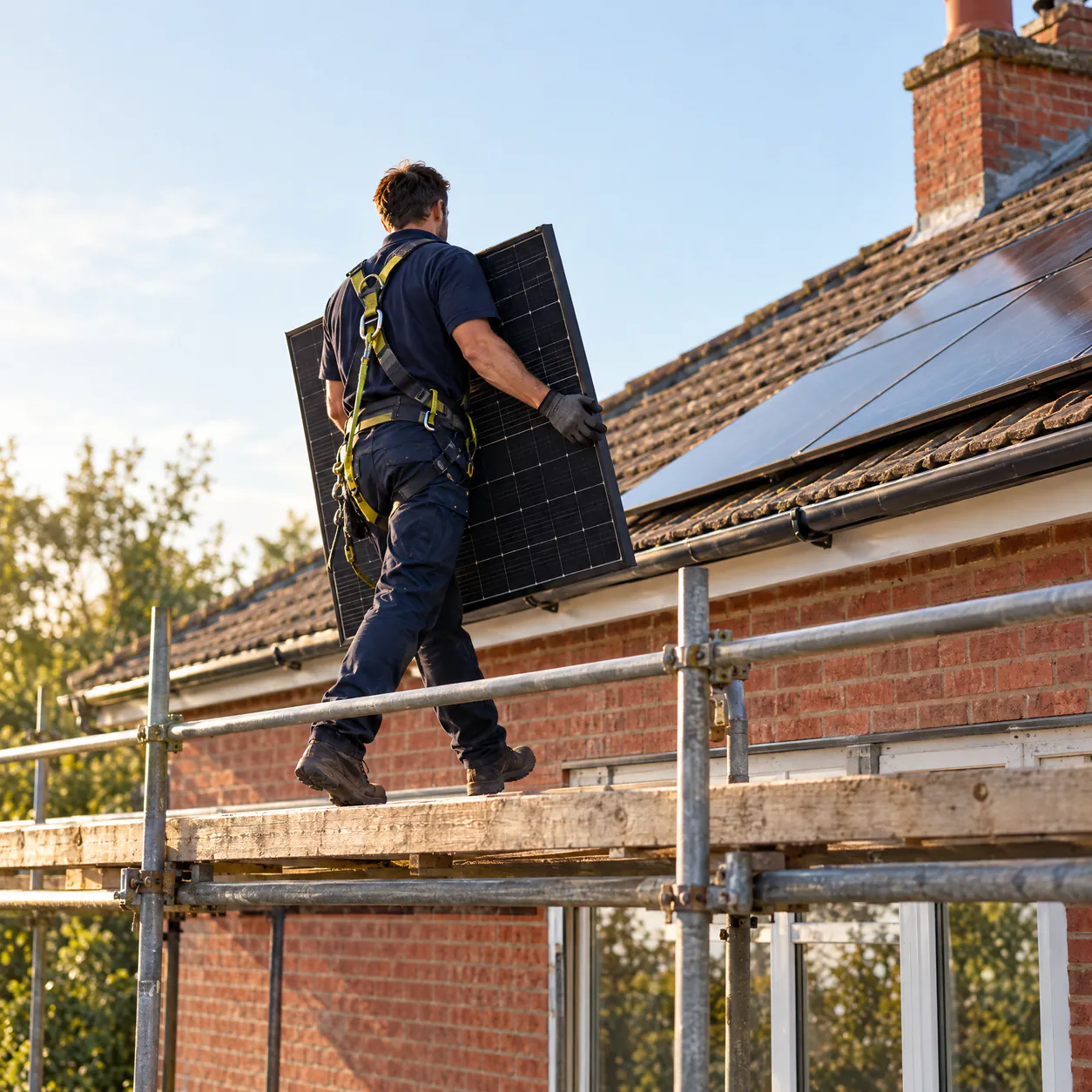
Installer carrying a solar panel along scaffolding at the edge of a roof

Ready to compare quotes for your home?

Compare free, no-obligation quotes from vetted, certified local installers.