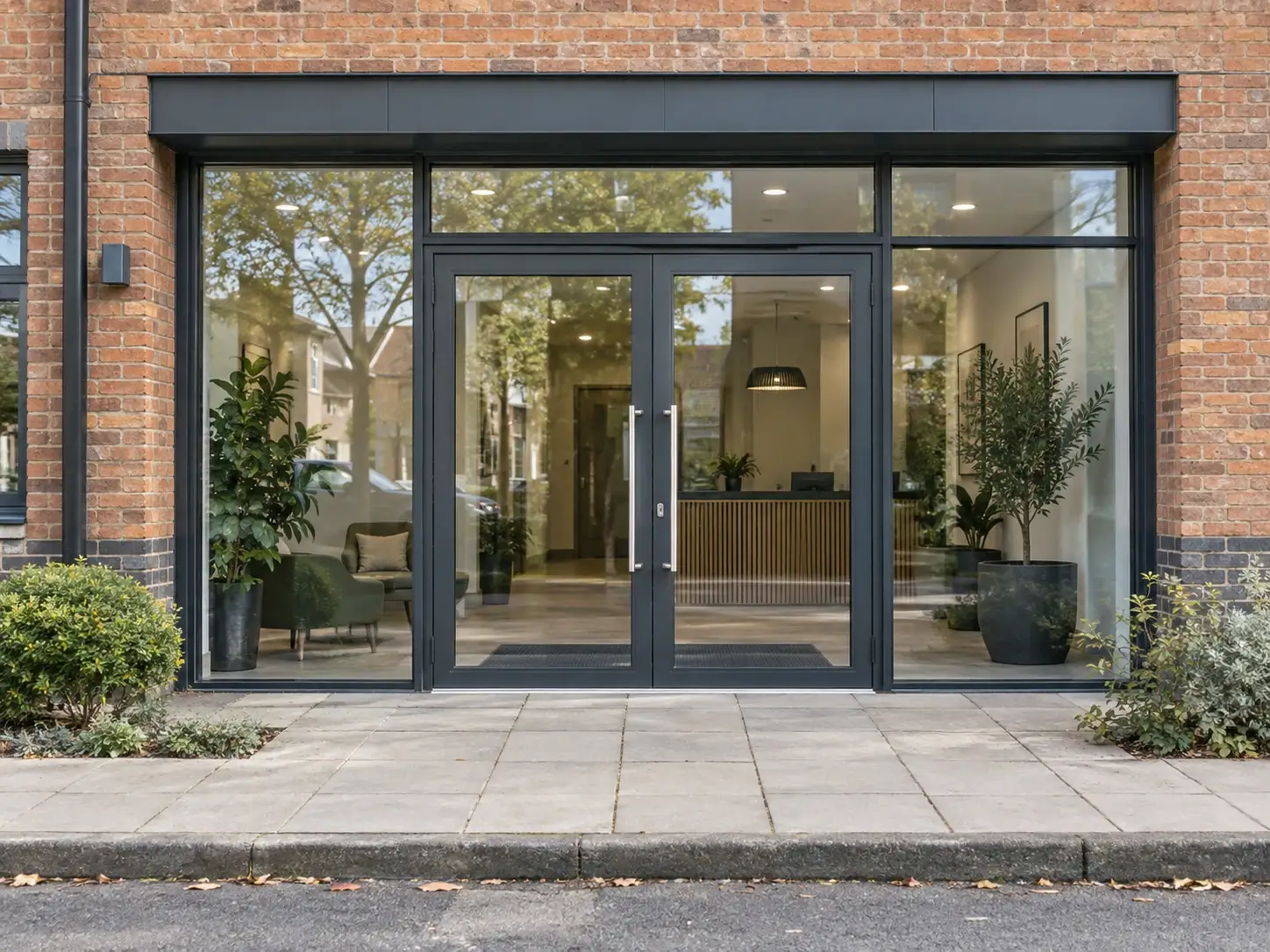
- Commercial windows and doors are a different product category from domestic ones: enterprise-grade materials, stricter fire, accessibility and security rules, and installers who understand them.
- Poorly performing windows and doors can account for as much as 26% of a commercial building's heat loss.
- There is no dedicated grant for commercial glazing, but local authority schemes and business rates relief on property improvements are both worth checking.
Poorly performing windows and doors can be responsible for as much as 26% of a commercial building's heat loss, according to Westmorland and Furness Council. With energy still a major line item for most UK businesses, that heat loss turns into money fairly quickly.
The case for upgrading goes well beyond the energy bill, though. Better windows and doors improve security, reduce ongoing maintenance and repair costs, lift kerb appeal, and help you keep pace with tightening energy efficiency rules for commercial property.
This guide walks through the best options for different business types, along with realistic costs, the return you might expect, and how the installation process actually works, so you can plan a project that supports your bottom line as well as your building.
Residential versus commercial windows and doors
Windows and doors for businesses are not simply bigger, tougher versions of the domestic equivalents. They are a different category of product.
Commercial buildings see far more daily wear: more footfall, longer opening hours, heavier use. Products have to be built for durability and performance at scale, not kerb appeal alone.
They also have to meet a stricter rulebook. Depending on your premises, that can include fire safety requirements, accessibility standards such as door widths and level thresholds, and energy performance targets that go beyond what is expected of a family home. Many commercial doors also need to meet higher security specifications, often set by insurers.
That is why commercial projects usually call for specialist products (aluminium curtain walling rather than a casement window, or fire-rated doors rather than a standard internal one) and installers who understand commercial specifications, certifications and compliance rather than residential fitting.
Why window and door upgrades matter for businesses
A tired set of windows and doors does not just look dated. It costs your business in several quiet ways.
Rising energy bills
Old, poorly insulated windows and doors let heat escape in winter and back in during summer, which forces your heating and cooling systems to work harder. According to the British Chambers of Commerce, 27% of businesses struggle to pay their energy bills, rising to 35% of manufacturers and 34% of B2C services.
Products with better thermal performance meaningfully cut how much energy a building wastes, and they work best alongside insulation, solar panels and battery storage rather than on their own.
Enhanced security
The Government's most recent Commercial Victimisation Survey reported that 30% of UK businesses were the victim of theft, burglary or vandalism. For 54% of those affected the financial impact was moderate, through direct losses, downtime, repair costs and higher insurance premiums. For 9% it was severe enough that permanent closure became a serious threat.
Modern commercial windows and doors carry toughened or laminated glazing, multi-point locking and insurance-rated hardware, all of which make forced entry considerably harder.
Brand image
Your windows and doors are part of your brand whether you planned it that way or not. A clean, modern shopfront or a well-lit, glass-fronted office says something different to a customer than a tired, discoloured frame. First impressions count, particularly in retail, hospitality and client-facing offices.
Noise and comfort
For businesses on busy roads or near industrial areas, sound insulation makes a real difference to concentration and to customer experience alike. Better-performing glazing and well-sealed doors keep external noise where it belongs, which is especially valuable for offices, healthcare settings and hotels.
Types of commercial windows and doors
Commercial windows and doors come in a wide range of specifications. Our complete guide to windows and doors covers the products in general. Here are the main commercial types and what each one suits.
Aluminium windows
Aluminium is the go-to choice for a lot of commercial projects, and for good reason. Slim frames mean more glass and more natural light, the material is naturally strong and low-maintenance, and it can be powder-coated in almost any colour to match your branding. A popular pick for offices, retail units and reception areas where appearance matters as much as performance.
uPVC commercial windows
uPVC is not just for houses. Commercial-grade uPVC windows offer solid thermal and acoustic performance at a lower cost than aluminium or steel, which makes them a practical choice for standard office units, schools and smaller retail premises where budget matters and the frame does not need to carry a design statement.
Steel windows
High-grade steel combines strength with a slender profile. Steel typically sits at the higher end of the price range, but it is very low maintenance and highly durable under heavy use and harsh weather, with no real worry about rust or corrosion across a long lifespan. Its distinctive slimline industrial look has become popular in warehouse conversions, cafés, and heritage or listed building refurbishments.
Curtain walling and structural glazing
These are for businesses that want to make a statement. Curtain walling delivers large expanses of glass with a structural frame behind it, maximising natural light and creating a strong visual impression. It is a bigger investment and usually needs a specialist installer, but it suits corporate offices, luxury retail fronts, and any building meant to stand out.
High-speed industrial doors
High-speed doors open and close rapidly to keep workflow moving while minimising heat loss, and they let through less dust, noise and pests than a door propped open all day. Built primarily for warehouses, logistics hubs and manufacturing sites, though any business with heavy traffic may find them useful.
Automatic entrance doors
Sliding or swing automatic doors are a staple for businesses that need smooth, accessible customer flow, such as retail, healthcare and hospitality. They remove the need for a customer to fumble with a handle while carrying shopping, or pushing a wheelchair or pushchair.
Fire doors
Required in many commercial buildings under fire safety regulations, fire doors are rated by how long they hold back fire and smoke, commonly FD30 or FD60. Getting the rating, the seals and the certification right is a compliance essential rather than a specification choice.
Roller shutter doors
A practical choice for retail units, warehouses and industrial premises needing robust overnight security. Manual or electric, roller shutters act as both a visual and a physical deterrent against break-ins.
Aluminium entrance doors and shopfronts
Durable, low-maintenance and available in a wide range of finishes, aluminium entrance doors are the workhorse of commercial frontages. From independent shops to office receptions, they strike a good balance between looks, security and price.
Industries that benefit most
There is not really an industry that fails to benefit somewhere along the line, but the pay-off looks different depending on what you do.
- Hotels and hospitality. Soundproofing and thermal comfort feed directly into guest reviews. Nobody leaves five stars after a cold night listening to traffic through a single-glazed window.
- Warehousing and logistics. High-speed doors and better insulation help control temperature, protect stock and keep goods moving.
- Retail. Secure, attractive and accessible shopfronts protect stock overnight, pull footfall in during the day, and let every customer in regardless of mobility.
- Offices and co-working spaces. Comfortable temperatures and lower noise support staff focus, wellbeing and productivity.
- Healthcare and care settings. Hygiene-friendly finishes, secure access and stable internal temperatures matter for patients, residents and staff, and accessibility is a necessity rather than a nice-to-have.
- Education. Safety, noise control and energy efficiency all play into tight public-sector budgets and duty-of-care requirements.
- Manufacturing and industrial. Durable, high-performance doors keep operations running and reduce energy waste in large, hard-to-heat spaces.
How much do commercial windows and doors cost?
Costs vary enormously with material, size, glazing specification and the complexity of your building, so treat the figures below as a starting point for budgeting rather than a quote.
The only way to get an accurate figure is a proper site survey and a tailored quote, which is exactly what a verified local installer can give you.
Grants for commercial window and door upgrades
There is no single, dedicated grant for commercial windows or doors, but a couple of routes are worth checking before you finalise a budget.
- Local authority and Local Enterprise Partnership grants. Some regions offer discretionary energy efficiency or premises improvement grants for smaller businesses, including independent retailers. Availability and criteria vary a great deal by area, so it is worth a search or a call to your local authority.
- Business rates relief on property improvements. In England, relief schemes exist to reduce the business rates impact of qualifying property improvements, which can soften the cost of a significant upgrade. Eligibility is strict and windows and doors only sometimes fall inside it. The detail is on GOV.UK.
Funding schemes change fairly often, so check the government's business support finder and speak to an accountant or your installer before you build any scheme's savings into a budget.
Payback and return on investment
There is no single answer on what upgrading your windows and doors will save. Styles, costs and business needs vary widely, and payback depends heavily on your building's current condition, how energy-intensive your operations are, and local energy prices.
That said, a mid-range upgrade will pay for itself over a number of years through reduced heating and cooling costs, and buildings starting from very poor thermal performance tend to see the fastest payback.
There is also a regulatory angle if you own or lease out commercial property. Minimum Energy Efficiency Standards currently require most privately rented non-domestic buildings in England and Wales to meet at least an EPC rating of E, with further tightening proposed. Upgrading windows and doors can help push a rating up, which matters for lease compliance and for property value.
Then there is the less tangible return: fewer maintenance headaches, a lower chance of a costly break-in, a more comfortable and productive team, and a building that looks the part. None of that lands neatly in a payback calculation, but all of it matters for business continuity.
How to choose the right products for your business
There is no single best product, only the best fit for your building and your business. Work through these before you start comparing suppliers.
- Business needs and use case. High-footfall retail unit, quiet office, or secure warehouse? Your priorities around security, light, insulation and accessibility should shape the product rather than the other way round.
- Energy efficiency goals. Are you trying to hit a specific EPC rating, cut bills, or work towards a wider sustainability target?
- Property type and age. Listed buildings, older commercial stock and modern units each come with different constraints and opportunities.
- Budget and timeline. Be realistic about what you can spend now against what might need phasing in over time.
- Security and compliance requirements. Fire ratings, accessibility standards and insurer requirements can all narrow the options before aesthetics come into it.
- Maintenance and lifecycle. Some materials need more looking after than others. Factor in who will actually be doing that upkeep, and what it will cost.
What the installation process looks like
Once you know roughly what you are after, the process itself is fairly straightforward.
- Evaluate suitability. Take stock of your current windows and doors and where they fall short, whether that is draughts, security gaps, dated appearance or high maintenance.
- Set a realistic budget, accounting for the fact that commercial products and installation typically cost more than domestic equivalents.
- Research and compare installers. Check for relevant certifications, with FENSA and Certass the essential ones, and look for a track record with businesses in your sector specifically.
- Get a free survey. A proper site visit is the only way to get accurate measurements and a realistic quote.
- Get your quote, free and with no obligation, from a verified local installer.
- Installation. A good commercial installer will plan around your operating hours to keep disruption to a minimum.
Step three is the one that eats time you probably do not have. That is where we come in: tell us what you need and we will connect you with a verified, qualified installer in your area who is set up for commercial projects.
Find the right commercial windows and doors
Whether you are dealing with a draughty office, an ageing shopfront or a warehouse shedding heat, the first step is the same: get a proper assessment from someone who knows what they are doing.
Ready to upgrade?
Tell us about your business and your building, and we will match you with a verified local installer set up for commercial work, for a free, no-obligation survey and quote.
Free and no obligation. We only share your details with the installers we match you with.
If you are looking to scale energy efficiency further, commercial solar panels and commercial insulation both go further on savings and sustainability.
Sources: Westmorland and Furness Council on commercial heat loss, the British Chambers of Commerce on business energy costs, and the Home Office Commercial Victimisation Survey on business crime.
Ready to upgrade?
Tell us about your business and your building, and we will match you with a verified local installer set up for commercial work, for a free, no-obligation survey and quote.
Free and no obligation. We only share your details with the installers we match you with.
What the accreditations actually mean
Certification is the clearest signal you have that an installer is competent, and that you are protected if something goes wrong. Here is what each one covers.





Keep reading
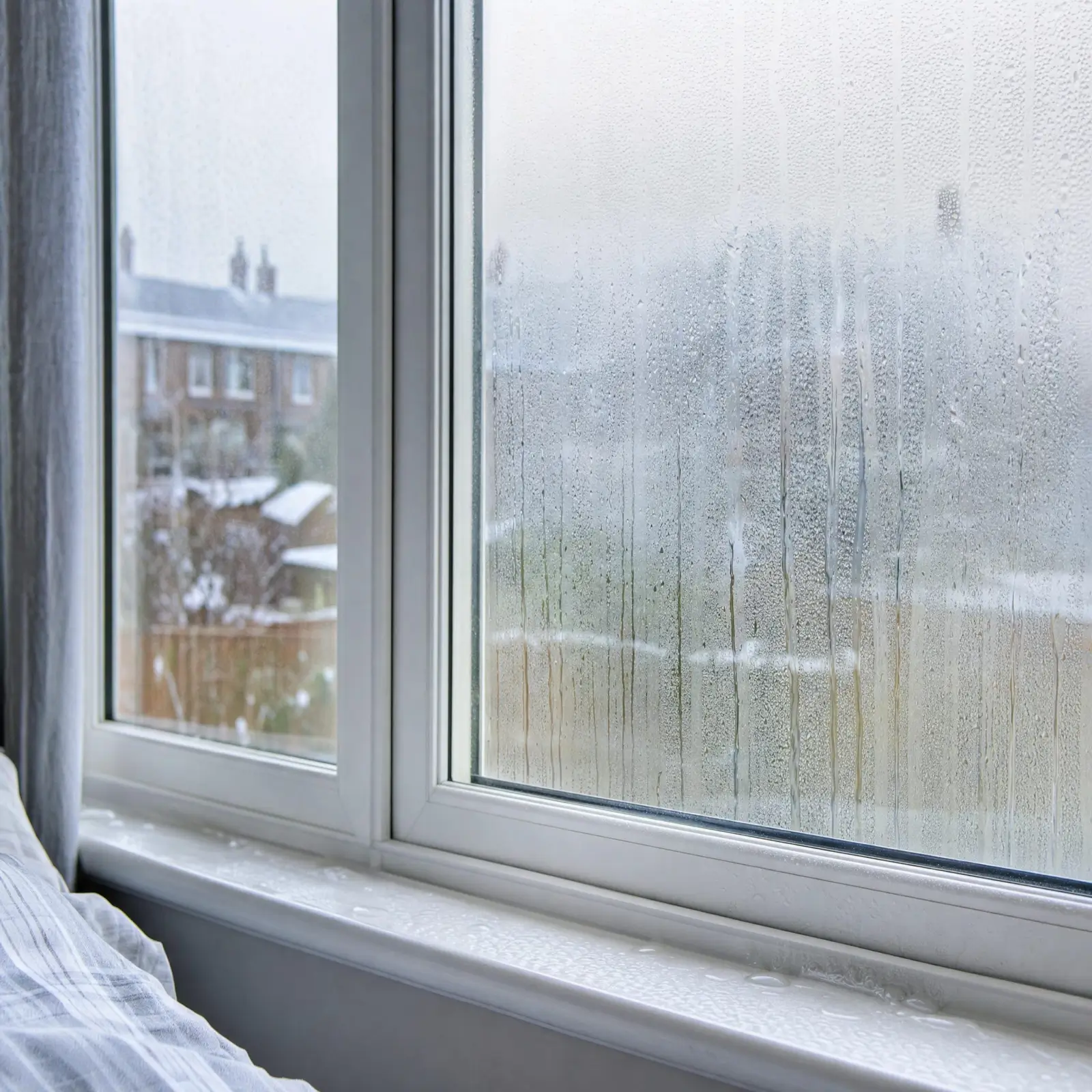
Condensation on windows: causes and how to stop it
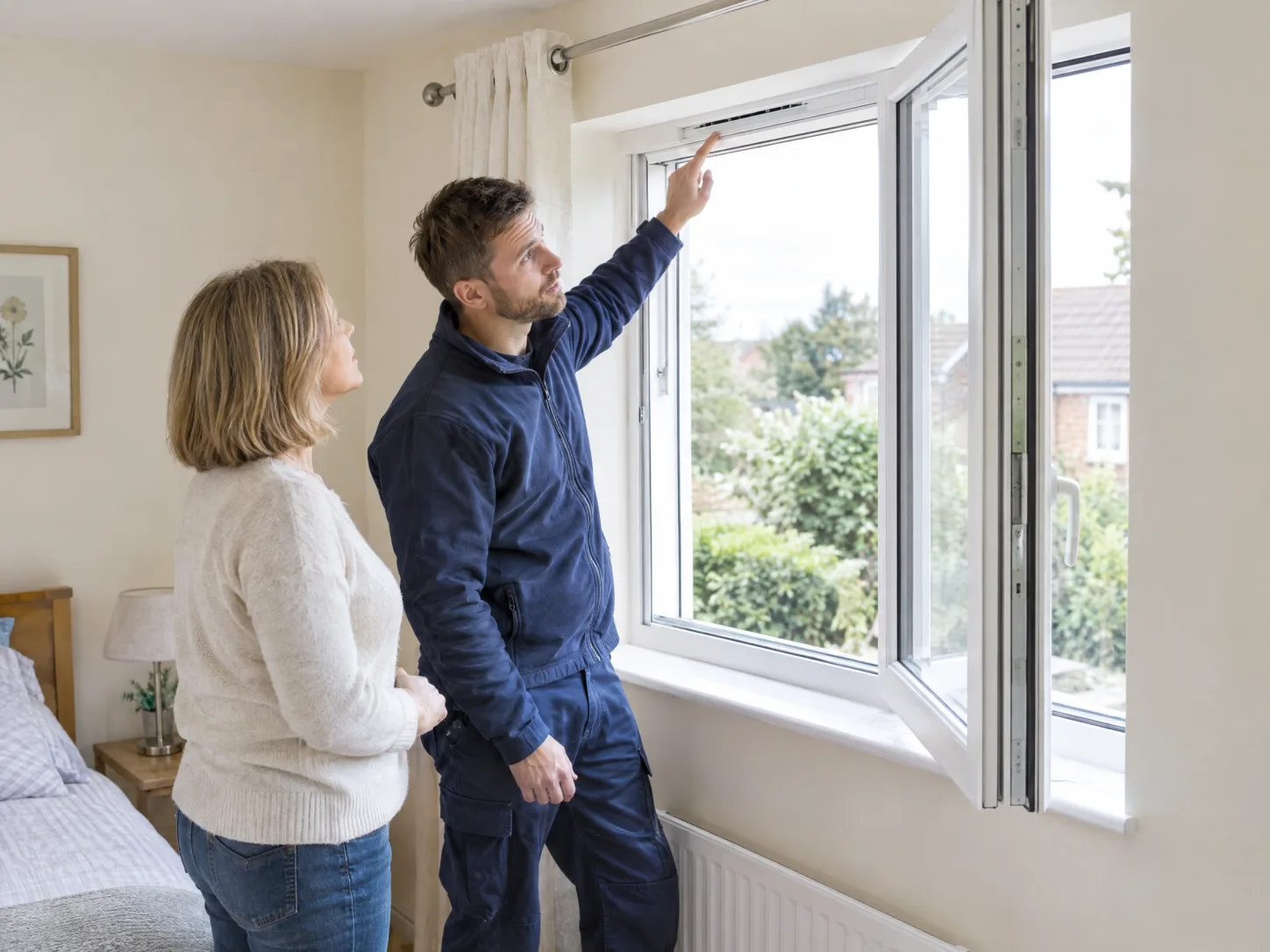
Replacing windows checklist: survey to FENSA certificate
Indicative commercial window and door costs
Supplied and fitted ranges, to give a sense of scale before you arrange a survey.