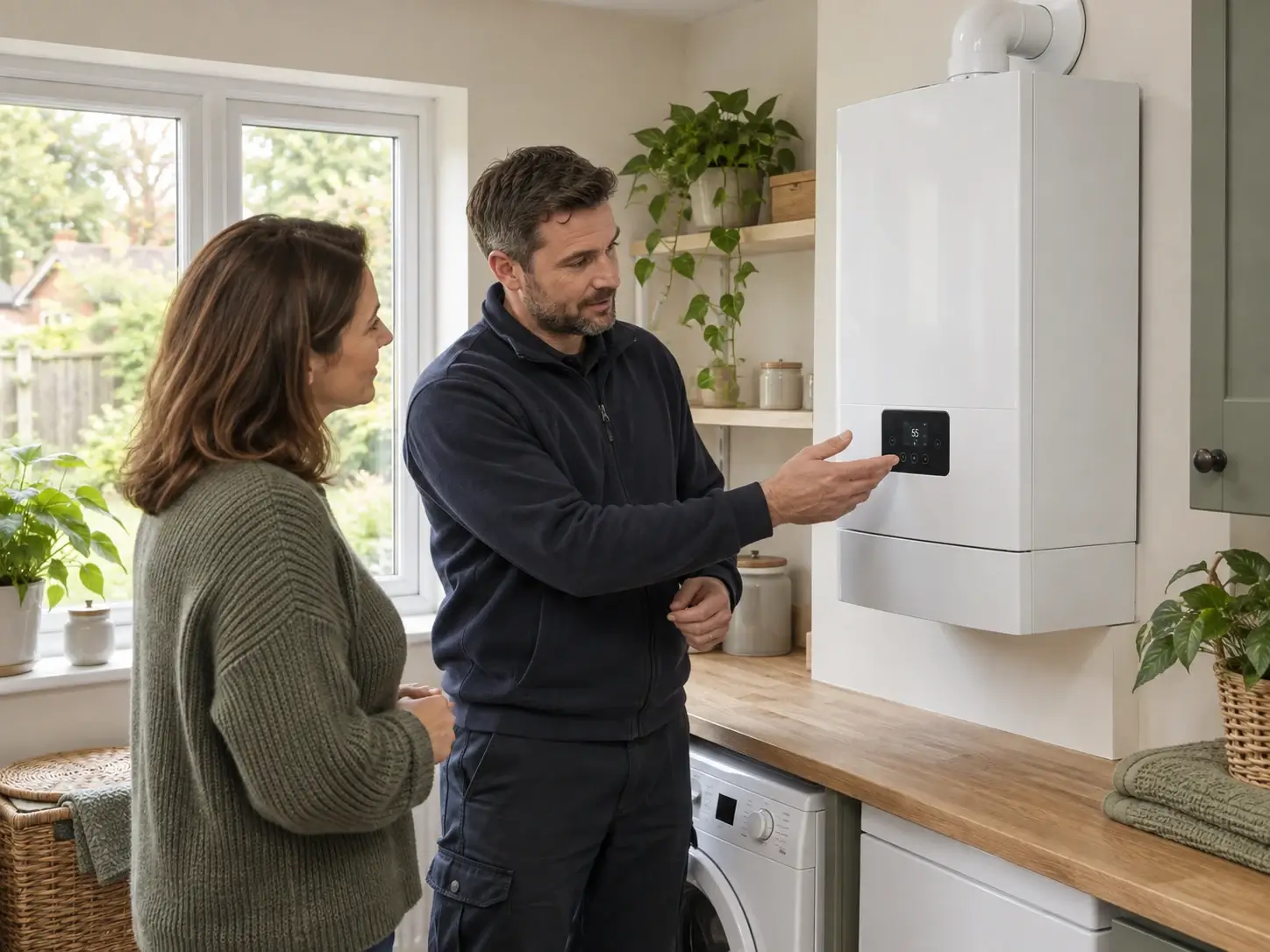
- There are four main boiler types: conventional, combi, system and biomass, suiting different property sizes and hot water demands.
- Boilers also come in different fuel types, sizes and efficiencies.
- Upgrading an old boiler could cut your bills by around £500 a year through better efficiency.
Boilers are not exactly glamorous, but they are probably the hardest-working appliance in your home. They keep you warm, provide hot water for showers, and tirelessly power your daily routine. That is, until they stop working.
Between 1.5 and 1.7 million gas boilers are replaced each year. With the law requiring all new boilers to be 90% efficient, homeowners are reaping the benefits of warmer homes, lower annual energy bills and reduced carbon emissions.
But if you want to upgrade or replace your current boiler, where do you start? In this guide we compare the boiler types available in the UK, along with average costs, potential savings, and why an energy-efficient boiler is always the right choice.
Boiler fuel types
Before we talk boiler types, you need to know what your new boiler will run on: what fuel it burns to heat your home.
Gas boilers
Around 86% of UK homes are heated by gas, making it the default choice. Gas boilers burn natural gas to heat water, which is sent to your radiators, taps or storage tank.
The pros: compared with electricity, gas is relatively cheap per kWh. Most homes are already connected to the national gas grid, so installation is easier, faster and cheaper, and there is a wide choice of mainstream models and installers.
The con: gas is a high-emission fossil fuel, releasing carbon dioxide and nitrogen oxides. There is also a greater risk of breakdowns and carbon monoxide leaks.
Oil boilers
Oil boilers work the same way as gas, but burn heating oil instead. They are used almost entirely in rural properties with no mains gas connection. Only 3% of UK homes have one.
The pros: the efficiency of oil is roughly the same as gas, so it is a sound option for off-grid homes.
The cons: burning oil is damaging environmentally, and you have to actively manage deliveries in a volatile market. That risks paying high prices, or running out of fuel if you fail to plan ahead.
Electric boilers
Electric boilers do not burn anything. They use an internal element to heat water from your existing electricity supply, so there is zero combustion and no carbon monoxide risk. Only 8% of UK households have one today, though that is set to rise under net-zero policy.
The pros: near 100% efficiency, with no fuel wasted to combustion. They are compact, quiet and future-ready, and pair well with solar panels.
The cons: electricity costs considerably more per kWh than gas, around 26.11p against 7.33p under the current Ofgem price cap, so running costs are higher unless you are offsetting with solar. Electric boilers also have lower output, which makes heating a large home with high hot water demand difficult.
The different types of boiler
Fuel is what your boiler burns. Type is how it is built, and how it delivers hot water. There are four main types on a UK homeowner's radar: conventional, combi, system and biomass.
Conventional boilers
A conventional boiler, also called a regular or heat-only boiler, is the oldest type of water tank boiler in the UK. It has two separate tanks: a hot water cylinder that stores heated water, and a cold water tank that feeds it. That lets you heat multiple rooms and run showers, kitchen taps and other hot water sources at the same time.
Advantages. They heat multiple sources simultaneously without affecting water pressure, which suits large, busy households. They are compatible with solar, because solar-heated water can be stored in the cylinder. And they do not rely on mains pressure, so you get consistent hot water however low your incoming pressure is.
Disadvantages. They are bulky, needing space for the boiler and both tanks, usually in a loft. They do not heat water constantly, so you wait for the cylinder to refill and reheat. And storing hot water makes them less efficient, as well as expensive to install if you do not already have the tanks.
Best for you if: you have a large home, multiple bathrooms, low mains water pressure, or you want to upgrade the central heating in an older property.
Combi boilers
The UK's most popular boiler, valued for being compact and delivering instant hot water. A combination boiler connects directly to your mains cold water supply, so it has no separate tanks and heats water on demand. Turn on a tap and cold water travels from the mains through a heat exchanger, arriving hot.
Advantages. Hot water is instant, with no tank to heat up. They are small enough to be wall-hung and tucked into a cupboard. They cut bills, because water is only heated when you use it. And with one unit to install and plenty of engineers familiar with them, installation and servicing are straightforward.
Disadvantages. They can reduce water pressure if your mains flow rate is low, particularly with several outlets running at once. They are not compatible with solar thermal, because there is no cylinder. And with no stored reserve, a breakdown means cold showers until it is fixed, though same-day repairs are usually available.
Best for you if: you are a small household, have one bathroom, have good incoming water pressure, and fewer than 10 radiators.
System boilers
A system boiler takes the best of both. It connects directly to the mains like a combi, but also has a hot water cylinder that stores hot water for later, like a conventional boiler.
Advantages. They save some space, because there is no cold water tank. They hold pressure well, drawing from the mains, so you avoid sudden drops when someone uses another tap. And they work with solar thermal, storing solar-heated water in the cylinder.
Disadvantages. Hot water is limited by cylinder size and takes time to reheat. The cylinder is too large for a kitchen cupboard, so you need an airing cupboard or similar. And storing hot water costs some efficiency if the cylinder is poorly insulated.
Best for you if: you are a medium-to-large household, have two to three bathrooms, and good water pressure.
Biomass boilers
Biomass boilers work like traditional boilers but burn sustainable fuels rather than fossil fuels. Wood pellets, chips or logs are fed into a combustion chamber, ignited, and the heat passed through an exchanger into your central heating. Feeding can be automatic or by hand, and they have thermal storage tanks.
Advantages. They are a renewable source, generating carbon-neutral energy when the fuel is sustainably produced, and can lower emissions by as much as 11 tonnes a year. Efficiency runs 70 to 91%. And they can qualify for government funding: the Boiler Upgrade Scheme can cover the cost of a biomass upgrade, subject to eligibility.
Disadvantages. They are high maintenance, producing ash and soot you must clear regularly to prevent clogging. They need significant storage, at least 10 to 15 square feet for the smallest pellet models, plus space for fuel. And they depend on a steady local supply of biomass fuel.
Best for you if: you live off the grid, have a large rural home, and space for a fuel store.
What is a condensing boiler?
You will see this term everywhere, so let us clear it up. A condensing boiler is not a separate type. It is any A-rated boiler that uses a heat exchanger to capture and reuse energy that would otherwise escape through the flue, which is how it reaches over 90% efficiency.
By law, every new boiler must be a condensing boiler, so any replacement you buy will meet the legal efficiency standard.
What size boiler do I need?
Boiler size is measured in kilowatts, essentially the horsepower of your boiler. Broadly, the bigger your home, the more kW you need to meet its hot water demand.
Two things move you away from the table. How many people live there: a family of five in a two-bed flat can have higher hot water demand than one person in a five-bed house. Fewer rooms to heat, but far more showers. How well insulated the home is: a draughty house needs a more powerful boiler than a well-insulated one, because insulation means the boiler works less hard and for less time.
Do not buy a bigger boiler than you need just in case. An oversized boiler produces more hot water than you can use, wasting energy and raising bills. One that is too small will not keep up. Getting the output right matters.
Why upgrade to an energy-efficient boiler?
Your old boiler is leaking heat and money. A pre-2005 non-condensing boiler may run at 60 to 70% efficiency, which is roughly 30 to 40p in every pound going up the flue instead of into your radiators. A modern A-rated condensing boiler runs above 90%.
You are missing out on real savings. The average gas bill for a medium-sized home with two or three people is £948.95 a year. The Energy Saving Trust estimates a household that size could save around £350 a year by switching from a G-rated non-condensing boiler to an A-rated condensing one with modern heating controls, and the bigger the home, the bigger the saving.
Reliability is a risk to your wallet. Boilers typically last 10 to 15 years before breakdowns become frequent, and many households are running well past that. Research by Fair Fix estimates over 107,000 boiler breakdowns a year, costing UK households £32.1 million in total, at an average of £300 per repair and more for emergency callouts.
New boilers future-proof your home. A household gas boiler emits roughly 2.2 tonnes of CO2 a year, which Nesta compares to seven London to New York flights. Upgrading to A-rated could cut that by an estimated tonne a year, more if you pair it with solar. Many modern boilers are also hydrogen-ready, so they can be converted when hydrogen reaches the gas network.
Costs and grants
How much does a new boiler cost?
The average cost of replacing a boiler in the UK is about £3,500, a figure from the Energy Saving Trust for replacing a G-rated gas boiler with an A-rated one fitted with thermostatic radiator valves. What you actually pay depends on the type, the size and the complexity of the job, which is why a single headline price is hard to give.
Can I get a grant for a new boiler?
Only if you are switching from fossil fuel heating to a low-carbon system such as an air source heat pump or a biomass boiler. The Boiler Upgrade Scheme currently offers a £5,000 government grant for homeowners in England and Wales upgrading to a biomass boiler.
How much could you save by replacing your boiler?
An average of around £350 a year for a semi-detached home replacing a G-rated boiler, and as much as £500 for a detached one. The exact figure depends on several factors, one of the biggest being your current EPC rating: the lower it is, the bigger the gap to close and the more you save.
Savings also vary with fuel type and boiler size, how much heating and hot water you use, your existing insulation, and whether you have solar panels or battery storage.
Finding the best boiler installer
A brilliant boiler fitted badly, or one that is wrong for your needs, is still a bad boiler.
Understand your own needs first. The best boiler is not the cheapest or the most premium, it is the one that suits your home. A rough idea of your property size, hot water use and heating demand will help you narrow the choice and find an installer who can recommend the right system.
Check the installer is Gas Safe registered. This is not optional, it is a legal requirement, but it is always worth verifying. Look for OFTEC for oil, HETAS for biomass and MCS for renewable heating too. We only pass on quotes from installers with the right credentials.
Get more than one quote. Replacement quotes vary, and you can be offered widely different prices for the same job. On an investment this size it is worth weighing quality and trustworthiness rather than price alone.
Upgrade your boiler today, save tomorrow
Choosing the right boiler does not have to be guesswork. Whether you are deciding between combi, system and conventional, or thinking about switching to electric or biomass, it helps to understand the suitability, costs and savings each option brings. If in doubt, get an assessment from a qualified professional.
Ready to buy a new boiler?
Get a free, no-obligation quote in minutes from a Gas Safe registered engineer near you.
Free and no obligation. We only share your details with the installers we match you with.
Ready to buy a new boiler?
Get a free, no-obligation quote in minutes from a Gas Safe registered engineer near you.
Free and no obligation. We only share your details with the installers we match you with.
What the accreditations actually mean
Certification is the clearest signal you have that an installer is competent, and that you are protected if something goes wrong. Here is what each one covers.





Keep reading
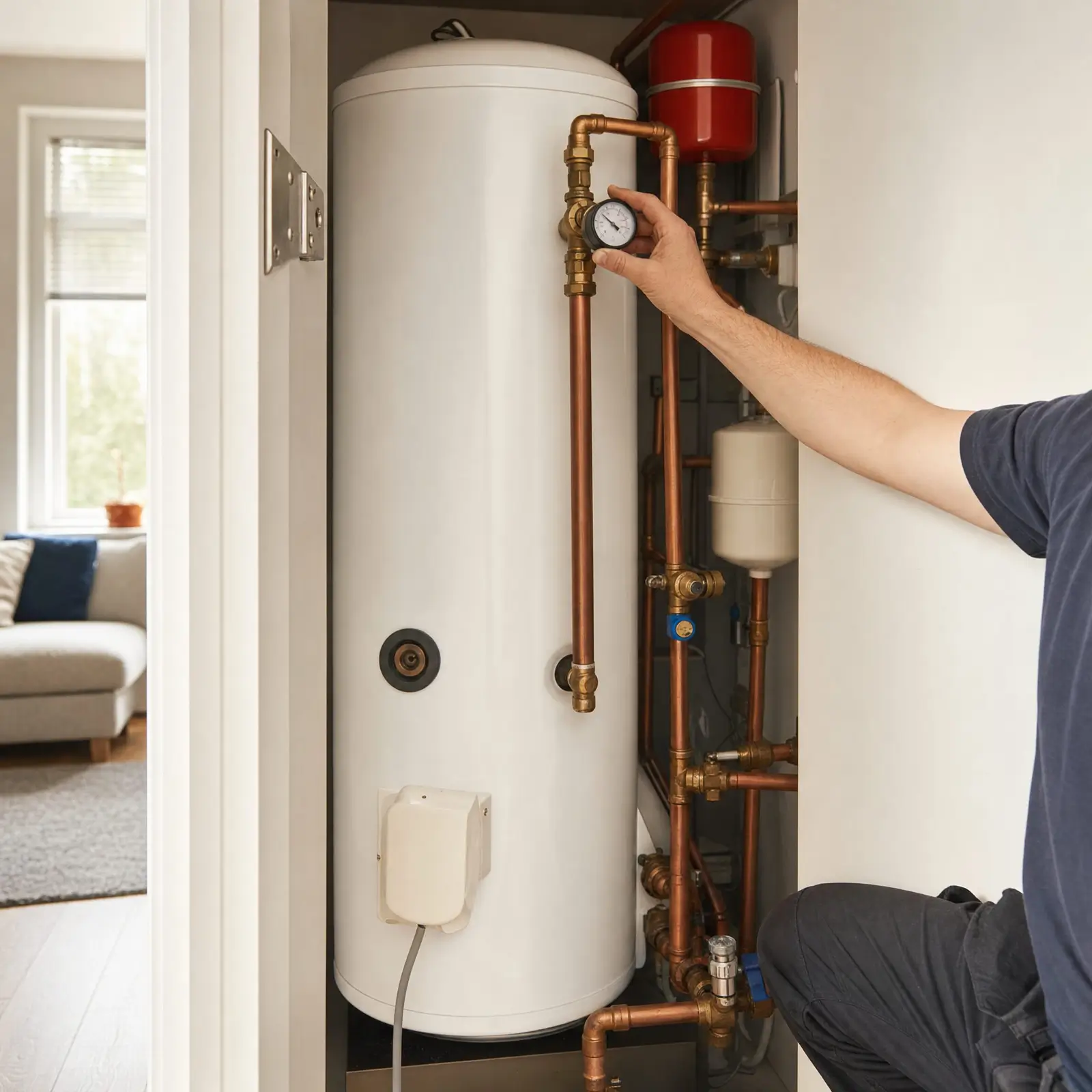
Unvented cylinder: how it works, costs and who can fit one
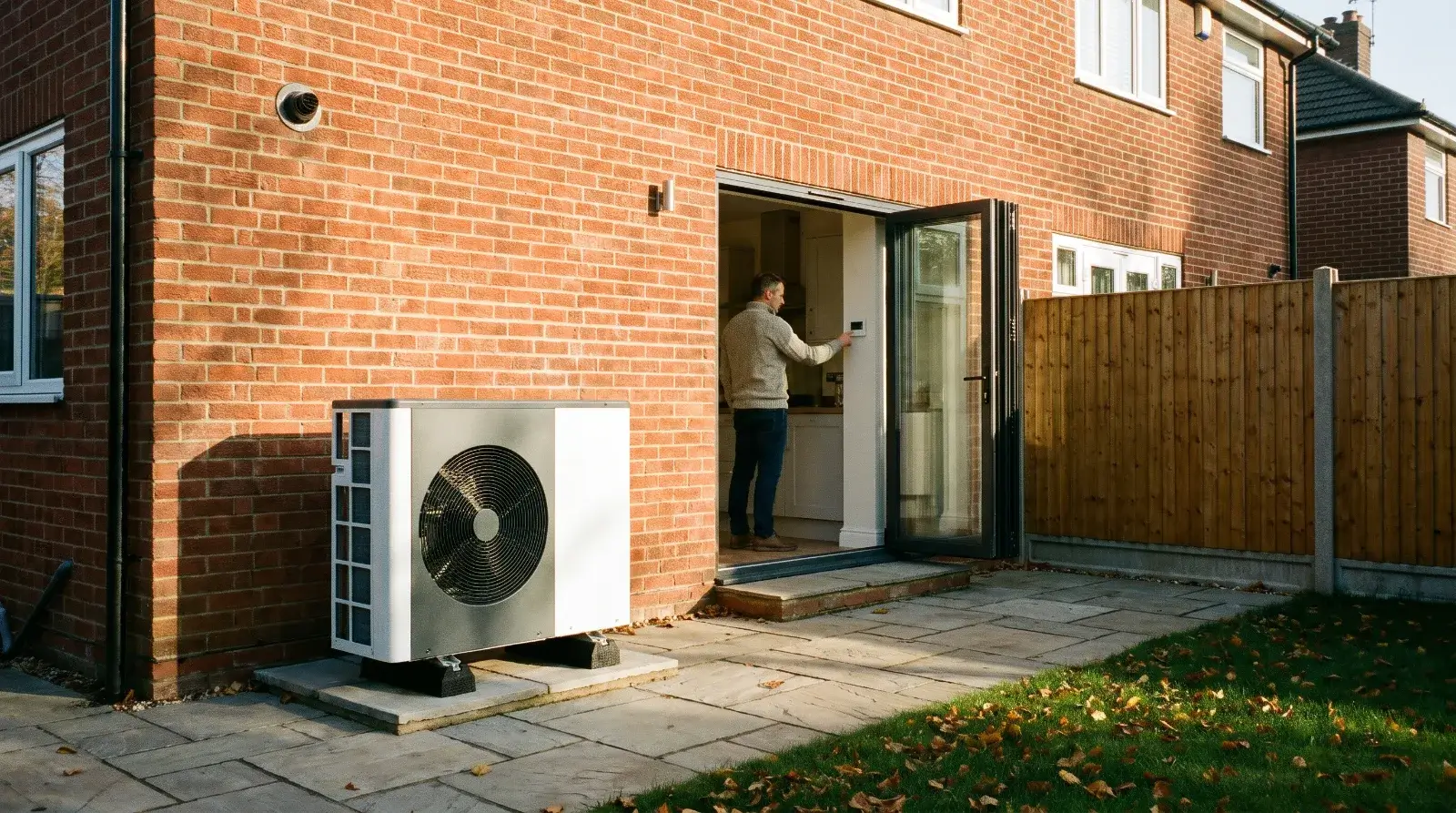
Are heat pumps worth it? Costs, savings and who they suit in 2026
The four boiler types compared
Conventional, combi, system and biomass, side by side before the detail below.
What size boiler do I need?
Boiler output is measured in kilowatts. Broadly, the more bedrooms, bathrooms and radiators you have, the more kW you need.
How much you could save by upgrading
What you save depends on how inefficient your current boiler is and how much house you are heating.
A typical semi-detached household has an average annual gas bill of £948.95. On a £950 bill, that upgrade would bring it down to somewhere between £600 and £760.