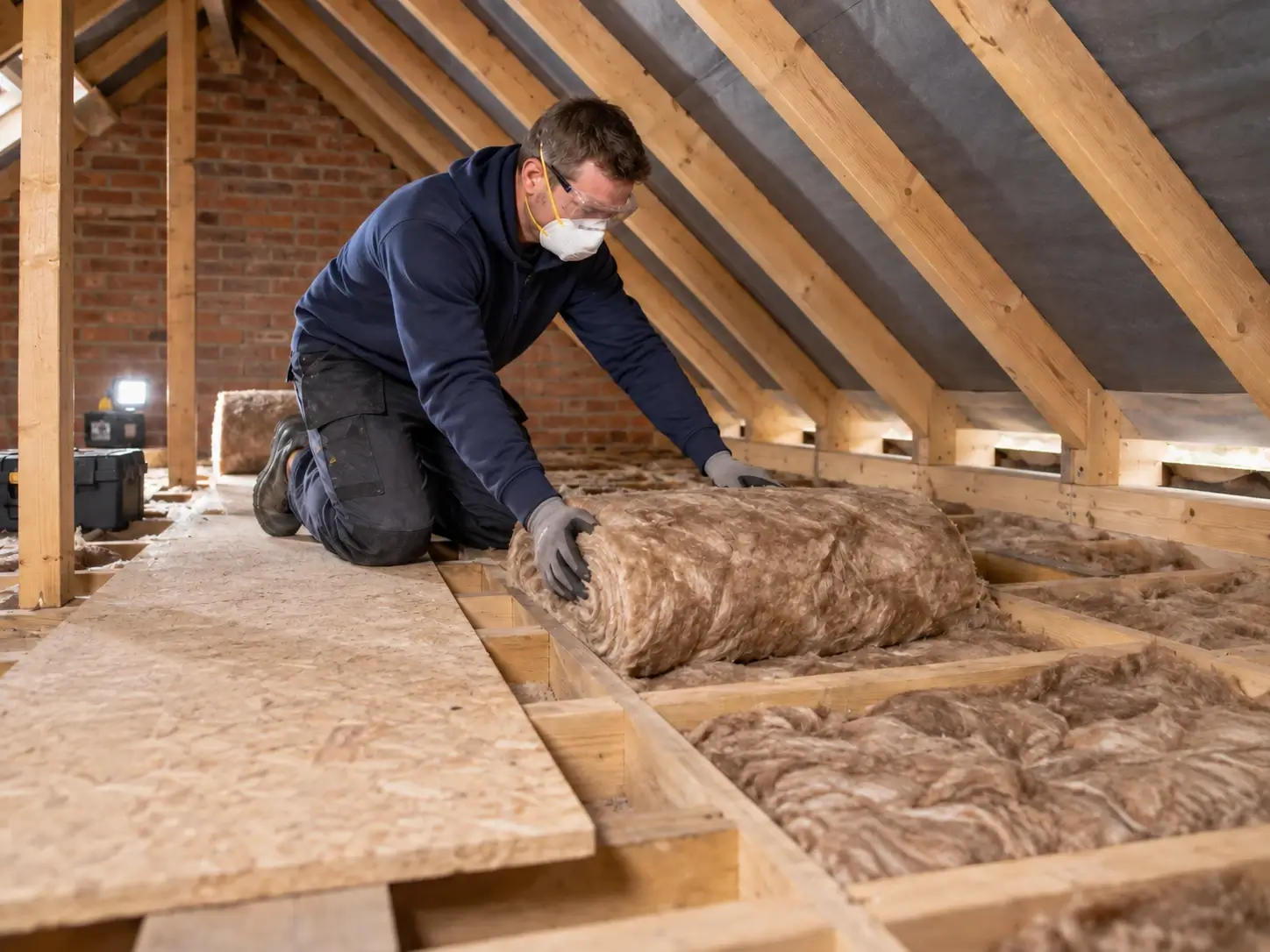
- Loft insulation reduces heat loss, cuts energy bills and lowers your carbon footprint.
- If you have no insulation already, installing 270mm costs £650 to £1,700 and saves £140 to £360 a year.
- The four types of loft insulation are blanket, sheet, loose-fill and blown-fibre.
Did you know that 25% of your home's heat escapes through your loft? That is valuable warmth, and a quarter of your gas bill, completely lost to the great outdoors.
Loft insulation is one of the most effective ways to stop that happening. It puts a barrier between your ceiling and your loft, which is where heat rises to, keeping your hard-earned cash in the rooms you actually need to heat.
The result: comfortable temperatures, lower bills, and less energy going to waste. This guide walks through what loft insulation is, the materials and types available, how much you could save, and how to find the right installer for the job.
What is loft insulation?
Loft insulation is a thick layer of material laid across your loft floor, a bit like a big duvet. It can sometimes be placed against the roof itself, where it acts more like a woolly hat.
Its job is to stop rising heat escaping through your ceiling or roof, trapping it inside your home so your boiler is not working overtime to replace it.
To meet the maximum U-value set out in building regulations, loft insulation needs a thickness of 270mm. A U-value describes how fast heat moves through a material: lower U-values mean less heat loss, which means better energy savings.
What is loft insulation made from?
Plenty of materials can be used to insulate a loft or roof, each with its own advantages and best use cases. These are the most common right now.
Mineral wool. The most popular choice in the UK. Mineral wool, both fibreglass and stone wool, has high R-values, meaning it is very resistant to heat flow and delivers strong thermal performance. It also has superior fire resistance, at a more affordable price than many alternatives.
Sheep's wool. Pricier than mineral wool for around the same R-value, but with distinct advantages. It is more eco-friendly and regulates temperature better, so it excels at keeping your home warmer in winter and cooler in summer.
Rigid foam boards. These dense foam panels have exceptional thermal performance and are highly resistant to water and pests, which makes them a great fit for roofs. They are significantly more expensive, and harder to install.
Natural fibres. Alongside sheep's wool there are wood fibre, hemp, cellulose from recycled newspaper, and cork. Homeowners looking for a breathable, high-performance solution from renewable resources often go this way.
What are the different types of loft insulation?
Blanket insulation
Blanket insulation, sometimes called quilt or roll insulation, is built into floor or ceiling joists using two layers of material. One layer goes between the joists, another goes across at a right angle to stop heat leaking through the gaps. It is supplied in rolls or batts for easy handling, in a range of thicknesses.
The pros: it can be cut and shaped to the dimensions you need, and it is flexible enough to fit between beams, pipes and electrical wiring. It is affordable, comes in a wide variety of materials, and is manageable as a DIY project in a highly accessible loft.
The cons: it can itch and irritate skin if handled directly, and trigger respiratory issues if inhaled, so protective gear is a must. It is more prone to moisture retention, compression and degradation if not installed correctly, and it is not ideal for awkward loft shapes.
Sheet insulation
Sheet insulation, or rigid board insulation, typically uses polyisocyanurate (PIR) or polyurethane (PUR) boards, cut and fixed between, under or over the roof rafters. Rigid boards are relatively thin compared with blanket insulation and more efficient per millimetre, so you can install without sacrificing headroom. Perfect for loft conversions.
The pros: high insulation efficiency per unit of thickness, it can be decorated or plastered over, it does not compress over time thanks to its rigidity, and it is well suited to warm loft installations.
The cons: usually pricier than blanket and loose-fill. It must be professionally fitted to get a gap-free seal, and it has a lower sustainability factor and higher environmental production costs than the alternatives.
Loose-fill insulation
Made from granular, lightweight materials, loose-fill is a low-tech, flexible option. Installation means pouring the material into the joists by hand and levelling it off for a seamless finish. It is generally designed for top-ups and working around obstacles rather than large-scale projects.
The pros: easy to place around fiddly, irregular joists and obstructions, relatively inexpensive, good for topping up existing insulation and filling gaps, and it can be added gradually rather than all in one go.
The cons: loose materials can blow around in draughty lofts, reducing thermal performance. It lacks stability and is prone to shifting or spreading over time, and it can be difficult to install without a professional.
Blown-fibre insulation
Blown-fibre insulation is exactly what it sounds like: loose material, typically mineral wool fibre or cellulose, blown into the loft using specialist machinery. Unlike loose-fill, the material goes in via a hose, which gives an even spread.
The pros: it reaches tight, hard-to-access areas and awkward gaps, gives complete and consistent coverage across the whole loft, works on older ceilings and lofts with many obstructions, and installs quickly.
The cons: this is no DIY job, you will need a specialist. It is typically more expensive because of the installation costs, and like loose-fill the material can get blown around if the loft is draughty.
The benefits of loft insulation
Is loft insulation worth it? Yes, and here is why.
It saves energy, and money. A quarter of the heat you generate, heat you have already paid for, escapes into your loft and through your roof. Insulation keeps it in your living areas, saving up to £360 a year according to the Energy Saving Trust.
It reduces your carbon footprint. Heating our homes is one of the UK's biggest sources of carbon emissions. The Energy Saving Trust estimates that a new 270mm loft insulation install could save 460 to 1,200kg of CO2 a year.
It keeps your home comfortable year-round. Insulated homes hold an even temperature, keeping the warmth in during winter and the house pleasantly cooler through hot summers.
It lasts for decades. Around 40 years or more, so your investment pays for itself many times over.
How much could I save?
This is the bit everyone really wants to know. Insulation can save you a lot every year, but how much depends heavily on how much you already have, your home's size, and how you heat it.
If your house has little or no insulation, the savings are much bigger. If you are topping up a 120mm layer to the recommended 270mm, the returns are more modest, though by no means not worthwhile.
What actually affects your savings:
- How much insulation you are starting with. Insulating a draughty loft with nothing in it saves far more than a modest top-up
- Property size and shape. Bigger roofs mean more heat loss to prevent
- How you heat your home. Homes on electric heating typically see more savings than homes on mains gas, because electricity costs more per unit
- Daily heating habits. If you are at home most of the day with the heating on, you will see bigger savings than a home heated only in the evening
For a figure tailored to your actual home, get a free quote from a professional installer.
How much loft insulation will I need?
Current UK building regulations recommend a minimum depth of 270mm of mineral wool, or the thermal equivalent in another material.
Not sure how much you have? Here is how to check.
- Inspect your loft. You will need a tape measure, and probably a torch
- Measure a few points. Thickness varies across a loft, so move about
- Compare against 270mm. If your depth is well under, and many older homes still only meet the previous 100 to 120mm recommendation, a top-up is worthwhile
- Get a professional opinion. An installer can measure, and also check the condition of your existing insulation for damp or gaps that lower its performance
Different materials need different depths. Rigid foam boards, for example, achieve the same performance as mineral wool at a thinner depth, which is handy if you need the headroom.
Cold loft vs warm loft: what do they mean?
You will see these two terms a lot, so it is worth decoding them early.
Cold loft. Insulation is placed at ceiling level, on the loft floor, between and across the ceiling joists. This traps heat in the living areas of your home and leaves the loft space at roughly the same temperature as outside. Hence, cold loft.
Warm loft. Insulation is fitted at rafter level, following the slope of the roof. Heat is contained within the loft itself, keeping it snug. Ideal for loft conversions, or for using the loft for something other than storing Christmas decorations.
A warm loft is more expensive to insulate because it covers a wider area and takes more labour. It is only really needed if you are converting the loft into a living space, such as a bedroom or study.
Can I get loft insulation?
Most UK lofts can be insulated. But there are some questions worth asking yourself before you get a quote.
Is your loft easy to access? Even very tight lofts can be insulated, but access decides the type you need, for example blown-fibre rather than blanket.
Do you have damp or condensation issues? Genuinely, sort this out before you insulate. Insulation makes the loft space colder, which can worsen existing damp or cause new condensation. Insulating over the top only makes the problem more expensive to deal with later.
Is your loft a conversion? If so it needs warm loft insulation at rafter level, which is a specialist job. If you only use the loft for storage, a cold loft install is the norm.
Does your loft contain pipes or a water tank? Once you insulate the loft floor, the loft gets colder, which puts tanks and pipes at risk of freezing. They need their own insulation, a jacket for tanks and foam lagging for pipes, as part of the job rather than an afterthought.
Is there enough ventilation? To stop moisture getting trapped and causing damp, mould and rot, the loft needs to be properly ventilated. A good installer keeps eaves gaps, vents, grilles and airbricks unblocked so the loft gets fresh air.
How to buy insulation: costs and grants
If you are ready to buy loft insulation, you will want to know exactly what it costs, whether there are any grants, and how you can pay for it.
How much does loft insulation cost?
If you live in England, Scotland or Wales, loft insulation costs between £650 and £1,200 for a full, new insulation job. The price is a bit steeper in Northern Ireland, coming in around £950 to £1,700. For a top-up it is much less: £500 to £800 in Great Britain and £650 to £1,000 in Northern Ireland. For a full breakdown of the costs, including the other types of insulation for your home, see our insulation costs guide.
Are there any loft insulation grants?
Insulation grants are sometimes available through government-backed schemes and local council initiatives. Our insulation grants page sets out what exists across the four nations, who each route reaches, and how to check whether you are eligible.
Finding the best insulation installers
A good installer makes the difference between a job that keeps your home warm for 40 years and one that traps damp and rots your roof timbers within twelve months. A few things worth doing before you commit.
Understand your own needs first. Know roughly what depth you need, how accessible your loft is, and whether you want a warm or cold loft. It makes conversations with installers far more productive.
Check certifications. Look for installers registered with TrustMark, the government-endorsed quality scheme, and with an industry trade body such as the National Insulation Association. We verify that installers hold the relevant certifications, so every quote comes from an accredited installer.
Ask the awkward questions. Will they address ventilation as part of the job, or is it an optional extra? Can they provide references? What guarantees come with the work? Ask what you need to choose with confidence.
Ready to keep your heating inside your home?
With cold winters and increasingly scorching summers, loft insulation is one of the best upgrades you can make to a UK home. It makes the house more comfortable, lowers your bills, and is a great starting point for other energy-efficient upgrades such as cavity wall or floor insulation.
Ready to insulate your loft?
Get a free, no-obligation quote from a TrustMark-registered insulation installer near you.
Free and no obligation. We only share your details with the installers we match you with.
Source: the Energy Saving Trust.
Ready to insulate your loft?
Get a free, no-obligation quote from a TrustMark-registered insulation installer near you.
Free and no obligation. We only share your details with the installers we match you with.
What the accreditations actually mean
Certification is the clearest signal you have that an installer is competent, and that you are protected if something goes wrong. Here is what each one covers.



Keep reading
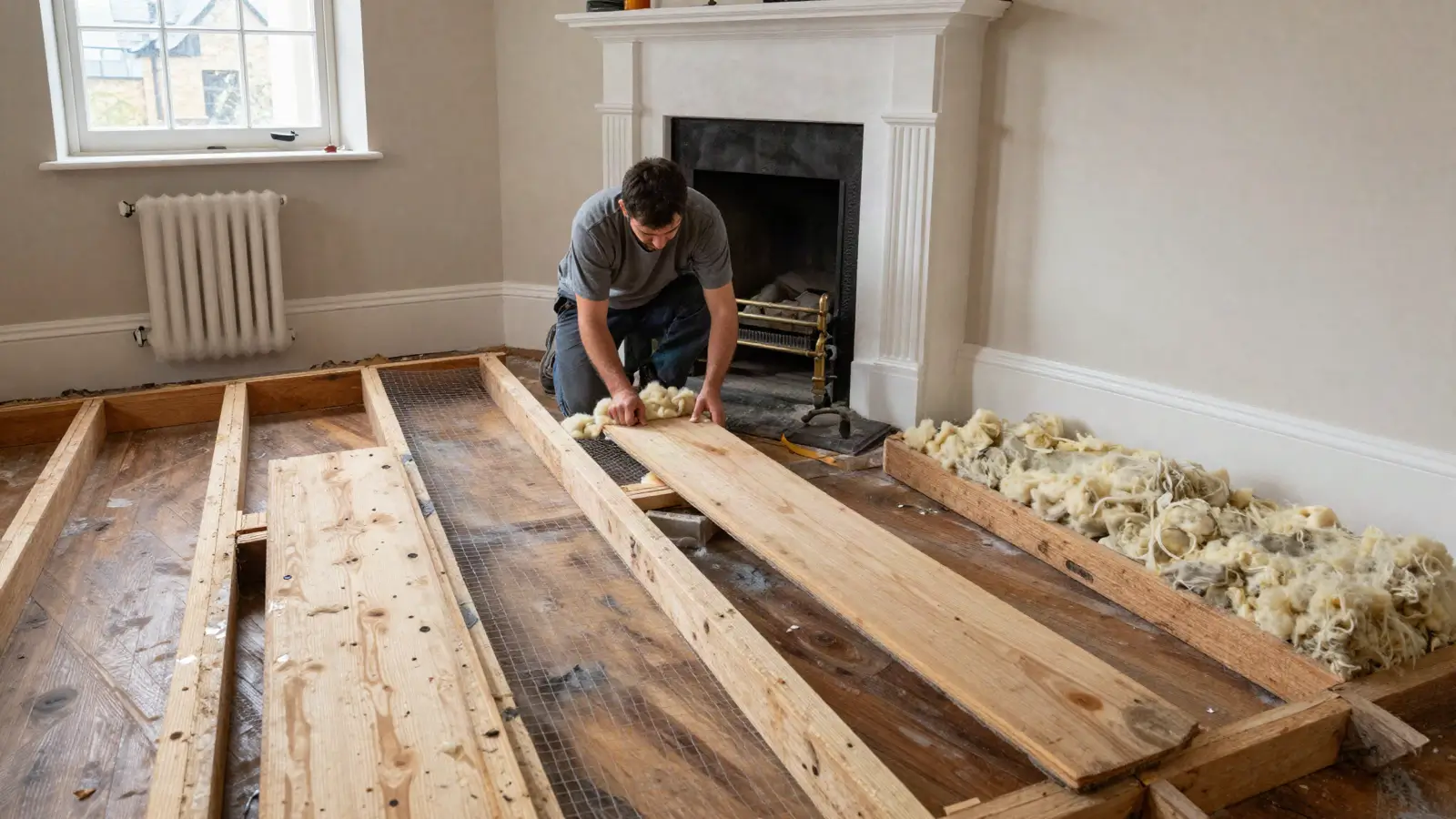
Underfloor insulation and draught proofing: cheap fixes for a cold house
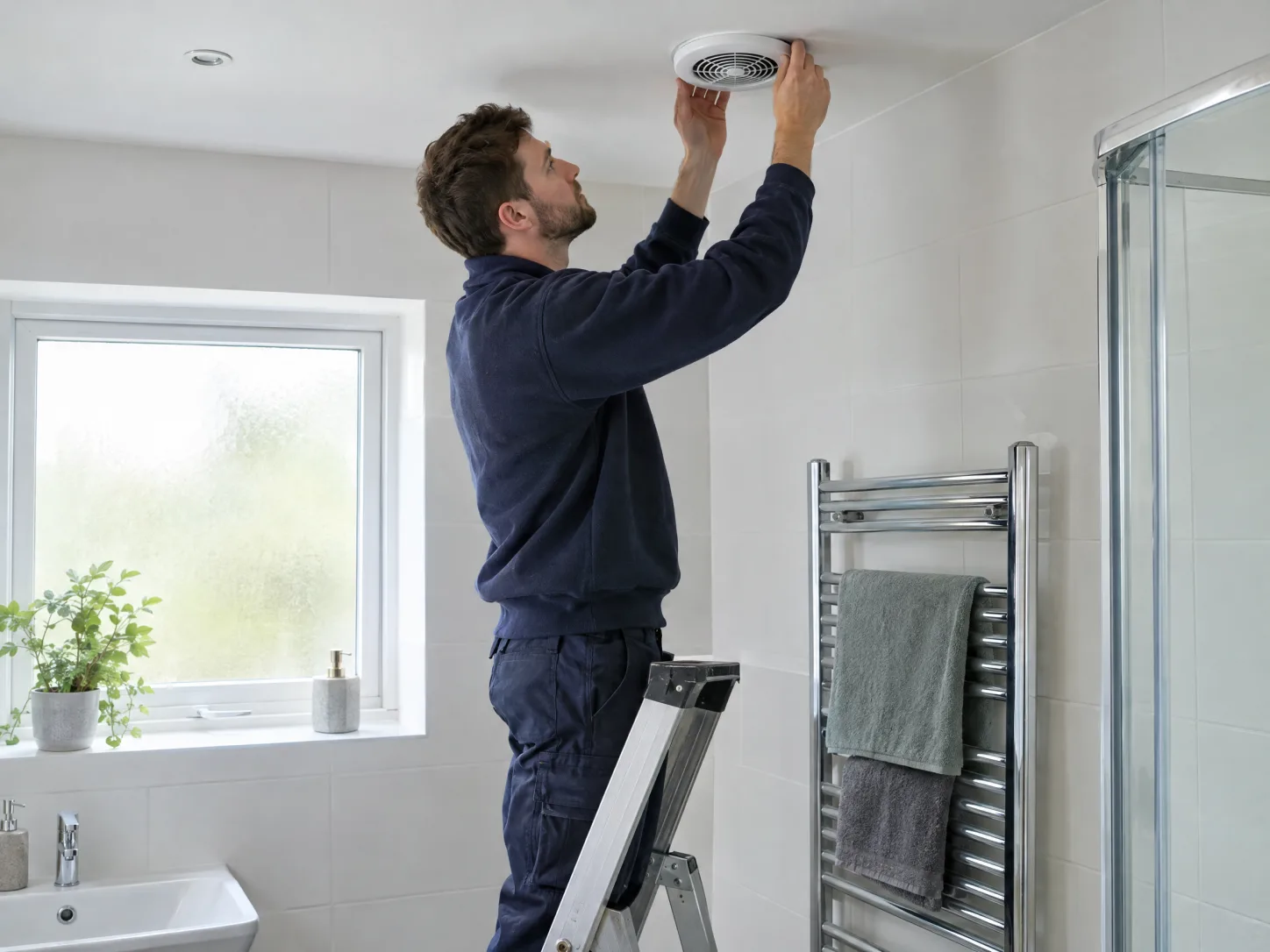
Insulation checklist: permissions, ventilation and paperwork
The four types of loft insulation
Each type suits a different loft. Access and shape usually decide it more than price.
What loft insulation costs, and what it saves
How much you save depends most on how much insulation you are starting with.