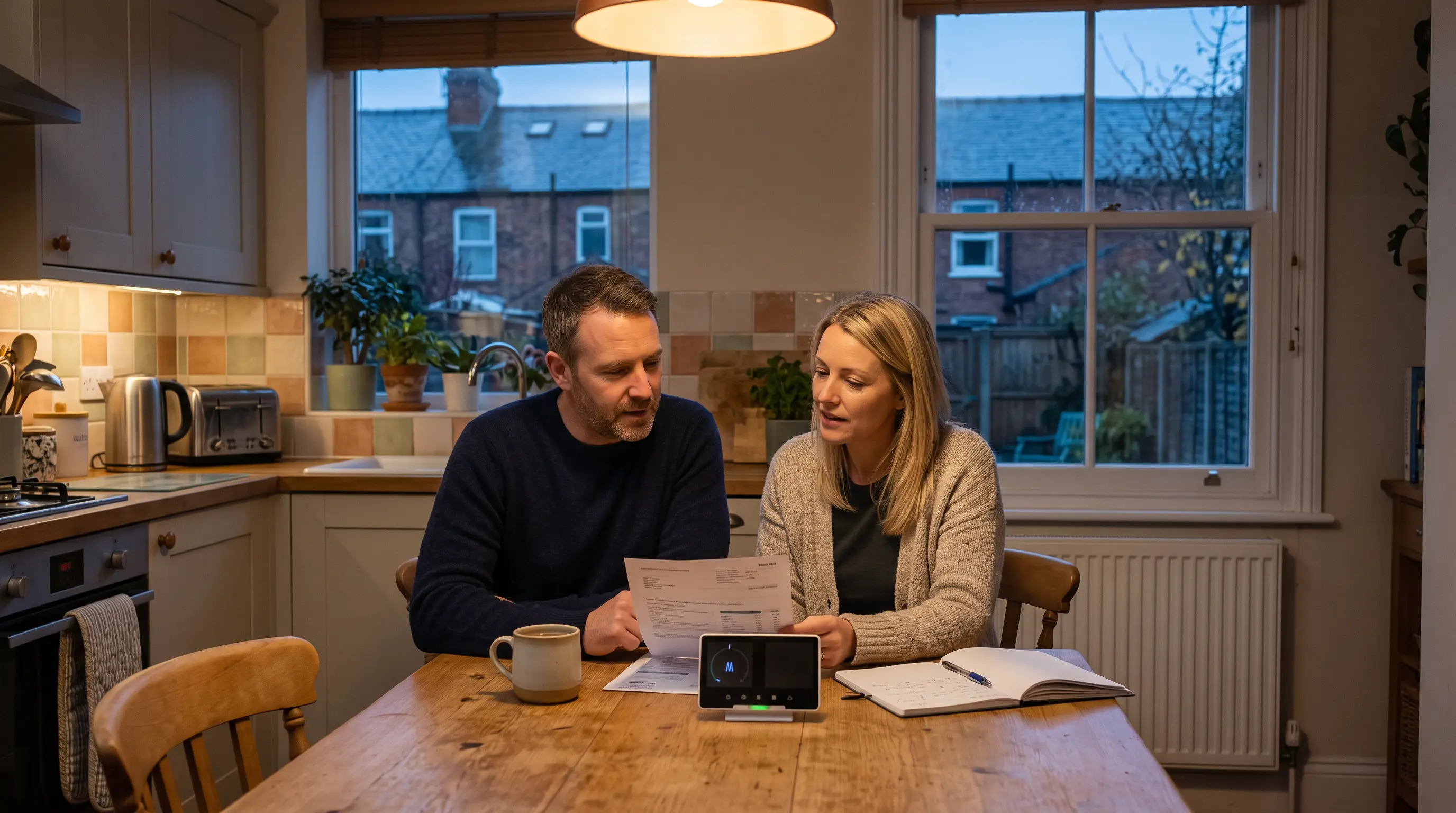
On 30 September 2026, Cornwall Insight forecast that the energy price cap will rise by 16% on 1 January 2027, taking a typical household's annual dual fuel bill from £1,723 to £1,999. E.ON Next's forecast on 12 October is higher, at £2,130, a rise of 24%. Either would be the biggest increase in the cap since January 2023.
These are forecasts, not the final figure. Ofgem will confirm the cap for 1 January to 31 March 2027 by 25 November 2026, and until then the numbers can still move.
How much will energy bills go up in January 2027?
For a typical home paying by direct debit, the forecasts put the rise at between about £276 and £407 a year, or roughly £23 to £34 a month:
- Cornwall Insight, 30 September 2026: £1,999 a year, up 16%. That is £959 for electricity and £1,040 for gas.
- E.ON Next, 12 October 2026: £2,130 a year, up 24%.
Both forecasts are for a typical home using 2,500 kWh of electricity and 9,500 kWh of gas a year, measured against the cap of £1,723 that has applied since 1 October 2026. Your own bill depends on how much energy you use. The cap limits the unit rates and standing charges on a standard variable tariff, not your total bill, and it covers England, Scotland and Wales but not Northern Ireland.
Why are energy prices going up again?
Gas. Cornwall Insight says the escalating conflict in the Middle East has disrupted gas supplies to the UK and globally, and that wholesale prices reached a four-year high in early September before falling back. Europe's gas storage was also at its lowest September level in 15 years, at around 65% full.
The timing matters because of how the cap works. Ofgem sets each cap from wholesale prices over an observation window in the months before it starts. September's high prices are already inside the window for January, which is why Cornwall Insight says a January rise is almost certain, even if wholesale prices fall from here.
Will energy bills go down in 2027?
Not on current forecasts. E.ON Next's early forecast for 1 April to 30 June 2027 is £2,211 a year, £81 more than its January figure, though it marks both forecasts as low confidence and made them before the Budget. Cornwall Insight has not yet published a figure for April and warns that the effects could last beyond this winter if gas storage stays low.
The Budget on 28 October 2026 changed one part of the outlook. There has been no VAT on household electricity in Great Britain since 1 October 2026, and that zero rate was due to end on 31 March 2027. The Budget extended it to July 2027, which the government says will take around £50 off the price cap in April 2027. VAT on electricity is now due to return after that, unless it is extended again.
The government has also asked Ofgem to remove standing charges on household gas bills as early as 2027. That would move the cost into the price of each unit of gas, so low gas users are likely to pay less and high users could pay more.
Should I fix my energy tariff now?
A fixed tariff is not covered by the cap, so your rates stay the same for the length of the fix. Ofgem says about 35% of households are on fixed deals. If you are one of them, January's change does not affect you until your fix ends.
If you are on the standard variable tariff, a fix only saves money if its rates are lower than the cap turns out to be across the whole fix. Suppliers price fixed deals from the same wholesale market, so many have risen too. Before you commit, compare the annual cost a supplier quotes for your own usage against the forecasts above, and check the exit fees. We are not financial advisers, and the right answer depends on your usage and how long you plan to stay.
What you can do before January
If you live in England in council tax bands A to D, you should receive a one-off £100 Household Energy Payment from January 2027, announced in the Budget. It will soften the rise but not cancel it.
Because gas is driving this rise, the measures that cut gas use are worth more this winter than last. Insulation reduces the heat a home loses, and a more efficient heating system turns less gas into the same warmth. Solar panels work on the electricity side of the bill, which is forecast to rise less.
Two dates are worth knowing if you are planning an upgrade. Installing insulation, solar panels, batteries or a heat pump carries 0% VAT until 31 March 2027. And if your household income is lower, the Warm Homes: Local Grant in England can pay for some of these upgrades, as our insulation grants page explains. Our insulation costs and solar panel costs pages set out what a typical job involves.
If you are already struggling to pay, Ofgem's advice is to contact your supplier as soon as possible, before the January rise arrives.
When will we know the final figure?
Ofgem will announce the cap for 1 January to 31 March 2027 by 25 November 2026. We will update this post when it does.
Sources
- Cornwall Insight, 16% price cap rise forecast in January, published 30 September 2026. Checked 29 October 2026.
- Cornwall Insight, Predictions and insights into the default tariff cap, updated 14 October 2026. Checked 29 October 2026.
- E.ON Next, Energy price cap predictions, forecast dated 12 October 2026. Last checked for this site on 20 October 2026.
- HM Treasury, Budget 2026, published 28 October 2026. Checked 29 October 2026.
- Department for Energy Security and Net Zero, What the Autumn Budget 2026 means for your energy bills, published 28 October 2026. Checked 29 October 2026.
- Ofgem, Energy price cap will rise by 4% from October 2026, published 26 August 2026. Last checked for this site on 24 September 2026.
- HMRC, Revenue and Customs Brief 10 (2026): temporary zero rate of VAT for domestic electricity in Great Britain, published 8 September 2026. Superseded on its end date by the Budget extension to July 2027.