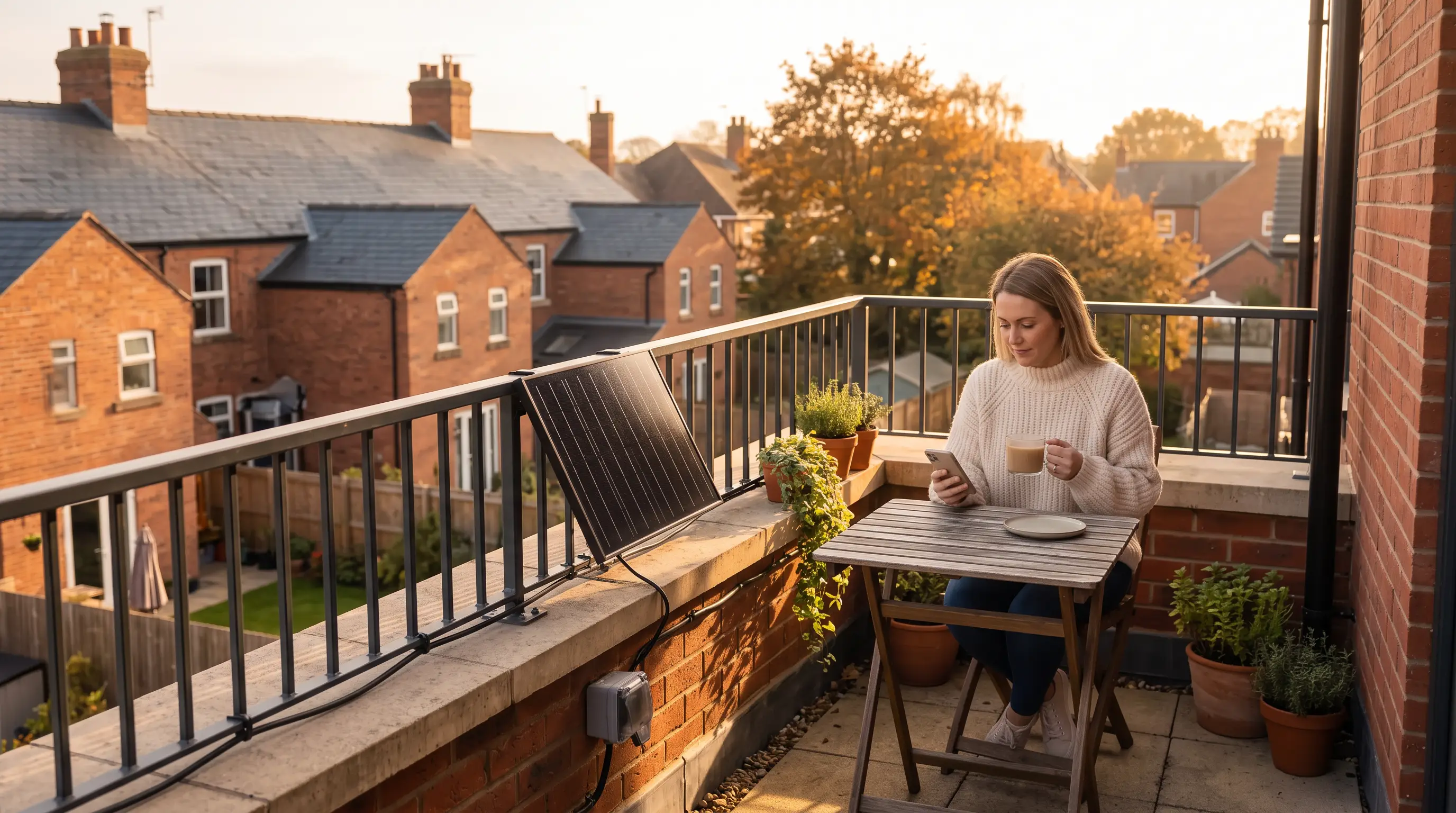
On 1 October 2026, Octopus Energy said it had sold out of plug-in solar kits for the second time in under four weeks. Its first 500 kits went in two weeks, it said, and more stock is on the way. Plug-in solar only became legal to sell and use in Great Britain on 27 August.
Demand is plainly there. The question worth asking before you join the queue is what happens to the electricity a kit makes when nobody at home is using it, and whether anyone will pay you for it.
What is on sale
Octopus says its bundles start at £450 for one panel and £650 for two, and that 89% of buyers have chosen two. When the rules changed, the government said retailers including Currys, B&Q, Screwfix, Amazon, Argos and Wickes would stock kits in stores and online.
Wherever you buy, the rules in our earlier post on plug-in solar still apply. A kit must meet the government's interim product specification, its output is capped at 800W, plug-in batteries are not allowed, and you need to tell your electricity network operator.
What a kit is worth
The government's estimate is a saving of up to £110 a year, with a kit supplying up to 20% of an average home's electricity. Octopus puts the figure at around £150 a year, but its number combines lower bills with payments from its own Outgoing export tariff, so it only applies if you sign up to that tariff.
Both are upper estimates. Most of the value comes from the power you use yourself, because every unit you generate and use is a unit you do not buy. Under the price cap from 1 October that is an average of 26.32p per kWh. Power you send to the grid earns only what an export tariff pays, if one will pay at all.
Why export payments are not automatic
The Smart Export Guarantee requires larger electricity suppliers to offer a tariff to small-scale generators, at a rate that must always be above zero. But Ofgem's guidance for generators sets out who qualifies, and for solar panels that means an installation certified under the Microgeneration Certification Scheme (MCS) or an equivalent. Plug-in kits are set up by the owner, and council guidance notes they are not currently covered by MCS.
That leaves it to individual suppliers. Some, Octopus among them, have chosen to pay plug-in customers through their own export tariffs. Those deals are a commercial choice rather than a legal right, so their terms can change, and you are likely to need a smart meter that records the electricity you export.
What to check before you buy
- That the kit meets the interim product specification. The Energy Networks Association lists compliant devices, and the Energy Saving Trust's checklist covers the other checks.
- Whether your electricity supplier will pay for power exported from a plug-in kit, at what rate, and what meter it needs.
- When your home uses electricity. A kit earns the most when something is running in daylight. If the home is empty all day, more of the output goes to the grid.
- Whether you need permission from a landlord, freeholder or your council before you put one up.
If you own your home and have a suitable roof, a rooftop system is still the bigger saving: up to £480 a year on the government's figures. Installed by an MCS-certified installer, it also qualifies for the Smart Export Guarantee. Our solar panel costs page sets out what a typical installation involves.
Sources
- Octopus Energy, Octopus plug-in solar sells out in a fortnight as bills soar, published 1 October 2026. Checked 8 October 2026.
- Department for Energy Security and Net Zero, Households can save as plug-in solar panels come to market, published 26 August 2026, updated 1 October 2026. Checked 8 October 2026.
- Ofgem, Smart Export Guarantee. Checked 8 October 2026.
- Ofgem, Smart Export Guarantee: guidance for generators. Checked 8 October 2026.
- Ofgem, Energy price cap unit rates and standing charges. Last checked for this site on 24 September 2026.
- East Cambridgeshire District Council, Plug-in solar. Checked 8 October 2026.
- Energy Saving Trust, Plug-in solar panel checklist. Linked from the government's announcement; checked 8 October 2026.