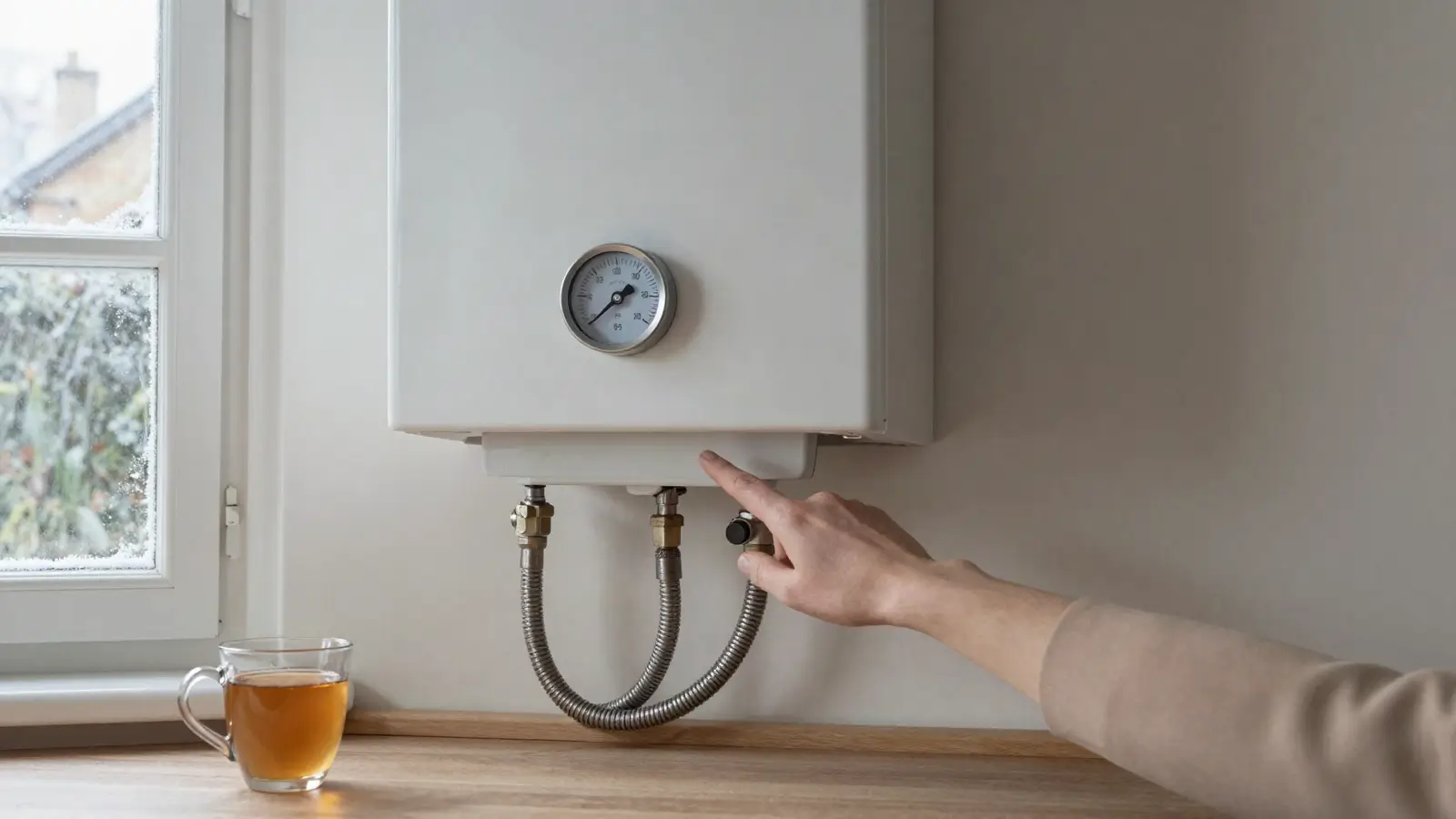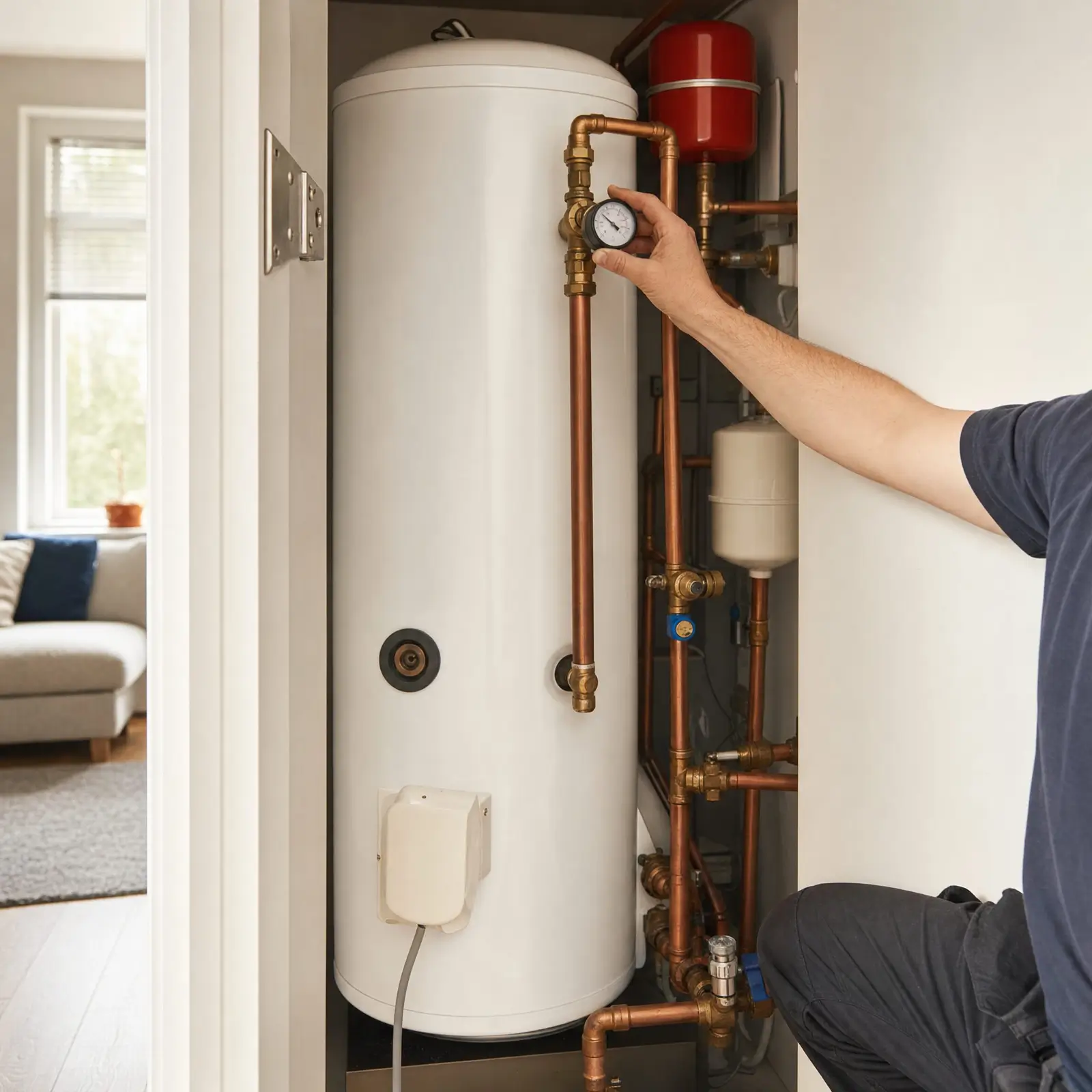
- An unvented cylinder is a sealed hot water tank fed straight from the mains, so there is no cold water tank in the loft.
- Checkatrade puts supply and fitting at around £900 to £3,500 excluding VAT.
- Approved Document G requires at least two independent safety devices and a skilled installer, such as one registered with a competent person scheme.
- Performance depends on your mains: the Megaflo manual gives a minimum of 1.5 bar and 20 litres a minute.
- The manufacturer recommends maintenance every 12 months.
An unvented cylinder is a sealed hot water tank fed straight from the cold mains, so it delivers hot water at close to mains pressure without a cold water tank in the loft. Supply and installation typically costs around £900 to £3,500 excluding VAT, according to Checkatrade, and it must be fitted by a suitably qualified installer.
You may also hear it called a Megaflo or "megaflow" system. Megaflo is a brand made by Heatrae Sadia, but the name is often used for any unvented cylinder.
What is an unvented cylinder?
A traditional vented cylinder is fed by a cold water tank, usually in the loft, and relies on gravity. An unvented cylinder is sealed and connected directly to the mains, so the water arrives under pressure.
The water is heated either by a boiler or heat pump through a coil inside the tank (an indirect cylinder) or by electric immersion heaters (a direct cylinder). Our boiler buying guide explains how system boilers and conventional boilers work with a cylinder, and how they differ from a combi.
What are the pros and cons of an unvented cylinder?
The Checkatrade cost guide lists these advantages:
- Better water pressure, which suits large and busy households.
- More flexible siting, because the cold water tank can be removed and the cylinder can go almost anywhere.
- No frozen or burst tank pipes in the loft.
- A sealed system, so the stored water is less likely to be contaminated.
There are trade-offs. The performance depends on your mains supply. Heatrae Sadia's Megaflo user manual gives a minimum of 1.5 bar working pressure and 20 litres a minute flow rate, and warns that flow may be poor when several taps run at once at those levels. Ask your installer to measure your pressure and flow before you commit.
An unvented cylinder also needs space for the tank and its safety pipework, and it needs regular servicing, which we cover below.
How much does an unvented cylinder cost?
Checkatrade's cost guide (last updated November 2024) gives these typical figures, all excluding VAT:
- Cylinder only: £400 to £2,000.
- Installation labour: £500 to £1,500.
- Total, supplied and fitted: around £900 to £3,500.
- Labour to replace an existing unvented cylinder: £300 to £500, plus the cylinder.
Checkatrade notes that bigger cylinders and indirect cylinders cost more, and that more complex jobs cost more. Swapping a vented system with a loft tank for an unvented one involves more pipework than a straight replacement, so ask for a quote that sets this work out separately. See our boiler costs page for what a new boiler adds if you are replacing both.
Who can install an unvented cylinder?
Unvented cylinders store hot water under pressure, so the Building Regulations set strict safety rules. Approved Document G, the government's guidance on hot water safety in England, requires precautions so that stored water can never exceed 100°C and any discharge from the safety devices is carried somewhere visible without putting people at risk.
The guidance says an unvented system should have at least two independent safety devices as well as any thermostat. It also says installers should be skilled, for example registered with a competent person scheme, and that the work must be notified to building control unless the installer is registered with such a scheme.
In practice, Checkatrade advises checking that your installer holds an unvented (G3) qualification. If the cylinder is heated by a gas boiler, anyone working on the boiler must also be Gas Safe registered. Our new boiler checklist lists the paperwork you should receive at the end.
Do unvented cylinders need servicing?
Yes. Heatrae Sadia's Megaflo user manual recommends maintenance every 12 months. A 2021 PHPI article drawing on Heatrae Sadia's advice says cylinders need an annual inspection and describes servicing as a crucial part of keeping the warranty valid.
A service checks that the pressure and temperature relief valves open and reseat properly, cleans the inlet strainer, descales the immersion heater where needed and recharges the expansion vessel. If you ever see water coming from the tundish (the open funnel on the discharge pipe), the manual says to switch off the boiler or immersion heater, not to turn off the water supply, and to call a competent installer.
Do you need an unvented cylinder with a heat pump?
According to the Energy Saving Trust, a heat pump heats water stored in a hot water cylinder for your taps, showers and baths. So if you are replacing a combi boiler, which has no tank, plan where a cylinder could go and ask your installer whether an unvented one suits your mains supply. Our guide to heat pumps vs gas boilers covers this alongside running costs, and our heating grants page explains what funding may be available.
Common questions
Is a Megaflo the same as an unvented cylinder?
Megaflo is a brand of unvented cylinder made by Heatrae Sadia. Other manufacturers make unvented cylinders too, and they work in the same way.
Can I fit an unvented cylinder myself?
No. Approved Document G expects a skilled installer, for example one registered with a competent person scheme, and the work must be notified to building control if they are not registered.
How long does it take to install?
Checkatrade says a like-for-like replacement of a direct cylinder is the quickest job, taking around a day at most. Converting from a vented system with a loft tank takes longer.
Will an unvented cylinder improve my shower pressure?
It should if your mains supply is good, because the water arrives at close to mains pressure. If your incoming pressure or flow is low, it may not help much, so ask for a measurement first.
Thinking about mains-pressure hot water?
Get a free, no-obligation quote from a Gas Safe registered engineer who holds an unvented (G3) qualification, with your mains pressure checked first.
Free and no obligation. We only share your details with the installers we match you with.
What the accreditations actually mean
Certification is the clearest signal you have that an installer is competent, and that you are protected if something goes wrong. Here is what each one covers.






Keep reading
Are heat pumps worth it? Costs, savings and who they suit in 2026