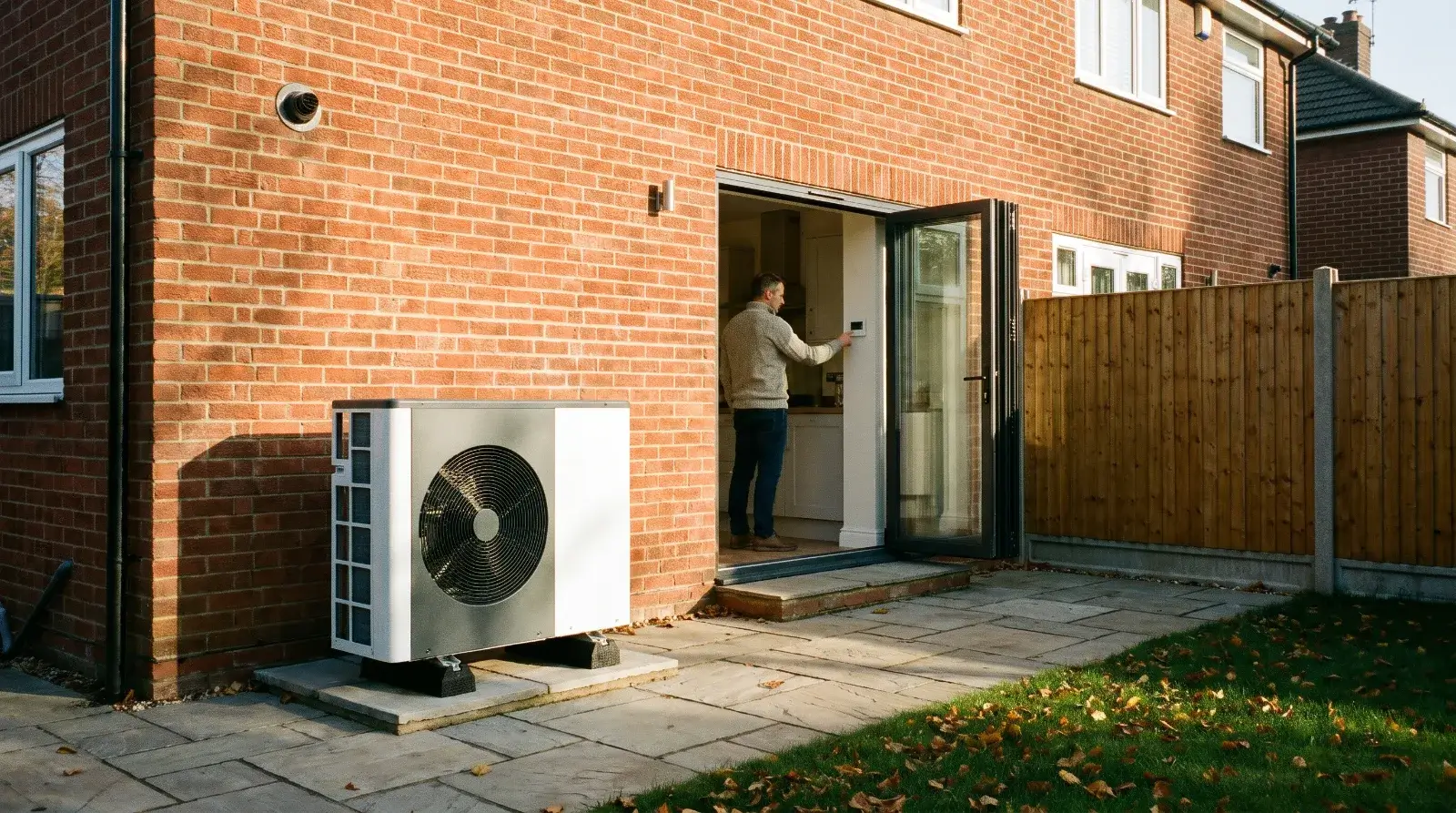
- Modern air source heat pumps make a steady, low hum, most noticeable close to the unit.
- In England, a heat pump fitted without planning permission must meet a 42 dB(A) limit at the nearest neighbour's window.
- Units get louder in very cold weather and during defrost, and quieter in night or low-noise modes.
- Where the unit goes matters most: away from bedroom windows, on a solid base, out of corners.
Heat pumps are not silent, but a well-chosen, well-sited air source heat pump is not noisy either. Most people describe the sound as a low, steady hum from the fan and compressor, a bit like a fridge or an air conditioning unit. Indoors, with the windows shut, you are unlikely to hear it at all.
Noise is one of the most common worries about heat pumps, and it is a fair one, because the outdoor unit sits near your home and your neighbours'. This guide explains how loud they are, the rules on noise in England and how to keep yours quiet.
Which parts of a heat pump make noise?
- The fan. It draws air across the outdoor unit and makes most of the sound you hear.
- The compressor. It hums while the unit is running, more so when it is working hard.
- Defrost. In cold, damp weather the unit occasionally melts ice off itself. You may hear a whoosh or hiss and see some steam. It lasts a few minutes.
Ground source heat pumps have no outdoor fan, so they are quieter outside. Their indoor unit makes a sound similar to a fridge.
How loud is an air source heat pump?
Manufacturers publish a sound power level for each model, measured in a lab. Quieter units have lower figures, so it is worth comparing these when you look at quotes. What you actually hear depends on how far away you are, what surrounds the unit and how hard it is working.
Noise drops quickly with distance. A unit that sounds noticeable when you stand right next to it is usually far quieter a few metres away and behind a closed window. Measurements by engineers at Max Fordham also found heat pumps spend much of the day on standby, and run below their peak level for much of the time they are heating.
What are the noise rules in England?
Most air source heat pumps on houses are permitted development, so you do not need planning permission. One condition is noise. The installation must meet a limit of 42 dB(A) at the nearest neighbouring habitable room, such as a bedroom or living room window. For comparison, that is around the level of a quiet library.
Your installer works this out using the MCS 020(a) method, which uses the unit's sound power, the distance to the neighbour's window and the surfaces around the unit. Hard walls and fences close to the unit reflect sound and raise the result.
Since 29 May 2025, a heat pump no longer has to be at least one metre from your boundary to count as permitted development. It still has to pass the noise calculation, so a unit close to a fence still needs careful siting.
If a unit cannot meet the limit, you need to apply for planning permission. Our guide to heat pumps vs gas boilers covers the other practical differences.
When are heat pumps loudest?
- On the coldest days. The unit works harder to pull heat from cold air, so the fan and compressor run faster.
- When heating hot water. Heating a cylinder to a higher temperature takes more effort for a short burst.
- At start-up and during defrost. Both are short and occasional.
How to keep a heat pump quiet
- Site it carefully. Keep it away from bedroom windows, yours and your neighbours'. Avoid tight corners and narrow passages, which bounce sound around.
- Use a solid, level base with anti-vibration feet or mounts, so the unit does not transmit vibration into walls.
- Size it correctly. An undersized unit runs flat out more often. A proper heat loss survey avoids this.
- Use quiet or night mode. Many units have a low-noise setting that trims output slightly overnight.
- Keep it serviced. Loose panels, a damaged fan or debris in the unit can all add noise.
- Talk to your neighbours before installation, especially if the unit will be near their side.
What if a heat pump is too noisy?
Start with your installer. They can check the settings, the mounting and whether the unit is working as it should. If a fault is found, it may be covered by the warranty. If noise from a neighbour's unit is a problem and talking does not help, your council can investigate it as a statutory nuisance.
Common questions
Are heat pumps louder than gas boilers?
The outdoor unit is usually more noticeable outside than a boiler flue, but inside the home a heat pump system is often quieter than a boiler firing up.
Can I put a heat pump next to my neighbour's fence?
Possibly. The one-metre rule has gone, but the unit still has to meet the 42 dB(A) limit at their nearest window to count as permitted development.
Do heat pumps run all night?
They often run at a low, steady level for long periods, which is part of what makes them efficient. Night modes keep the sound down while you sleep.
Want a quiet, well-sited heat pump?
Tell us your postcode for a free, no-obligation quote from an MCS-certified installer, including a noise assessment for your home.
Free and no obligation. We only share your details with the installers we match you with.
What the accreditations actually mean
Certification is the clearest signal you have that an installer is competent, and that you are protected if something goes wrong. Here is what each one covers.







Keep reading
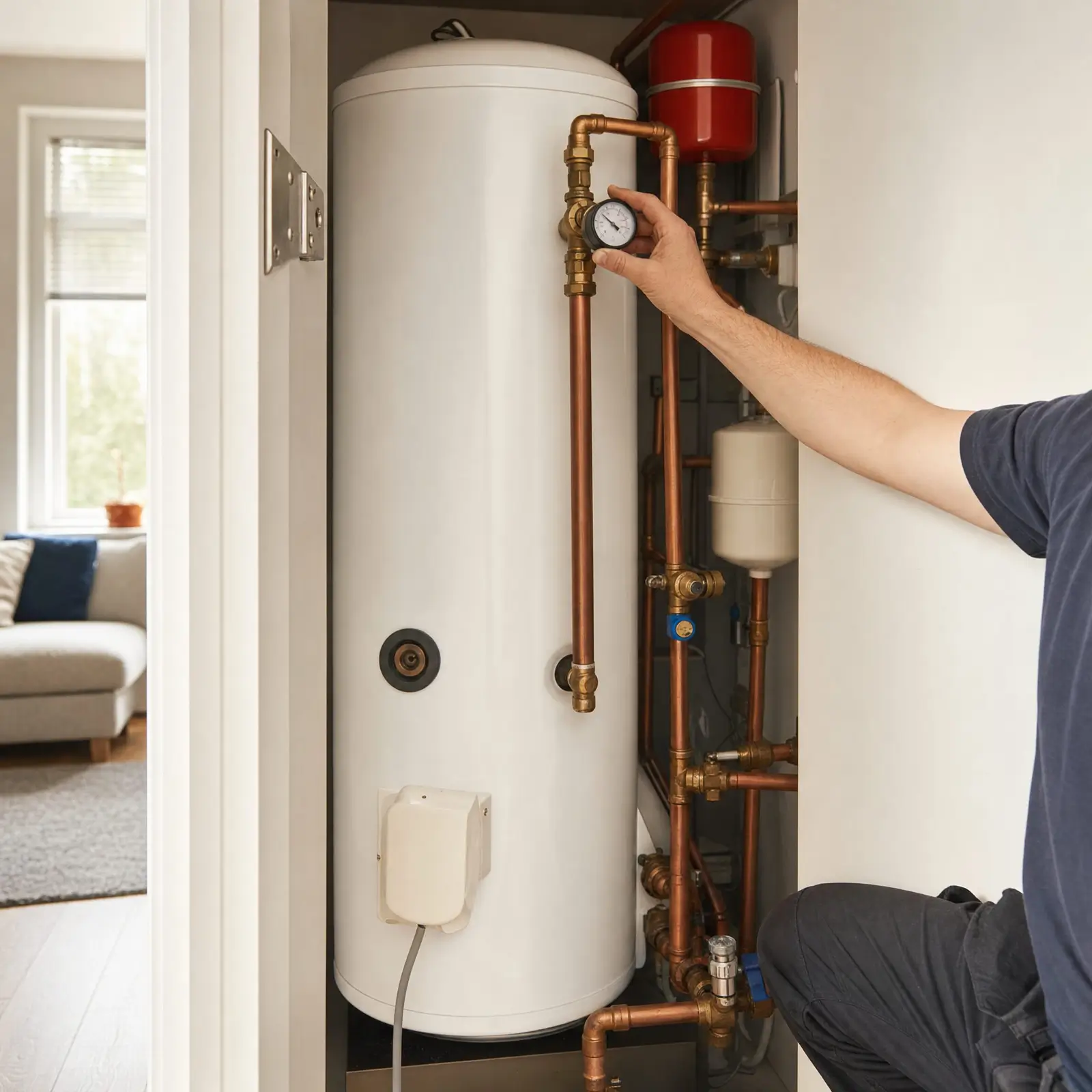
Unvented cylinder: how it works, costs and who can fit one