
- Your EPC rating is checked before anything else, so start there
- Funded schemes insulate a home before they generate power, so you may be offered other measures first
- Most refusals come down to the property, not the paperwork
- Assessments look at the whole house, not just the roof
- Being turned down for one route rarely rules out the others
Working out which support exists is the straightforward half. Most people come unstuck at the next step, because funded schemes are assessed on the whole property rather than on the measure you asked for, and the decision often arrives as something other than a simple yes or no.
This guide covers the process and the refusals. For what support currently exists and who each route is aimed at, see solar panel grants and funding, which carries the current position on every scheme and the date each one was last checked.
Start with your EPC, not with solar
Almost every funded route sets a condition on your Energy Performance Certificate before it looks at anything else. If you do not know your rating, it is free to look up on the government register, and it takes a minute.
Two things surprise people. A poor rating usually helps rather than hurts, because these schemes exist to fix the least efficient homes. And an expired or missing certificate can stall an application on its own, so it is worth sorting before you start rather than during.
Fabric first, and why you may be offered insulation instead
This is the single most common misunderstanding, and it is not a loophole or a fudge. Funded schemes are designed to reduce the energy a home needs before they pay to generate any, because insulating a leaky house is cheaper per unit saved than putting panels on it.
So an application that names solar can come back recommending loft or cavity insulation, or a heating upgrade, either instead of panels or ahead of them. That is the scheme working as intended. It also means solar is more likely to be funded on a property that has already had the basics done.
If you are turned down for panels but offered something else, taking it usually improves your position for a later application rather than closing the door.
What to have ready before you apply
Applications stall on missing paperwork more often than they fail on eligibility. Before you start, gather:
- Your EPC rating, or a note that you need a new certificate
- Proof of household income for everyone contributing to it, usually recent payslips
- Benefit award letters, if anyone in the household receives a means-tested benefit
- Proof that you own the property, or your landlord's written consent if you do not
- Your council tax band, which some local schemes use as a filter
Gather it once and it serves any route you end up taking, because the schemes ask for broadly the same things.
What the assessment actually looks at
If your application progresses, an assessor visits. They are surveying the whole house, not inspecting your roof, and the report they produce drives what gets funded.
Expect them to look at loft and wall insulation and its condition, the age and type of your heating system, glazing, draughts and ventilation, damp, and only then the roof itself for orientation, pitch, shading and structural condition. A roof that needs repair before panels can be fitted is a common reason a solar recommendation gets deferred rather than refused.
The five commonest reasons applications are refused
- The household income or benefit test is not met. Thresholds are set locally in some schemes, so a neighbouring council can reach a different answer on identical circumstances.
- The property is the wrong fit. Shading, orientation, roof condition or a listed or conservation restriction.
- The scheme has committed its funding. Allocations run annually and some are exhausted well before the year ends. This is a timing refusal, not a permanent one.
- Fabric measures come first. Covered above, and it usually arrives as a different recommendation rather than a refusal.
- Documentation is incomplete. The most avoidable one, and the reason the checklist above is worth doing properly.
If you are turned down
Ask which of the five it was, because the answer decides what to do next. A funding-timing refusal means reapplying when the next allocation opens. An income test means checking whether another route uses a different threshold. A property issue may be fixable, and a fabric-first recommendation is worth accepting on its own merits.
Two things are open to everyone regardless of the outcome: the zero rate of VAT on the installation, which needs no application at all, and payment for the electricity you export. Comparing quotes properly usually saves more than any single scheme is worth, which is worth remembering if none of them apply to you.
Use a certified installer either way
Funded or not, certification matters beyond the quality of the work. You need a certificate from a recognised scheme to register for export payments at all, and funded routes will require a certified installer as a condition. It is the one requirement that applies across every path through this.
{{accreditations}}
See what solar would cost on your roof
Tell us about your home and we will match you with MCS-certified installers for free, no-obligation quotes.
Free and no obligation. We only share your details with the installers we match you with.
See what solar would cost on your roof
Tell us about your home and we will match you with MCS-certified installers for free, no-obligation quotes.
Free and no obligation. We only share your details with the installers we match you with.
What the accreditations actually mean
Certification is the clearest signal you have that an installer is competent, and that you are protected if something goes wrong. Here is what each one covers.




Keep reading
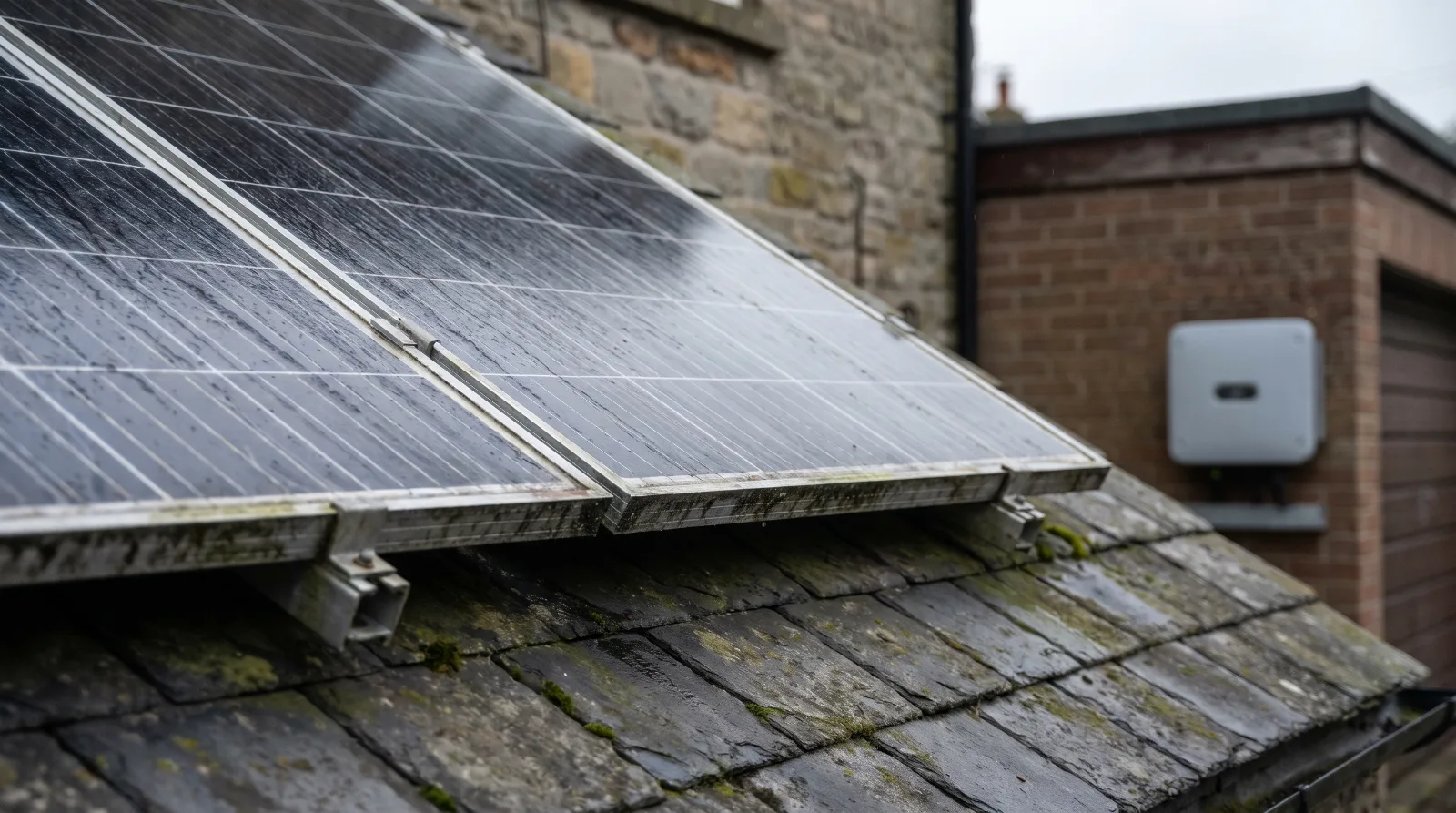
How long do solar panels last? Lifespan, warranties and upkeep