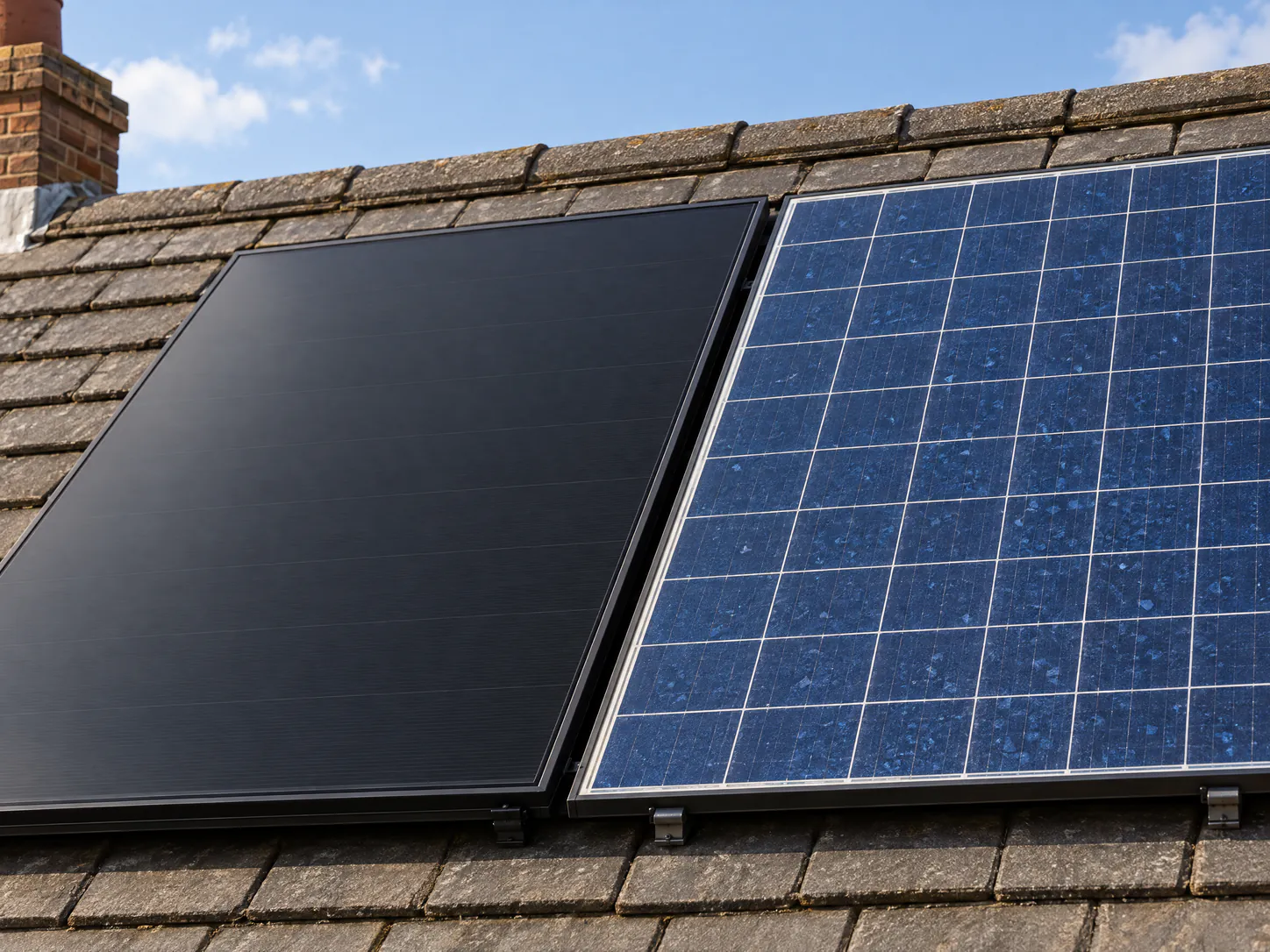
- Roof space usually decides the panel type, not price
- The cheapest panel per unit is rarely the cheapest over the life of the system
- Lifespan only pays back if you stay long enough to collect it
- The inverter, the warranty terms and how shading is handled matter as much as the panel
- Ask every quote to name the make, model, system size in kWp and both warranties
Most solar quotes name a panel type somewhere in the small print and never explain why it was chosen. The choice matters, because it decides how much electricity a fixed area of roof will produce, how long the system keeps working, and how much you pay upfront.
Three types are worth considering for a UK home. Rather than list their specifications again, this guide works backwards from the three questions that decide between them.
Question one: how much usable roof do you have?
This settles it more often than anything else. Efficiency describes how much of the daylight hitting a panel becomes electricity, so on a small or awkward roof the more efficient type gets more power out of the same space.
If your roof is generous and unobstructed, efficiency matters less. You can reach the system size you need with more of a cheaper panel and spend the difference elsewhere, on a battery or on better inverter equipment.
If your roof is small, broken up by dormers and chimneys, or partly shaded, efficiency stops being a preference and becomes the constraint. Every square metre has to work harder.
Question two: upfront cost or lifetime return?
These pull in opposite directions. The cheapest panel per unit is rarely the cheapest panel over the life of the system, because a longer-lived, more efficient panel keeps producing after a cheaper one has been replaced.
If cash today is the binding constraint, the lower-cost types are a legitimate choice and not a compromise on safety or reliability. If you are weighing the whole life of the installation, the calculation usually favours the more efficient end.
Question three: how long will you be in the house?
Lifespan only pays you back if you are there to collect it. A household planning to move within a few years is buying a shorter horizon than the panels are designed for, and the resale value of the system, rather than its output decades from now, becomes the thing that matters.
{{types-table}}
What the comparison does not show you
The panel is one component. Three other things move the outcome, and none of them appears in a specification table.
The inverter
The inverter converts what the panels generate into the alternating current your home uses. It typically has a shorter working life than the panels, so ask what is specified, what its warranty covers, and what replacing it later would involve.
The warranty, and what it actually guarantees
Panels usually carry two separate warranties: one on the product itself, and one on performance, which guarantees a minimum output after a set number of years. Ask for both in writing, and check who honours them if the installer stops trading.
Shading, and how the system handles it
On a string of panels, one shaded panel can drag down the rest. Panel-level optimisers or microinverters isolate that effect. If any part of your roof is shaded for part of the day, this decision matters more than the panel type does.
Where batteries fit
A battery is not a fourth panel type, it is a separate decision layered on top. It stores what you generate during the day so you can use it in the evening, which raises how much of your own electricity you use rather than export. Price it separately rather than accepting it folded into a single figure.
How to check a quote specifies what you agreed
Quotes vary in how much they disclose. Before you sign, confirm the quote names the panel make and model, the number of panels and the total system size in kWp, the inverter make and model, whether optimisers or microinverters are included, and both warranty terms.
Where two quotes differ in price, the answer is almost always somewhere in that list. Comparing at least three quotes for the same specification is the fastest way to see which figure is fair.
Compare quotes for the panel type you want
Tell us about your roof and we will match you with MCS-certified installers for free, no-obligation quotes.
Free and no obligation. We only share your details with the installers we match you with.
How the panel types compare
Efficiency, lifespan and price at a glance, so you can see which suits your roof.
Compare quotes for the panel type you want
Tell us about your roof and we will match you with MCS-certified installers for free, no-obligation quotes.
Free and no obligation. We only share your details with the installers we match you with.
Keep reading
How long do solar panels last? Lifespan, warranties and upkeep