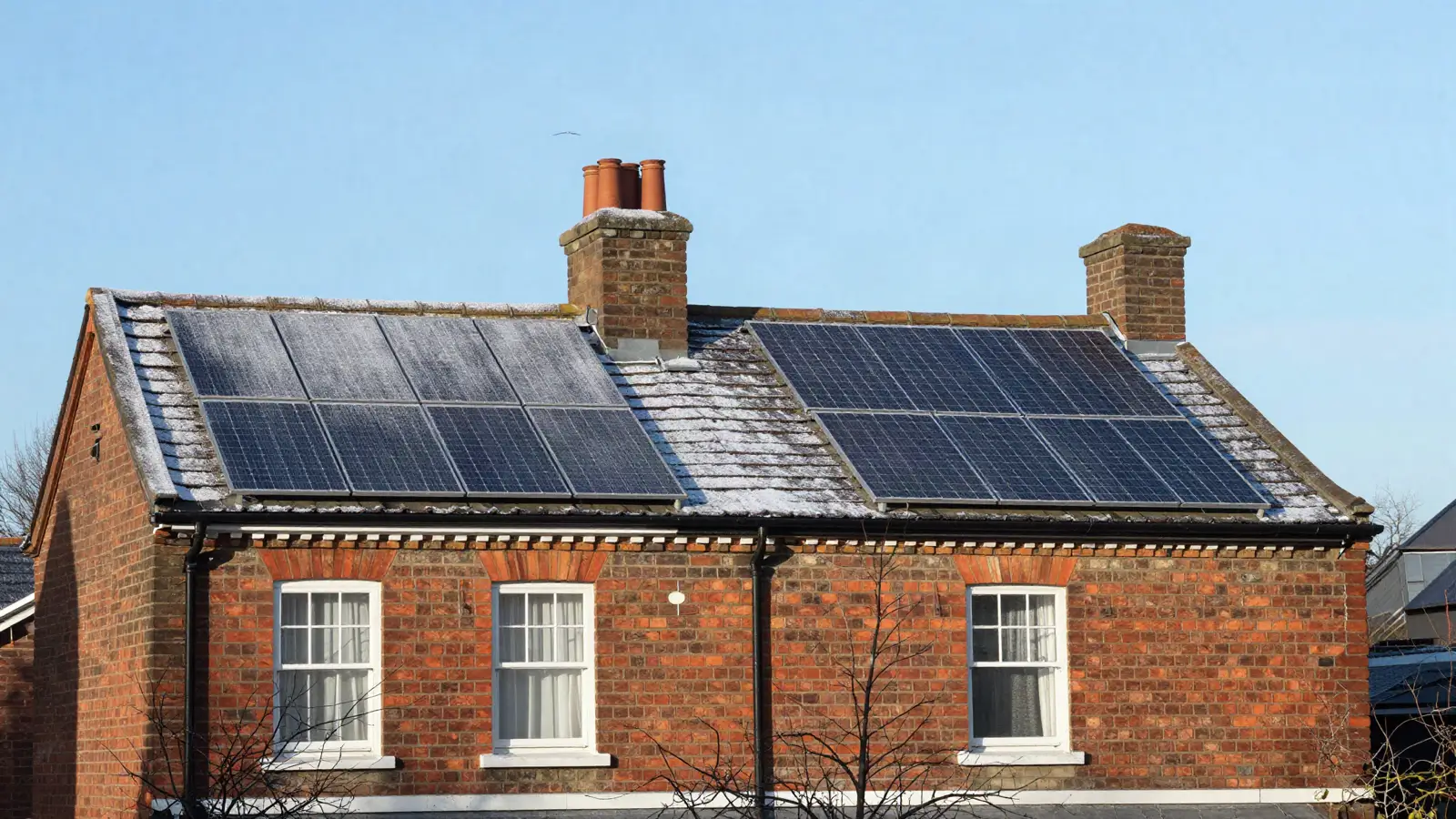
- Solar panels work all year round. They need daylight, not warmth.
- Roughly a third of a typical year's output arrives between October and March.
- Short days and a low sun are what cut winter output; cold weather on its own does not.
- Using appliances in the middle of the day gets the most from what your panels make.
- Leave snow to slide off on its own. Never climb onto a roof to clear panels.
Yes, solar panels keep generating electricity through the winter, just much less of it. They run on daylight rather than heat, so a cold, bright December day still produces power. Across a typical UK year, about two thirds of the output comes between April and September and about a third between October and March.
If you have just had panels fitted in the autumn, the first winter of figures can feel disappointing. This guide explains what is normal, why, and how to get the most out of the darker months.
How much do solar panels generate in winter?
Much less than in summer, but not nothing. European Commission data on UK solar output shows the year splitting like this:
December and January are the quietest months. The gap opens up gradually through the autumn and closes again from February, so by March your panels are already well on their way back up.
Why do solar panels produce less in winter?
Two things do most of the damage, and neither is the cold:
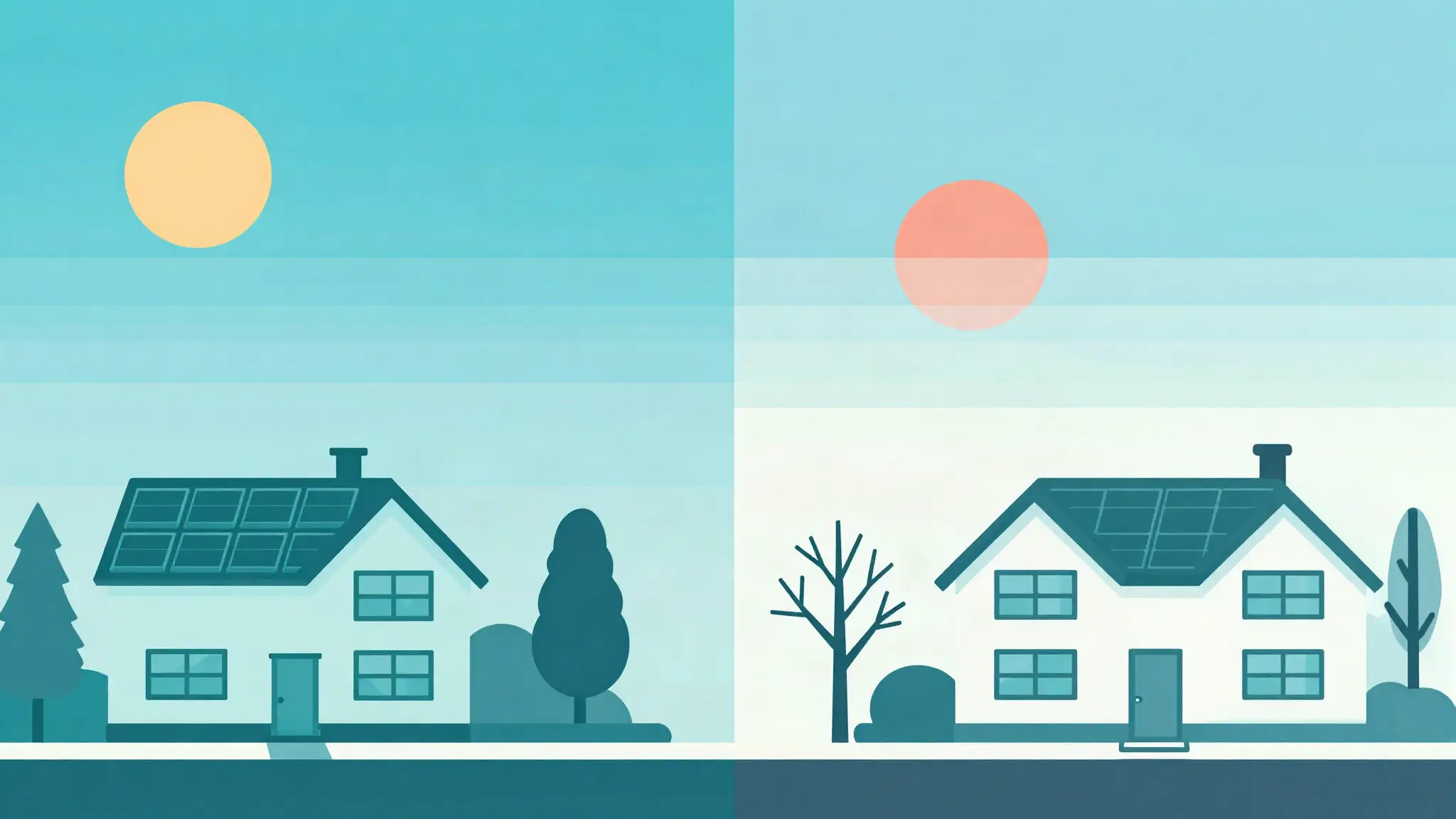
- Shorter days. Around the shortest day, southern England gets under eight hours of daylight, against more than sixteen in June. Fewer hours means fewer units.
- A lower sun. When the sun sits low in the sky, its light passes through more atmosphere and hits the panels at a shallower angle, so each hour of daylight carries less energy.
Cloud and rain cut output further on the day, though panels still generate in overcast weather. Shading from trees, chimneys or neighbouring buildings also matters more in winter, because long shadows from a low sun can fall across panels that are in full light in July.
Does cold weather affect solar panels?
Not in a bad way. Solar panels work more efficiently when they are cool, so a crisp, clear winter day can be surprisingly productive for the light available. It is the lack of hours and the angle of the sun that hold winter output back, not the temperature.
What about snow?
A covering of snow will stop a panel generating until it clears. On a pitched roof, panels are smooth and dark, so snow usually slides off within a day or two once the sun comes out.
Do not climb onto the roof or use a ladder to clear panels, and do not pour hot water on them, which can crack cold glass. If snow regularly sits on your panels for long spells, ask your installer about safe, ground-level options.
A worked example: what winter means for your bill
Take a system that makes 3,000 kWh in a year. This is an illustration; your installer's estimate for your roof will give you a real figure.
- April to September: 68.6% of 3,000 is about 2,060 kWh.
- October to March: 31.4% of 3,000 is about 940 kWh.
- Per winter month: 940 spread across six months is about 160 kWh a month on average, with less than that in December and January and more in October and March.
Every unit you use yourself is a unit you do not buy from the grid. So the winter months still chip away at your bill, while summer does the heavy lifting.
How to get more from your panels in winter
- Run big appliances in the middle of the day. Washing machines, dishwashers and tumble dryers on a timer between about 11am and 2pm use the power when your panels are making it.
- Check your inverter or app. A sudden drop on a bright day can point to a fault, so it is worth glancing at your figures each week.
- Keep panels clear of growth. Trim back trees that have grown since installation, because shading costs more in winter.
- Think about storage. A battery lets you use daytime generation in the evening, and can also charge on cheaper off-peak electricity in winter. Our solar battery storage guide explains when it pays.
- Remember the summer credit. Payments for exporting spare power, earned mostly in summer, help balance out lower winter generation.
Is it worth installing solar panels in winter?
Yes, and there can be advantages. Installers are often less busy than in spring, and a system fitted in winter is ready to make the most of the longer days from March. Installing solar panels and batteries also carries 0% VAT until 31 March 2027, as our post on the VAT deadline explains.
Judge a system on its whole-year output, not its December figures. Our guide to whether solar panels are worth it covers payback in detail.
Where to go next
- New to solar? Start with our solar panel buying guide.
- See typical prices on solar panel costs.
- Plan the installation with the solar panel checklist.
- Renting or living in a flat? Read about plug-in solar panels.
Common questions
Do solar panels work on cloudy days?
Yes, at a lower output. They generate from daylight, so even an overcast day produces some electricity.
Do solar panels work at night?
No. Without daylight they produce nothing, which is why a battery or a time-of-use tariff can help.
Should I clean my solar panels in winter?
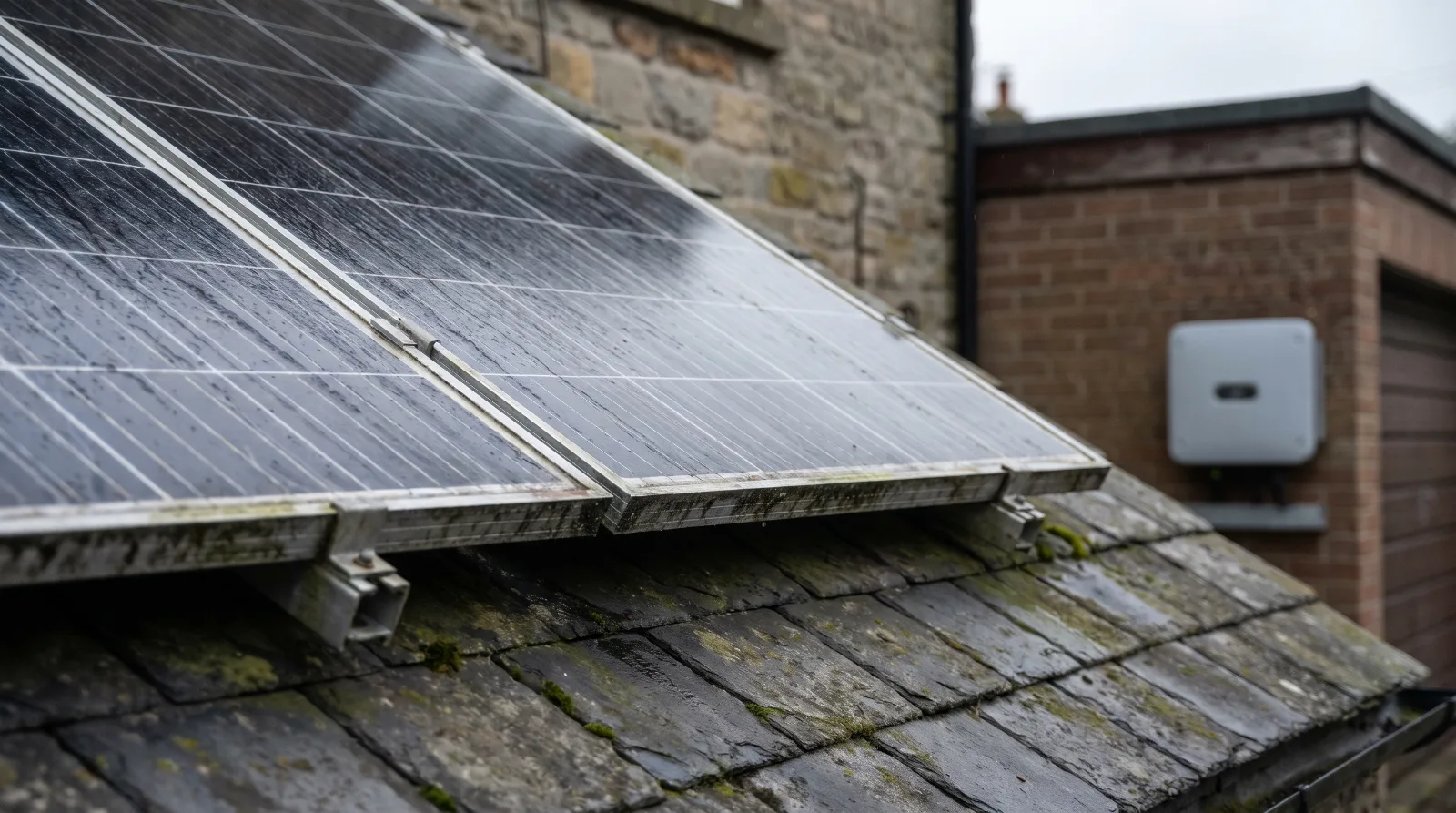
Rain usually keeps them clean enough. If you want them cleaned, use a professional with ground-level equipment rather than going on the roof yourself.
Why are my panels producing almost nothing in December?
Low output in December is normal. If a bright day produces far less than similar days, check for snow, new shading or a fault on your inverter display.
Sources
- Good Energy, Solar panel output in the summer vs the winter, reporting European Commission PVGIS data, published 30 September 2026. Checked 5 November 2026.
- European Commission, Photovoltaic Geographical Information System (PVGIS). Checked 5 November 2026.
Thinking about solar for next spring?
Tell us your postcode to get a free, no-obligation quote from an MCS-certified installer, with a year-round generation estimate for your roof.
Free and no obligation. We only share your details with the installers we match you with.
Keep reading
How long do solar panels last? Lifespan, warranties and upkeep

How to choose a solar panel installer: 9 checks before you sign
When UK solar panels generate their power
How a typical year's output splits between the brighter and darker halves of the year.