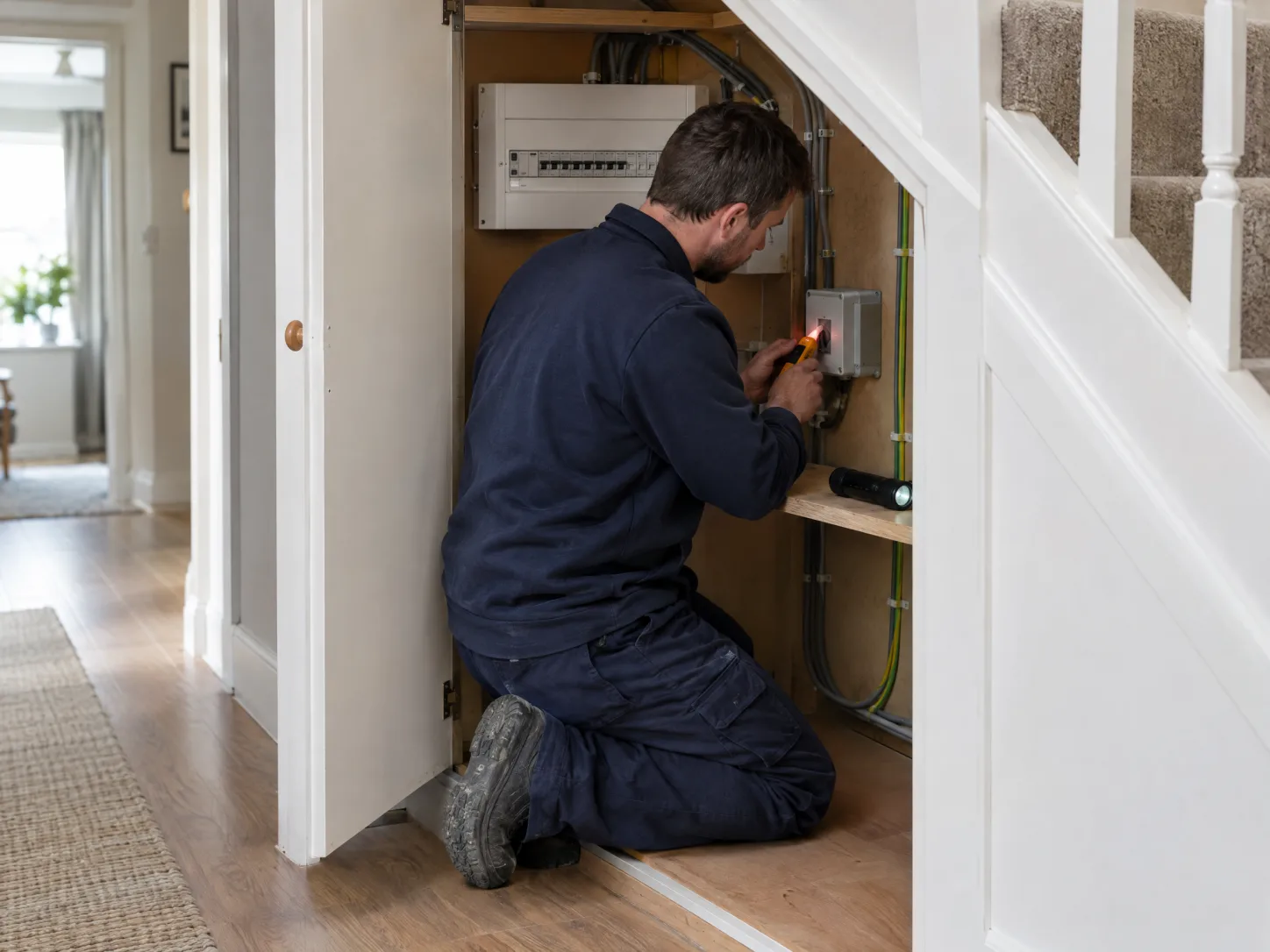
- Most roof panels are permitted development, but listed buildings and some conservation areas need permission.
- England's permitted development rules for solar changed on 27 August 2026, with a year to switch over.
- Small systems are notified to the network operator after fitting; larger ones need approval first.
- Export payments in Great Britain need an MCS certificate or equivalent, and do not exist in Northern Ireland.
- MCS installers now have 30 days to issue your certificate, so chase it if it is late.
Most roof-mounted solar panels need no planning application, but check first if your home is listed or in a conservation area, and make sure your installer tells the local network operator, either before fitting or within 28 days after, depending on the size of the system. Once it is switched on, keep the MCS certificate: without it you cannot claim export payments in Great Britain.
This checklist covers permissions and paperwork. For whether solar suits your roof, see our solar panel buying guide, and for prices, see solar panel costs.
Step 1: check the permissions
Roof panels are usually permitted development, which means no planning application, as long as they stay within set limits. As of September 2026:
England's rules for solar changed on 27 August 2026. The Planning Portal says either the old or the new rules can be used during a 12-month transition that ends on 27 August 2027, so ask your installer which set they are working to.
Two other checks sit outside planning. If you own a leasehold flat, your lease may need the freeholder's agreement. And if your home is listed, listed building consent is a separate permission from planning.
Step 2: the survey and the quote
A proper survey looks at the roof's condition, orientation, shading and structure, and at your electricity use. The quote should set out:
- the panels, the inverter and any battery, by make and model;
- the system size in kWp and the inverter's output in kW;
- how the network operator will be told, and whether approval is needed first;
- the MCS certificate, and when you will get it;
- scaffolding, the electrical work and making good;
- the guarantees on products and workmanship, and whether the workmanship guarantee is insurance-backed;
- the deposit, and how it is protected.
If your installer is a member of RECC, the renewable energy consumer code, it may not ask for more than 25% of the price as a deposit. MCS no longer requires installers to join a consumer code, so ask which code, if any, applies to your contract.
Step 3: telling the network operator
Your local electricity network operator, often called the DNO, must know about any system connected to the grid. The rule depends on size:
- Up to 16 amps per phase, about 3.68 kW on a normal single-phase supply: the installer can connect first and must notify the operator within 28 days of commissioning. The Energy Networks Association calls this "a legal requirement".
- Above that: the installer must apply before installing and wait for approval.
The limit counts the inverters, including a battery's, not the panels. In Northern Ireland the network operator, NIE Networks, requires approval before installation for larger systems, and charges a fee.
A worked example: when approval is needed first
- The threshold: 16 amps × 230 volts = 3,680 watts, or 3.68 kW.
- A typical system: a 4.5 kWp array on a 3.6 kW inverter is under the limit, so the installer fits it and notifies the operator within 28 days.
- Adding a battery with its own 5 kW inverter: 3.6 + 5 = 8.6 kW, over the limit, so the installer must apply before fitting. One network operator's fast-track process aims to respond within 10 working days.
If the system is commissioned on Monday 2 November 2026, the operator must be notified by Monday 30 November, and the MCS certificate issued by Wednesday 2 December.
Step 4: switch-on and the paperwork
On the day, the installer tests the system and shows you the isolator switches and the inverter display. Afterwards, expect:
- the MCS certificate, which installers must now issue within 30 days of commissioning, up from 14;
- the electrical installation certificate for the wiring;
- confirmation that the network operator was told, or the approval letter;
- the building regulations sign-off, where it applies in your nation;
- the product and workmanship guarantees, and the handover pack with the system's expected output.
Step 5: export payments and your records
In Great Britain, energy suppliers with at least 150,000 domestic customers must offer a Smart Export Guarantee tariff, and the rate must always be above zero. Suppliers set their own rates, so compare them. To apply you will need the MCS certificate, or an equivalent certification, and an export meter reading, usually from a smart meter.
In Northern Ireland, the Smart Export Guarantee does not apply, so ask electricity suppliers what they offer for exported power.
Keep the paperwork with the house deeds. An EPC stays valid for 10 years and there is no obligation to update it, but a new one will record the panels, which a buyer or tenant will see.
{{accreditations}}
Watch out for these
- Pressure selling. MCS tells installers not to pressure customers or stay in a home longer than needed. False "today only" deadlines, and ignoring a request to leave, are banned under consumer law.
- Large deposits. A RECC member may not ask for more than 25%; anyone asking for most of the price upfront deserves questions.
- No MCS certificate. Without it you cannot claim export payments in Great Britain, so do not pay the balance until you know when it will arrive.
- No network notification. It is a legal requirement; ask for the confirmation.
- Your insurer and your lender. No official rule says you must tell them, but check whether your home insurance policy and mortgage terms ask you to report alterations.
How it differs across the UK
- England: new permitted development rules from 27 August 2026, with the old rules usable until 27 August 2027. Building regulations normally apply, signed off by a registered installer or building control.
- Scotland: panels can stand up to 1 metre from the roof under permitted development, but not on listed buildings or World Heritage Sites. Routine installations on one or two-storey houses usually need no building warrant if the roof can take the weight.
- Wales: panels must stand no more than 200mm proud of the roof and not above the ridge; listed buildings are likely to need consent.
- Northern Ireland: tighter limits on roof slopes that face and can be seen from a road; network approval and a fee for larger systems; no Smart Export Guarantee.
- VAT: installing solar panels and batteries carries 0% VAT across the UK until 31 March 2027, then 5%.
Where to go next
- Check whether solar suits your home in our solar panel buying guide.
- See prices and payback on solar panel costs, and the panel types on solar panels.
- If you want funding, see how to apply for a solar grant and solar grants.
- Thinking about storage? Read solar battery storage, or check the rules for plug-in solar.
- Or start from our solar panels overview.
Ready to plan your solar installation?
Tell us about your roof to get a free, no-obligation quote from an MCS-certified installer, then use this checklist to agree the permissions, grid notification and paperwork before work starts.
Free and no obligation. We only share your details with the installers we match you with.
Common questions
Do I need planning permission for solar panels?
Usually not for panels on a house roof, within the size limits. Listed buildings, some conservation-area positions, flats and very large systems are the exceptions, and the details differ in each nation.
Do I need to tell the network operator about solar panels?
Yes. For most home systems the installer notifies the operator within 28 days of commissioning. Larger systems, including many with batteries, need approval before installation.
Is an MCS certificate the same as building regulations sign-off?
No. The MCS certificate shows the system was designed and installed to the MCS standard, which export payments need. Building regulations sign-off is separate, and your installer should tell you how it is handled.
How long does a solar installation take?
It depends on the roof and the system, so ask for the expected timings in the quote. Network approval, where it is needed, can add time before the work starts.
Do I need to tell my house insurer about solar panels?
No official rule requires it, but your policy may ask you to report alterations to your home. Check it, and your mortgage terms, before the panels go up.
Ready to plan your solar installation?
Tell us about your roof to get a free, no-obligation quote from an MCS-certified installer, then use this checklist to agree the permissions, grid notification and paperwork before work starts.
Free and no obligation. We only share your details with the installers we match you with.
What the accreditations actually mean
Certification is the clearest signal you have that an installer is competent, and that you are protected if something goes wrong. Here is what each one covers.



Keep reading
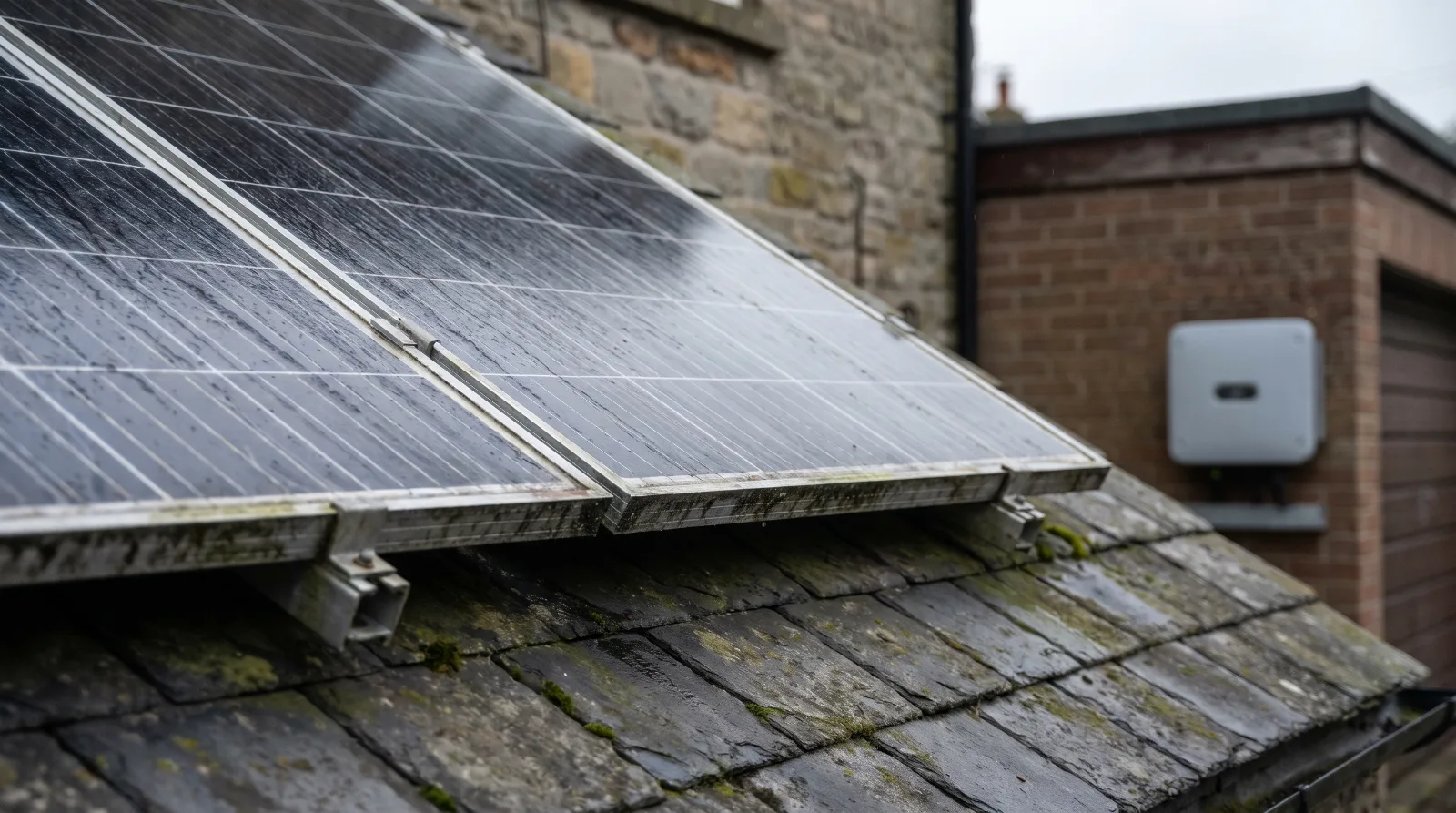
How long do solar panels last? Lifespan, warranties and upkeep

How to choose a solar panel installer: 9 checks before you sign
Solar permissions and paperwork, nation by nation
The planning limits for roof panels, the grid connection rules and export payments in each nation, as they stood in September 2026.