- In the UK, each kilowatt of panels typically makes around 850kWh a year on a south-facing roof.
- A single 400W panel makes roughly 340kWh a year, or under 1kWh a day on average.
- A 4kW system typically makes around 3,400kWh a year, more in the south and less in Scotland.
- Roughly 40% of a year's output arrives between May and August.
- Orientation, roof angle and shading can change output as much as location.
In the UK, a solar panel system typically produces around 850kWh a year for every kilowatt of panels, on a south-facing roof at a good angle. That means a 4kW system, usually about 10 panels, makes around 3,400kWh a year, according to figures based on MCS estimates published by ExpertSure.
Your own figure will differ, depending on where you live, which way your roof faces and how much shade it gets. This guide explains the typical numbers and what changes them.
How much does one solar panel produce?
Most home panels today are rated at about 400W to 450W. At around 850kWh per kilowatt, a 400W panel makes roughly 340kWh a year. That averages a little under 1kWh a day, with much more on a long June day and much less in December.
The rating, measured in watts, is what the panel produces in ideal lab conditions. Real-world output in the UK is lower, which is why installers estimate yearly generation rather than relying on the label.
How much does a whole system produce?
Typical yearly output for a south-facing roof at about 35 degrees, using the UK average:
- 3kW system: about 2,550kWh a year
- 4kW system: about 3,400kWh a year
- 5kW system: about 4,250kWh a year
- 6kW system: about 5,100kWh a year
For comparison, Ofgem's typical household uses about 2,700kWh of electricity a year, so a 4kW system can produce more than many homes use over a year. The catch is timing: most of it arrives in daylight and in summer. Our guide to how many solar panels you need helps you size a system.
How does location change output?
The further south you are, the more you generate. For a 4kW system, typical yearly output ranges from about 3,700 to 4,000kWh in the far south of England to about 2,700 to 2,900kWh in northern Scotland. The south generates roughly 15% to 20% more than Scotland.
How does output change through the year?
Output peaks in May and June and is lowest in December and January. Roughly 40% of a year's generation arrives between May and August, and only around 12% in the darkest winter quarter. Our guide to whether solar panels work in winter explains what to expect in the colder months.
What affects how much your panels produce?
- Direction. South-facing is best. East or west-facing roofs typically produce around 75% to 80% as much, and north-facing roofs much less.
- Angle. In the UK, a tilt of about 30 to 40 degrees is ideal. Flat roofs use angled frames.
- Shading. Chimneys, trees and nearby buildings can cut output noticeably, even when only part of one panel is shaded. Optimisers or microinverters reduce the effect.
- Panel type and age. Modern monocrystalline panels are the most efficient, and all panels lose a little output each year.
- Temperature. Panels work best when cool and bright, so very hot days are not their most efficient.
How to estimate your own output
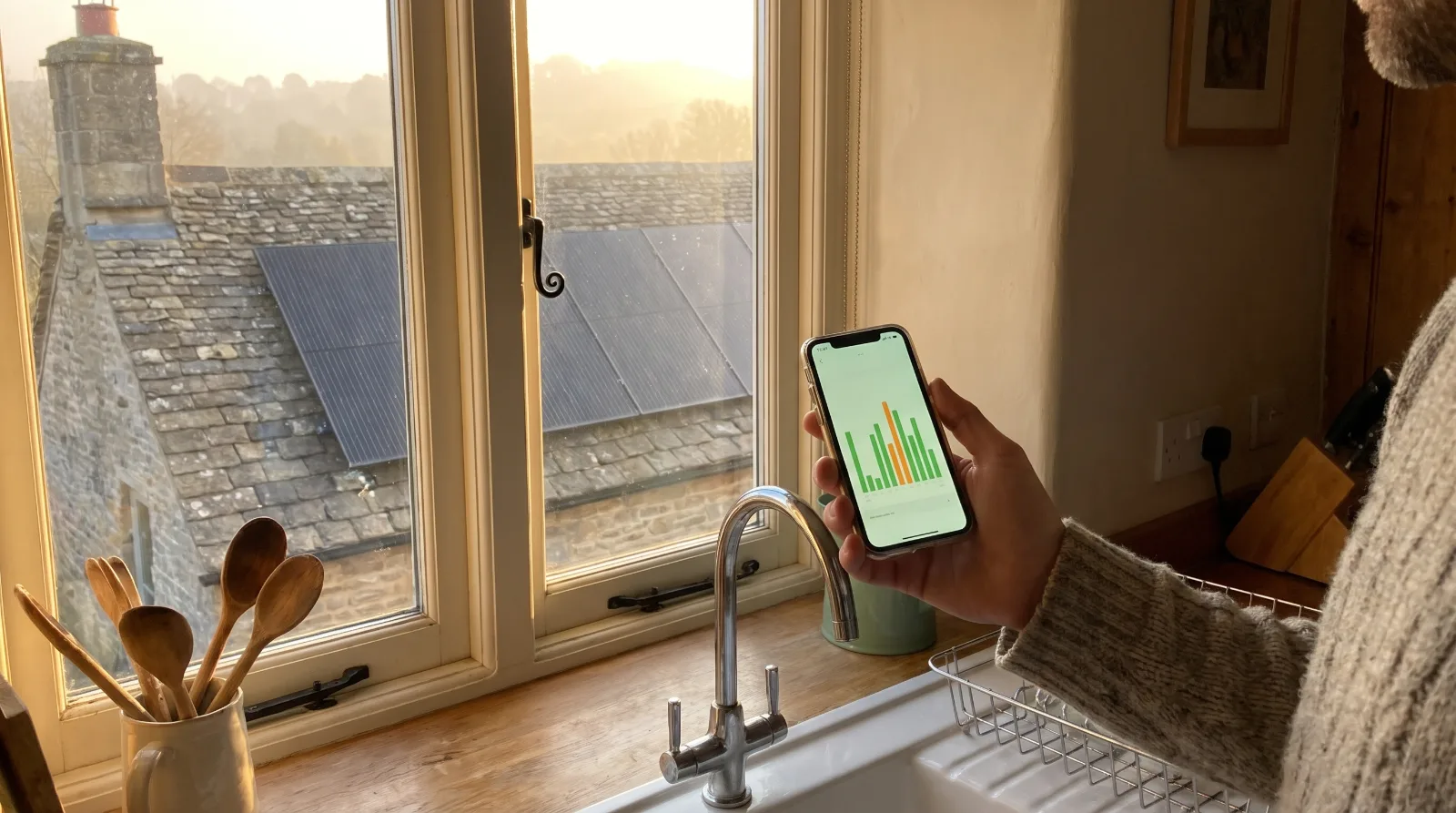
An MCS-certified installer will give you an estimate for your roof, based on its direction, angle, location and shading. Ask to see it in writing, along with the assumptions behind it. Once panels are fitted, your app or inverter shows real output, so you can check it against the estimate.
Our guide to whether solar panels are worth it turns these figures into savings, and solar panel costs shows typical prices.
Common questions
How much does a solar panel produce per day?
On average across the year, a 400W panel makes a little under 1kWh a day in the UK. On a bright summer day it can make two or three times that, and on a dull winter day a fraction of it.
Do solar panels work on cloudy days?
Yes, at reduced output. They run on daylight, not direct sun.
Can I use all the electricity my panels make?
Not usually. Spare electricity goes to the grid, where you can be paid for it through the Smart Export Guarantee, or into a battery to use later.
Find out what your roof could generate
Tell us your postcode for a free, no-obligation quote from an MCS-certified installer, with a yearly generation estimate for your roof.
Free and no obligation. We only share your details with the installers we match you with.
What the accreditations actually mean
Certification is the clearest signal you have that an installer is competent, and that you are protected if something goes wrong. Here is what each one covers.





Keep reading
Do solar panels increase home value? What UK research shows