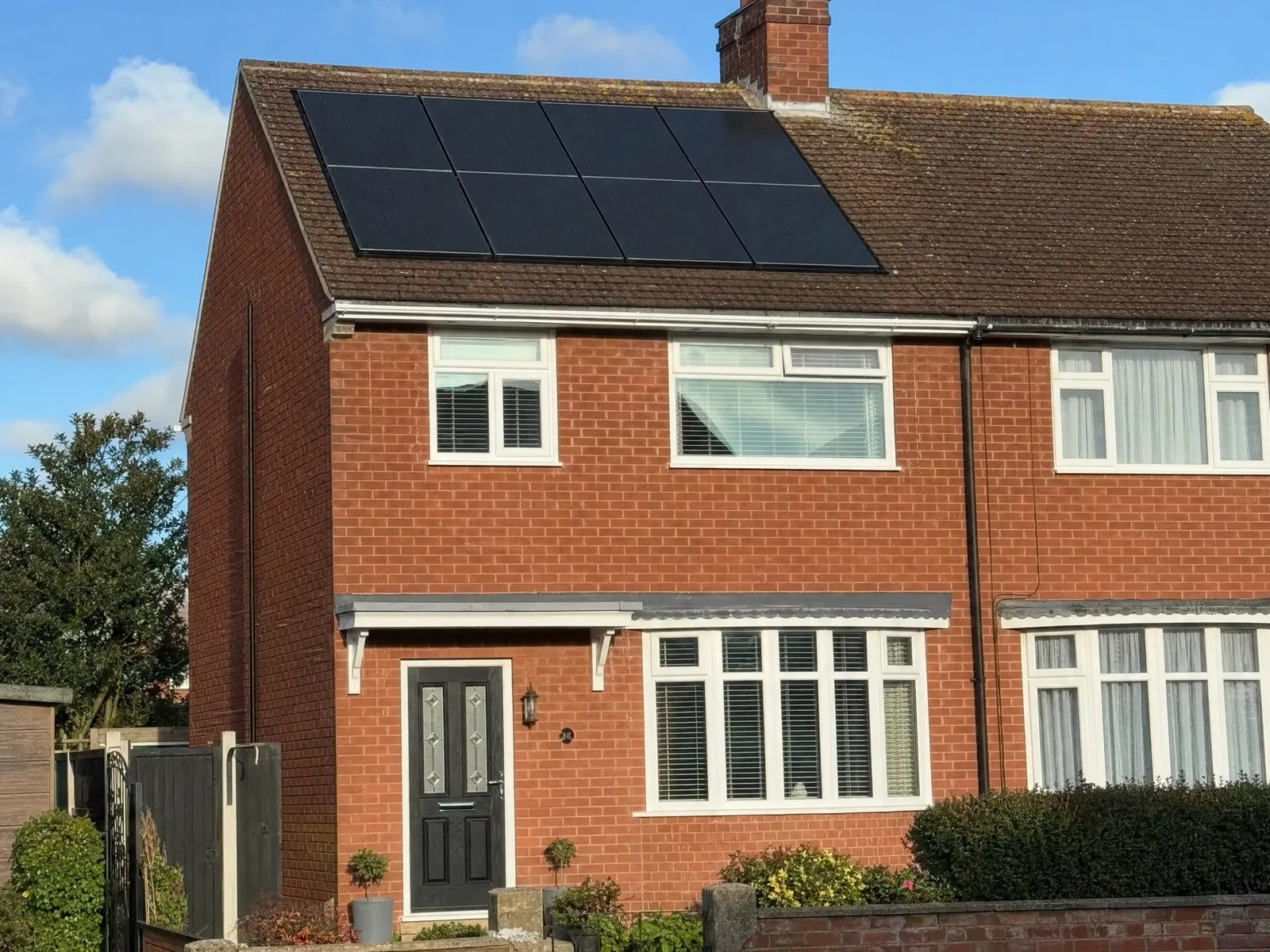
- A typical home using 2,700 kWh a year needs about seven 430W panels to generate roughly what it uses.
- The sum: annual use ÷ yield per kWp gives system size; system size ÷ panel rating gives the number of panels.
- Each panel needs about 2 square metres of clear roof, so ten panels need roughly 20 square metres.
- Size up if a battery, electric car or heat pump is coming, since adding panels later costs more.
- Every quote should include a written generation estimate you can check against these figures.
Most UK homes need somewhere between 5 and 12 solar panels. A household using a typical 2,700 kWh of electricity a year needs about seven modern 430W panels to generate roughly what it uses over a year, and many choose eight to ten to leave room for a battery, an electric car or a heat pump later.
Your own number depends on three things: how much electricity you use, how much sun your roof gets, and how much roof you have. This guide walks through each one, with the same sum MCS-certified installers use, so you can sanity-check any quote you are given.
The short answer: panels by household size
If you just want a ballpark, start here:
{{table:solar-panels-by-household-size}}
These figures size a system to roughly match a year's electricity use. They are a starting point, not a design. The rest of this guide shows how to work out a figure for your own home.
Step 1: find out how much electricity you use
Start with kilowatt hours (kWh), not pounds. Prices change; the number of units you use does not change much from year to year. You will find your annual use:
- on your latest annual statement or bill, usually labelled "estimated annual consumption"
- in your energy supplier's app or online account
- by adding up 12 months of meter readings
If you cannot find it, Ofgem's typical figures are a reasonable stand-in: 1,800 kWh a year for a flat or one-bedroom home, 2,700 kWh for a two or three-bedroom home, and 4,100 kWh for a home with four or more bedrooms.
Then think ahead. If you plan to buy an electric car or fit a heat pump in the next few years, your electricity use will rise, and it is far cheaper to add panels now than to bring the scaffolding back later.
Step 2: work out what each kilowatt of panels will generate
Solar systems are sized in kilowatts peak (kWp), the total rated output of all the panels added together. Ten 430W panels make a 4.3 kWp system.
How much electricity each kWp produces in a year depends on where you live, which way the roof faces and its pitch. Under the MCS installation standard, installers estimate it like this:
Annual generation (kWh) = system size (kWp) × a regional yield figure × a shading factor
The regional yield figure comes from MCS tables built on the European Commission's PVGIS solar data. For an unshaded, south-facing roof at a normal pitch, it is typically in the region of 850 to 1,000 kWh per kWp across much of the UK: higher in the south of England, lower in Scotland. East or west-facing roofs produce less, but often still enough to be worthwhile. Shading from chimneys, trees or neighbouring buildings reduces it further.
As a rule of thumb, this guide uses 900 kWh per kWp. You can check a figure for your own postcode and roof angle with PVGIS.
Step 3: divide one by the other
Now the sum is simple:
- System size needed (kWp) = your annual use (kWh) ÷ yield per kWp
- Number of panels = system size (kWp) ÷ panel rating (kW), rounded up
A worked example
A three-bedroom semi in the Midlands uses 3,200 kWh a year. The roof faces south with no shading, so we use 900 kWh per kWp. The installer offers 430W panels.
- System size: 3,200 ÷ 900 = 3.56 kWp
- Panels: 3.56 ÷ 0.43 = 8.3, so 9 panels
- Check: 9 × 430W = 3.87 kWp, generating about 3.87 × 900 = 3,480 kWh a year
That system makes a little more than the house uses across a year. It will still export some power in summer and buy some from the grid in winter and at night, which is why the next question matters.
Should you fit more panels than you need?
Matching your annual use is a sensible baseline, but it is not the same as covering all your electricity. Solar panels generate during the day, and most of it in spring and summer, while many homes use most of their power in the evening. Without a battery, a good share of what you generate is exported.
There are good reasons to go bigger than the baseline:
- You plan to add a battery. A battery lets you store daytime power for the evening, so extra panels have something useful to do. Our solar battery storage guide explains how to size one.
- An electric car or heat pump is on the way. Both add significantly to annual use.
- You will be paid for exports. Systems fitted by an MCS-certified installer can earn Smart Export Guarantee payments for power you send to the grid, at a rate your supplier sets.
- Fixed costs are shared. Scaffolding, the inverter and the survey cost roughly the same whether you fit 8 panels or 12, so extra panels are often cheap at the margin.
And reasons not to: a very large system on a home that uses little power, with no battery, exports most of what it makes, usually at a lower rate than you pay to buy electricity. Larger systems can also need approval from your electricity network operator before they are fitted, which our solar panel installation checklist explains.
How many solar panels will fit on your roof?
Roof space is often what really sets the limit. Most domestic panels are roughly 1.7m tall and 1.1m wide, so each one needs about 2 square metres. Check the datasheet for the exact panel you are quoted, because sizes vary between models.
To estimate your own roof:
- Measure the width and height of each roof face that gets sun, or estimate it from the number of tiles.
- Take off space around the edges, which installers leave clear for wind loading and access.
- Take off chimneys, roof windows, vents and dormers.
- Divide what is left by the panel's area.
As a guide, ten panels need roughly 20 square metres of clear, usable roof. Smaller terraced roofs often take fewer than that, while larger semi-detached and detached roofs can take more, depending on their shape.
If you have more roof than you need, use the best-facing faces first. If you have less, higher-wattage panels squeeze more output from the same space. Our guide to solar panel types compares the options, and an east-west split across two roof faces can work well, spreading generation across the morning and afternoon.
How many kWh does one solar panel produce?
Multiply the panel's rating in kW by the yield for your roof. A 430W panel on an unshaded south-facing roof at 900 kWh per kWp makes about 0.43 × 900 = 390 kWh a year, or just over 1 kWh a day on average. In practice, that means several kWh a day on a long June day and a fraction of one in December. Our guide to whether solar panels are worth it turns that into savings and payback.
Check the numbers on your quote
An MCS-certified installer should survey your home, ask about your electricity use and give you a written estimate of how much your system will generate before you sign. MCS advises getting at least three quotes and making sure the performance estimate is specific to your property.
When the quotes arrive, use the steps above to check them:
- Does the system size divided by the panel rating match the number of panels listed?
- Is the generation estimate in the right range for the system size, roughly 850 to 1,000 kWh per kWp on a good south-facing roof?
- Has the installer applied a shading factor where there is shade?
- Does the proposal explain why it recommends that size, with or without a battery?
A quote that cannot answer those questions is a reason to keep looking. Our nine checks for choosing a solar panel installer cover what else to look for.
Where to go next
- See typical prices for different system sizes on solar panel costs.
- New to solar? Start with our solar panel buying guide.
- No suitable roof? Read our guide to plug-in solar panels.
Common questions
How many solar panels do I need to run a house?
To generate roughly a typical home's 2,700 kWh a year, about 3 kWp, or seven 430W panels on a good south-facing roof. To actually run the house on solar into the evening, you also need a battery, because panels produce nothing at night.
How many solar panels do I need for a 3-bedroom house?
Usually 7 to 10, depending on how much electricity you use and how much sun your roof gets. A household using 3,200 kWh a year on a south-facing roof needs about nine 430W panels.
How many solar panels do I need to charge an electric car?
Work out how many extra kWh the car will use in a year from your mileage and the car's efficiency, then divide by about 390 kWh per 430W panel. Bear in mind most charging happens in the evening, so a battery or a smart charger that tops up during the day makes the panels far more useful for this.
Can I have too many solar panels?
Yes, in money terms. Beyond the point where you can use or store the power, extra panels mainly generate exports, which usually earn less per unit than you pay for electricity. Larger systems can also need network operator approval before they are fitted.
Do I need planning permission for solar panels?
Usually not. MCS notes that permitted development rights have removed the need for planning permission for most domestic solar. Listed buildings, conservation areas and flats are the common exceptions. Your installer should check this for you as part of the survey.
Sources
- Ofgem, Average gas and electricity use explained, Typical Domestic Consumption Values. Checked 11 November 2026.
- European Commission, Photovoltaic Geographical Information System (PVGIS). Checked 11 November 2026.
- MCS, Your renewable installation. Checked 11 November 2026.
- Ofgem, Smart Export Guarantee. Checked 11 November 2026.
Want a system sized for your home?
Tell us your postcode to get a free, no-obligation quote from an MCS-certified installer, with a written generation estimate for your roof.
Free and no obligation. We only share your details with the installers we match you with.
Keep reading
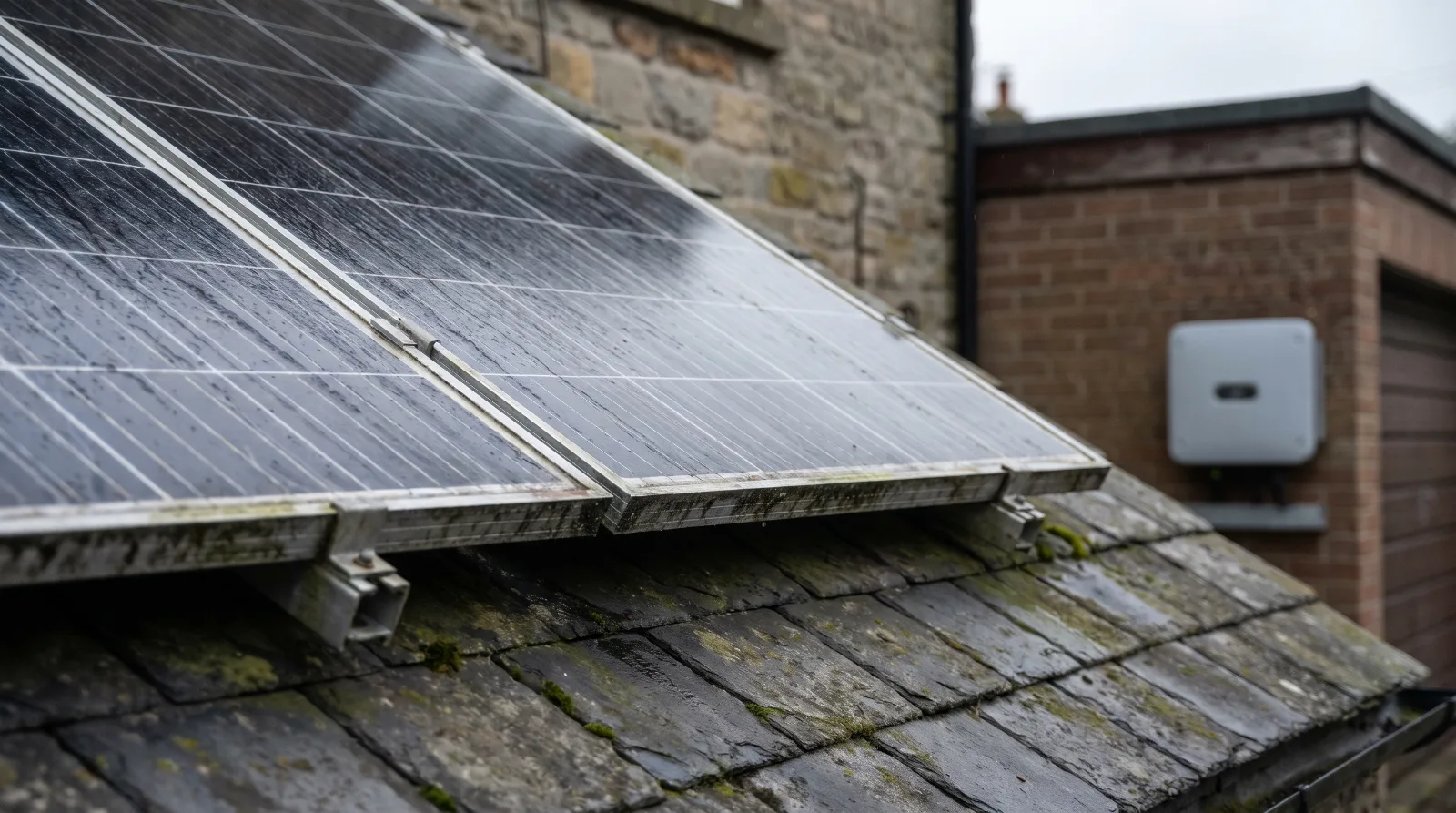
How long do solar panels last? Lifespan, warranties and upkeep
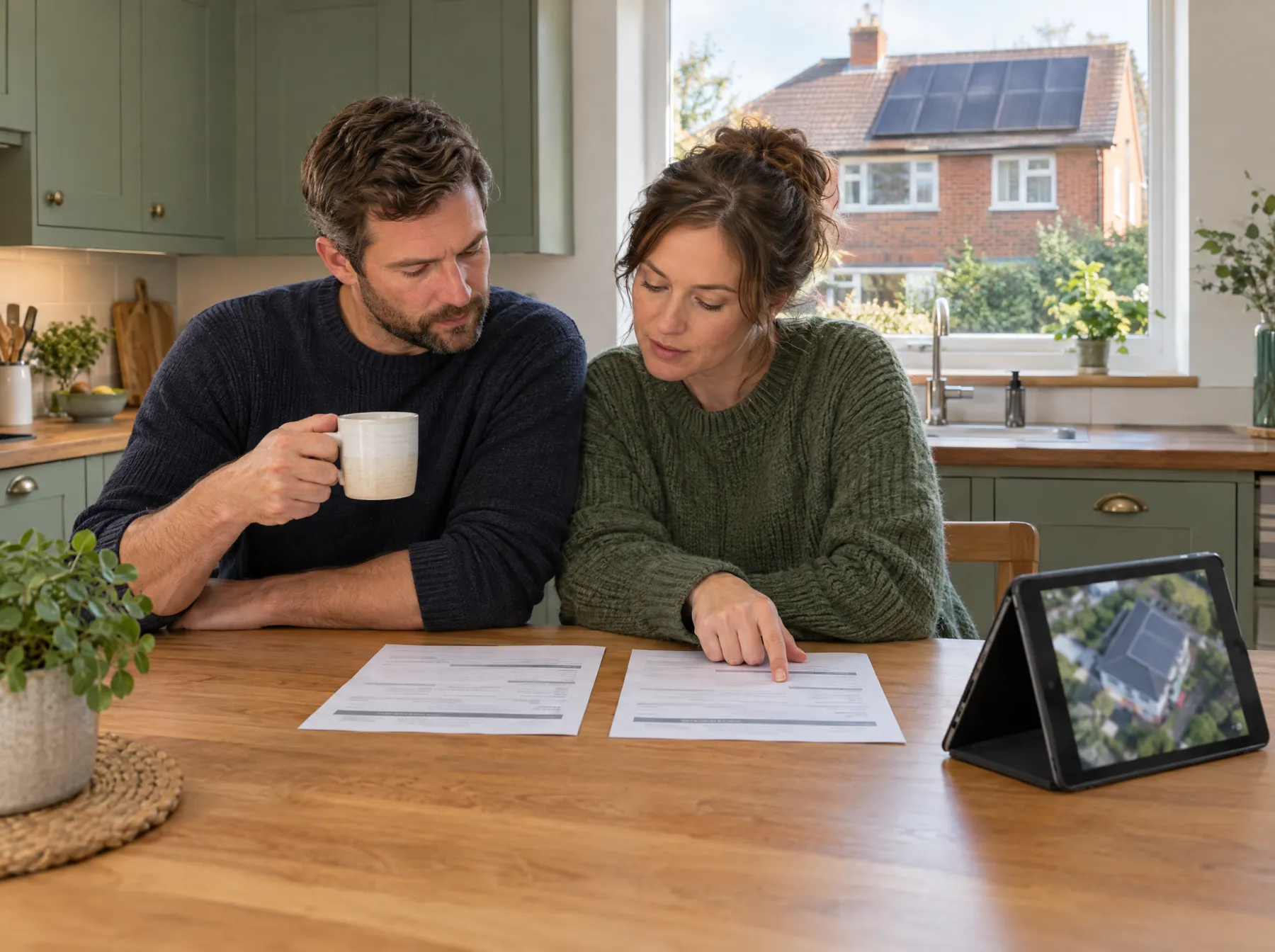
How to choose a solar panel installer: 9 checks before you sign
Solar panels needed by household size
A starting point for sizing a system to roughly match a year's electricity use on an unshaded, south-facing roof.