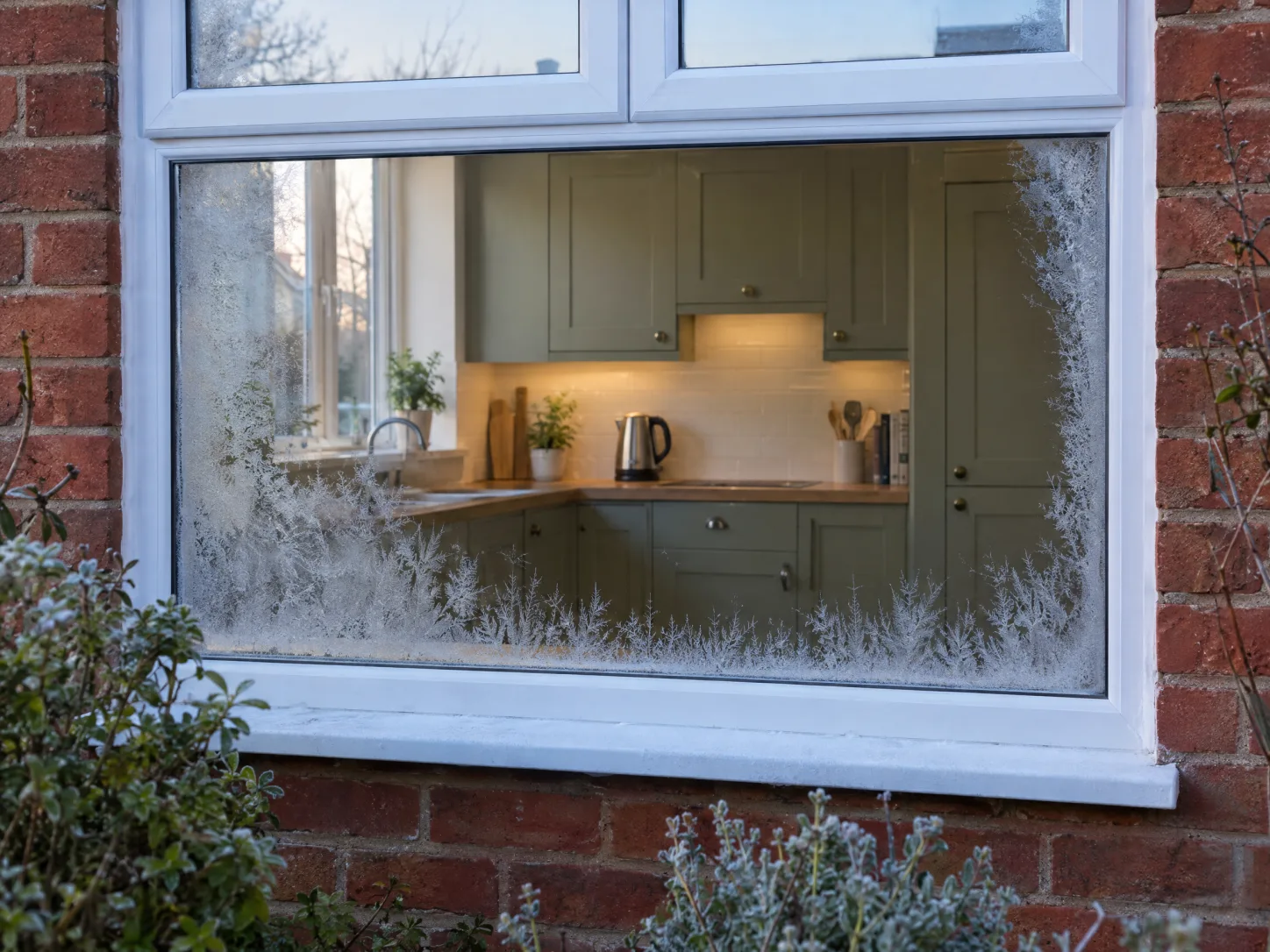
- A U-value measures how fast heat escapes through a window: the lower the number, the better.
- An energy rating from A++ to E combines heat loss, the sun's heat let in and air leakage.
- Replacement windows must reach 1.4 or band B in Great Britain; Northern Ireland allows 1.6 or C.
- Always compare the whole-window U-value; the figure for the glass alone is always lower.
- Check a claimed rating on the BFRC's licence search and the sticker inside the frame.
A U-value tells you how quickly heat escapes through a window, and the lower it is the better; an energy rating from A++ to E adds the sun's heat the window lets in and the air that leaks around it. A replacement window must reach a U-value of 1.4 or band B in England, Wales and Scotland, and 1.6 or band C in Northern Ireland.
This guide explains the numbers. For choosing between double and triple glazing, see Double or triple glazing?, and for prices, see window and door costs.
What is a U-value?
A U-value is the rate at which heat passes through a material, measured in watts per square metre for each degree of difference between inside and outside. A window with a U-value of 1.4 loses 1.4 watts through each square metre for every degree of that difference.
Two figures get quoted, and they are not the same:
- The whole-window U-value covers the glass, the frame and the spacer bars between the panes. This is the one the rules use.
- The centre-pane U-value covers the glass alone, away from the edges. It is always lower, so it can make a window look better than it is.
What is a window energy rating?
A Window Energy Rating, often shortened to WER, scores the whole window on three things: heat lost through it, the sun's heat it lets in, and air leaking around it. The BFRC, which runs the UK's rating scheme, grades windows from A++ to E. Doors get the same treatment as a Doorset Energy Rating.
Because it counts solar heat, a window can outscore another with a lower U-value if it lets in more of the sun's warmth. The worked example below shows how.
What is a good figure?
For a replacement window, anything that meets the legal minimum is good enough to be fitted, and better is better. The table sets out the minimums in each nation.
In practice, a whole-window U-value below 1.4, or a rating of B or above, meets the rules everywhere in the UK. Rooflights have their own, higher limit.
A worked example: how a rating is worked out
Northern Ireland's building regulations guidance publishes the formula behind the rating:
WER = 196.7 × (1 − f) × g − 68.5 × (U + 0.0165 × AL)
Here (1 − f) is the share of the window that is glass, g is the share of the sun's heat the glass lets in, U is the whole-window U-value and AL is the air leakage. Take a window that is 70% glass, using the default figures from the government's rating method:
- Double glazing with low-E coating (g 0.63, U 1.4, no air leakage): 196.7 × 0.7 × 0.63 = 86.7, minus 68.5 × 1.4 = 95.9, gives about −9.2. That falls in band B, between 0 and −10.
- Triple glazing at the default figures (g 0.57, U 1.3): 78.5 minus 89.1 gives about −10.6, band C.
- The same double glazing with air leakage of 3: 86.7 minus 99.3 gives about −12.6, band C.
So a triple-glazed window can score below a double-glazed one, because it lets in less of the sun's heat, and a leaky window loses its rating. Tested triple-glazed products usually do better than these defaults, which is why you should always read the rating for the exact window.
How can you check a rating?
- Look for the label. BFRC-rated windows carry a small official sticker on the inside of the frame.
- Check the licence. The BFRC's online search shows whether a company is licensed to use its ratings.
- Ask for it in writing. The quote should give the whole-window U-value and rating for each window.
- Keep the paperwork. In England, the building regulations accept a certified rating as proof, and an EPC assessor who has no documents for your windows uses default values, which are usually worse.
What does this mean for your EPC?
Your EPC's window section reflects the glazing and, where evidence exists, its tested performance. Without evidence, the assessor uses the default values set out in the government's rating method, such as 1.7 for modern double glazing in a timber or PVC-U frame.
Keeping the certificate and rating for new windows means a future assessor can use the real, usually better, figures.
Questions to ask your installer
- What is the whole-window U-value of each window, not just the glass?
- What is the energy rating, and is it certified by the BFRC?
- Does each window meet the limit for my nation, including the doors?
- For a listed or period home, can the heritage route apply?
- Will I receive the certificate and the rating paperwork when the job is finished?
Watch out for these
- A centre-pane figure passed off as the window figure. The heritage route in the rules uses a centre-pane limit, but for ordinary windows the whole-window figure is what counts.
- "A-rated" with no proof. Only licensed companies can use BFRC labels; ask for the certificate.
- "Meets UK regulations." The limits differ in Northern Ireland, so ask which nation's rules the quote is based on.
- A glass-only swap sold as a new window. Replacing the glass in an existing frame does not count as a new window under the rules in England, so there is no certificate for it.
How it differs across the UK
- England and Wales: 1.4 or band B for windows; 1.4 or Doorset Energy Rating band C for mostly glazed doors; 1.4 or band B for other doors. New editions from March 2027 keep these values.
- Scotland: 1.4, or a band B rating or better for work to existing buildings. One or two matching units in a traditional building can use a centre-pane limit of 1.2.
- Northern Ireland: 1.6 or band C for windows; 1.8 for doors.
- Heritage route: where a listed or traditional building's character must be kept, each nation allows a centre-pane limit of 1.2 or secondary glazing instead.
Where to go next
- Compare glazing options in Double or triple glazing?
- Plan the job, and the paperwork, with the replacing windows checklist.
- For frame materials and window styles, see our windows and doors buying guide.
- See prices on window and door costs, the options on windows and doors, help on grants, or start from our windows and doors overview.
Want windows with a checked energy rating?
Tell us about your home to get a free, no-obligation quote from a FENSA or Certass registered installer, with each window's U-value and energy rating set out in writing.
Free and no obligation. We only share your details with the installers we match you with.
Common questions
What is a good U-value for windows?
Anything at or below the legal limit for your nation: 1.4 in England, Wales and Scotland, and 1.6 in Northern Ireland. Lower is better; BRE notes that the glass in a well-specified triple unit can reach 0.6.
What is the difference between A and A+ rated windows?
A higher band means the window's combined score for heat loss, solar gain and air leakage is better. The difference between neighbouring bands is small, so compare the actual figures too.
What U-value are A-rated windows?
A band does not fix a U-value, because the rating also counts sunlight and air leakage. Ask for both figures for the exact window.
Are A-rated windows worth it?
Any new window must meet the legal minimum, so the question is how much better you want to go. For most homes, a window that comfortably meets the limit is sound value.
Do replacement doors have to meet a U-value?
Yes. In England and Wales, a door that is more than 60% glazed needs 1.4 or a Doorset Energy Rating of band C, and other doors 1.4 or band B.
Want windows with a checked energy rating?
Tell us about your home to get a free, no-obligation quote from a FENSA or Certass registered installer, with each window's U-value and energy rating set out in writing.
Free and no obligation. We only share your details with the installers we match you with.
Keep reading
Condensation on windows: causes and how to stop it
Replacing windows checklist: survey to FENSA certificate
What replacement windows and doors must meet
The minimum performance for replacement windows and doors in existing homes in each nation, and the route for listed and traditional buildings.