- Average prices range from about £950 for a flat to £4,600 for a detached house.
- The Energy Saving Trust says most homes make the cost back in five years or less.
- Government monitoring found it cut gas use by a median of about 12%.
- Not every wall is suitable: exposed, damp or narrow cavities need a proper survey first.
- Installed insulation has 0% VAT until 31 March 2027, and grants can cover the cost for some households.
Cavity wall insulation is one of the most cost-effective ways to keep a home warmer. Checkatrade's price guide puts average costs at about £950 for a flat and £2,700 for a semi-detached house, and the Energy Saving Trust says most homes make the cost back in five years or less through lower bills.
This guide sets out what affects the price, what you can expect to save, and how to make sure your walls are suitable before anyone drills a hole.
What is cavity wall insulation?
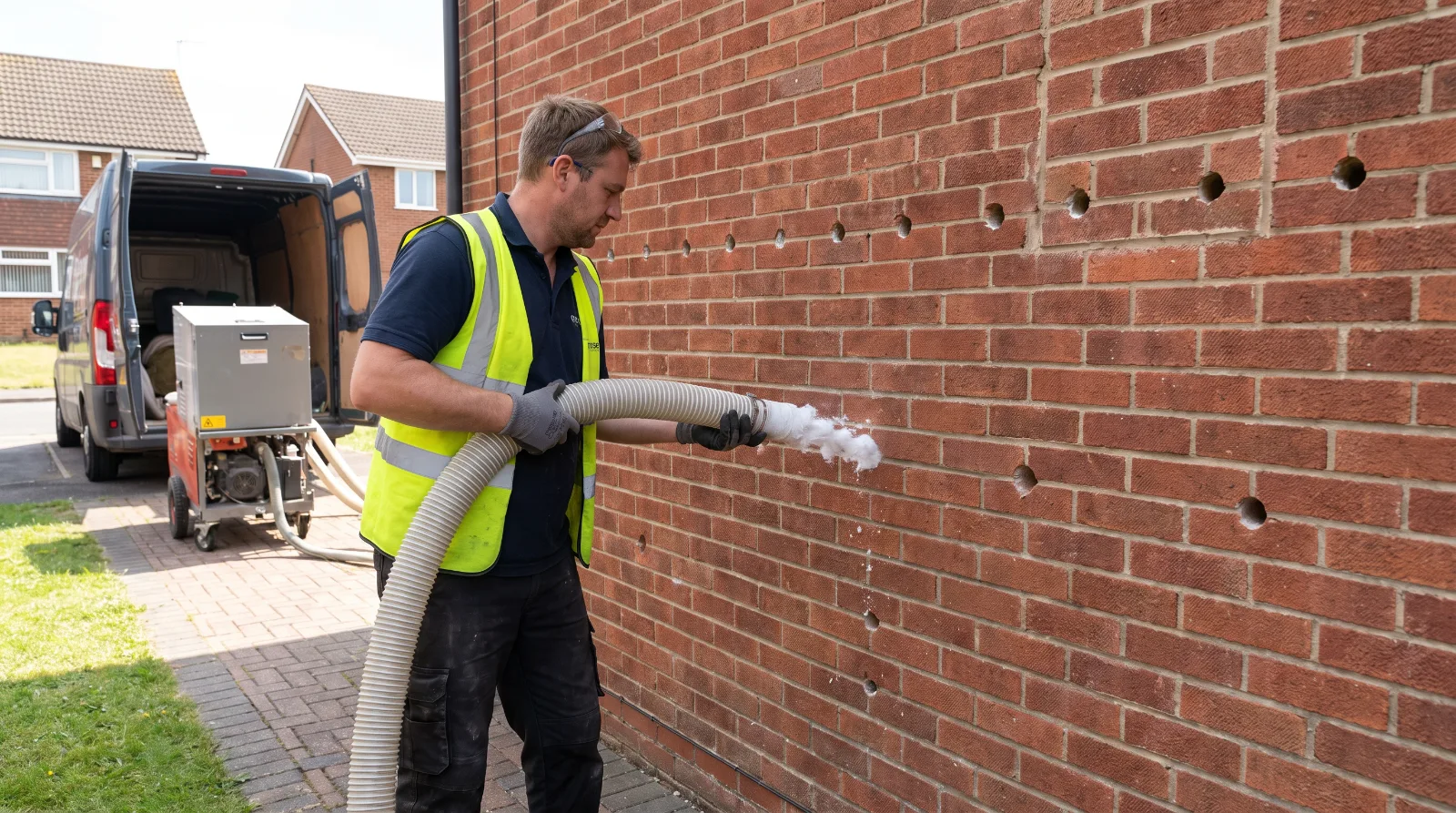
Most homes built from the 1920s onwards have two layers of wall with a gap, or cavity, between them. Cavity wall insulation fills that gap to stop heat escaping. An installer drills small holes in the outside wall, blows the insulation in, then fills the holes to match the mortar.
The three common materials are:
- Blown mineral wool, the most widely used
- Polystyrene beads, which flow well into irregular cavities
- Polyurethane foam, used in some cases where extra rigidity is needed
How much does cavity wall insulation cost?
The price mostly depends on how much outside wall there is. Average costs from Checkatrade's guide:
- Flat: about £950
- Mid-terrace house: about £1,800
- Bungalow: about £2,400
- Semi-detached house: about £2,700
- Detached house: about £4,600
Treat these as ballpark figures. Access, the height of the building, the material used and any repairs needed first all change the quote. Professionally installed insulation carries 0% VAT until 31 March 2027, as our post on the VAT deadline explains.
How much will it save?
Government monitoring of real homes found that cavity wall insulation cut gas use by a median of about 12%. How much that saves you depends on your current heating bill. A larger home that uses more gas will save more in pounds, which is why detached homes often see the biggest savings despite the higher price.
Results vary. In some homes, gas use barely fell, often because people chose to enjoy a warmer home instead of turning the heating down. Either way, a warmer, less draughty home is part of the benefit.
Is my home suitable?
Cavity walls are usually more than 260mm thick when measured at a window or door. Brickwork with a regular pattern of long bricks only is another sign. Our guide to solid or cavity walls shows how to check.
Cavity wall insulation may not be suitable if your home:
- faces driving rain or extreme exposure, for example on the coast or a hilltop
- has damp problems, damaged brickwork or poor pointing
- has a very narrow cavity
- is timber-framed, steel-framed or made of prefabricated concrete
- is at risk of flooding
A proper survey should check all of these. Never accept a quote given over the phone. Our guide to cavity wall insulation problems explains what can go wrong and how to avoid it.
Can I get it for free?
Some households can:
- ECO4 can fully fund insulation for households on certain benefits, but it closes on 31 December 2026 and work must be finished by then.
- Warm Homes: Local Grant in England is run by councils for households with an income of about £36,000 or less in homes rated EPC D to G, while funding lasts.
- Scotland, Wales and Northern Ireland run their own schemes.
Our insulation grants page covers each one.
Choosing an installer
- Get a survey and a written quote.
- Check the installer is TrustMark registered.
- Ask for a 25-year guarantee from CIGA, the Cavity Insulation Guarantee Agency, and keep it with your house documents.
- Fix gutters, downpipes and brickwork before the work, not after.
Common questions
How long does it take?
Usually a few hours to a day for a typical house. Nothing needs to happen inside, though the installer may check the loft and air bricks.
Can cavity wall insulation cause damp?
It can if it goes into an unsuitable wall or is poorly installed. That is why the survey matters. Fitted in the right wall, it should not.
Is it worth topping up existing cavity insulation?
Not usually. If an earlier fill is patchy or has failed, an installer can test it and advise whether it needs removing and replacing.
Find out if your walls can be filled
Tell us your postcode for a free, no-obligation survey and quote from a TrustMark-registered installer.
Free and no obligation. We only share your details with the installers we match you with.
What the accreditations actually mean
Certification is the clearest signal you have that an installer is competent, and that you are protected if something goes wrong. Here is what each one covers.



Keep reading
External wall insulation cost in 2026: prices and grants